A zipper may look like a small construction detail, but on a baby sleep sack, it can influence dressing, access, comfort, appearance, and production accuracy.
Two sleep sacks can use the same fabric, the same TOG, and the same overall shape, yet feel very different because of the zipper system.
For buyers developing a sleep sack collection, zipper design should be confirmed early. It affects pattern construction, sewing steps, neckline details, and the finished product itself.
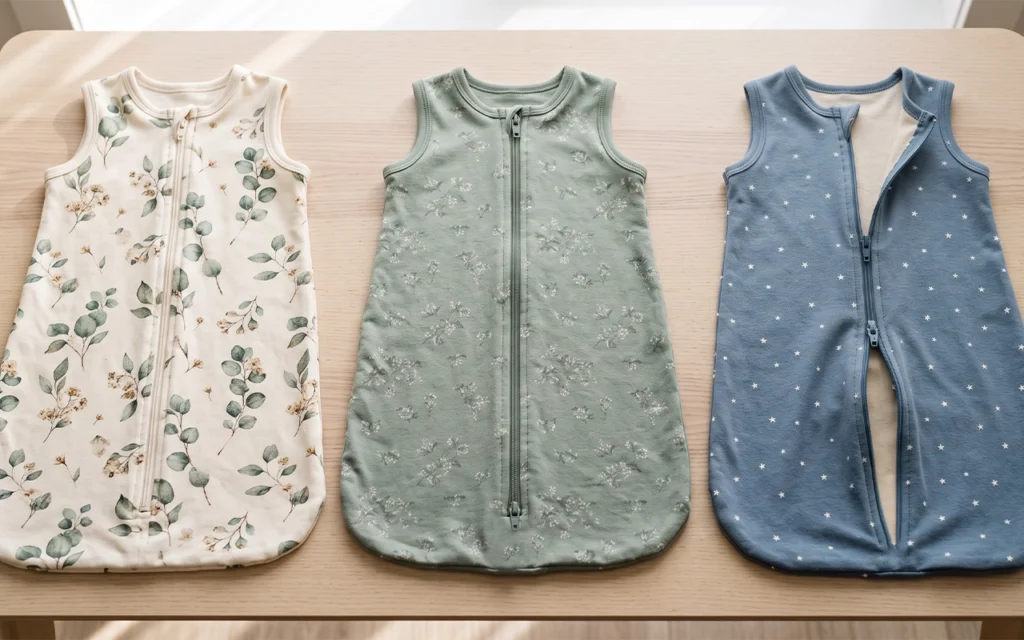
Zipper Direction Changes How the Sleep Sack Opens
The first decision is often zipper direction.
Some sleep sacks use a zipper that opens from the top. Others use a two-way or reverse-opening system that allows access from the lower part of the garment.
These options create different product experiences.
A top-opening zipper keeps the structure simple and familiar.
A lower-opening or two-way zipper can provide more flexible access without requiring the entire sleep sack to be opened.
When comparing zipper directions, buyers should consider:
• Where the zipper starts
• Where it ends
• Whether it opens from one or both directions
• How much of the garment opens
• How the zipper interacts with the lower body area
• Whether the system fits the intended product structure
The best zipper direction depends on how the sleep sack is expected to be used.
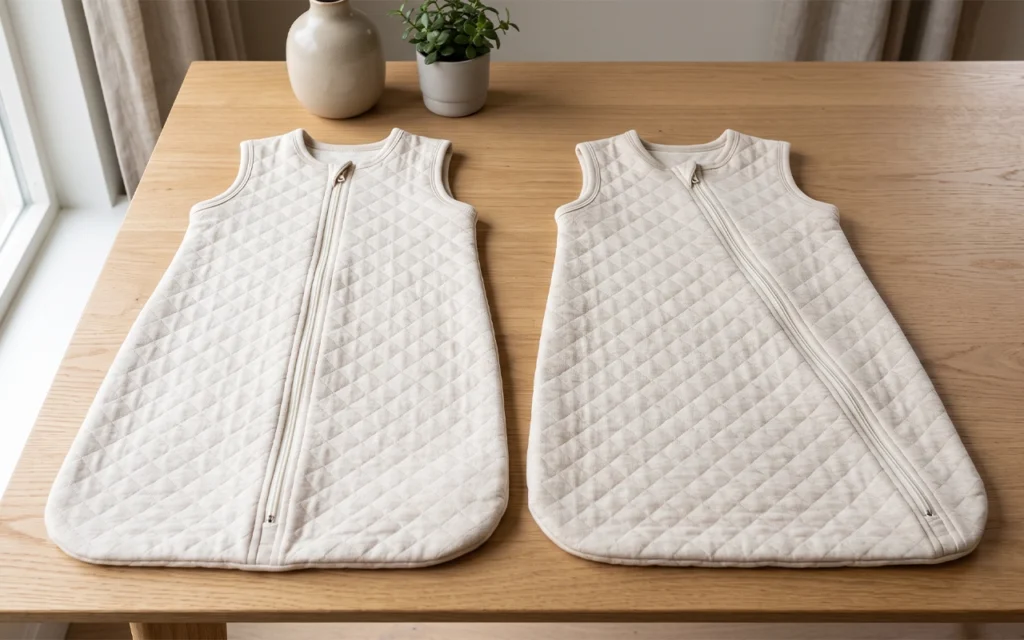
Zipper Length Affects Dressing and Product Construction
Zipper length is another important development decision.
A short zipper creates a cleaner front appearance, but it may provide less opening space.
A longer zipper can make the garment easier to open more fully.
However, zipper length also affects:
• Sewing position
• Fabric stability
• Pattern layout
• Lower seam construction
• Finished appearance
If the zipper is too long for the garment structure, it may create unnecessary bulk or distortion near the bottom.
If it is too short, the opening may feel restrictive.
Therefore, zipper length should be tested on the actual sleep sack sample rather than selected only from a trim catalog.
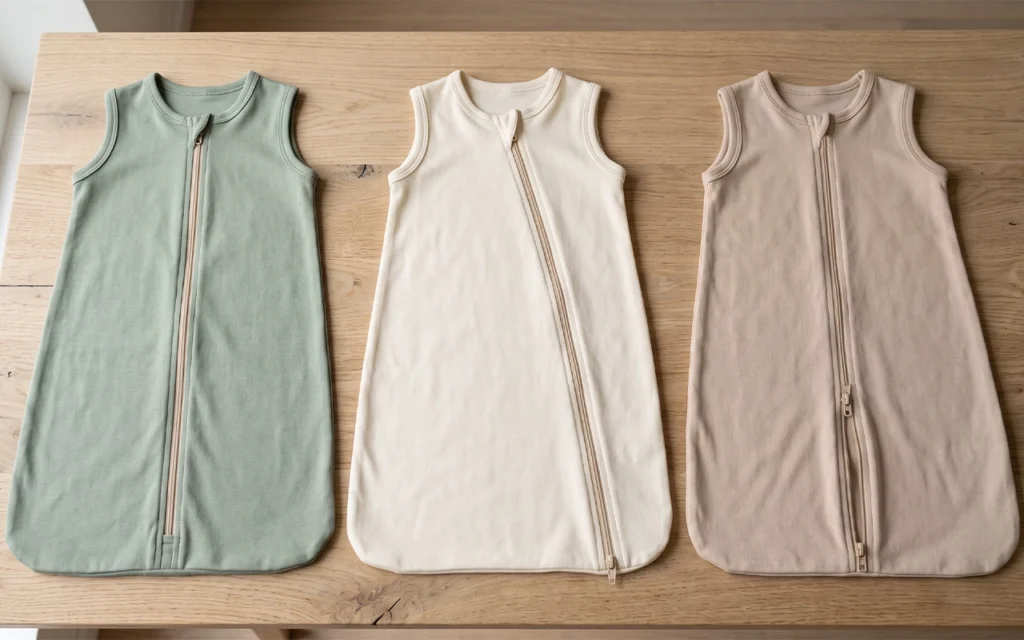
Straight and Diagonal Zippers Create Different Product Looks
The zipper path also changes the visual identity of the sleep sack.
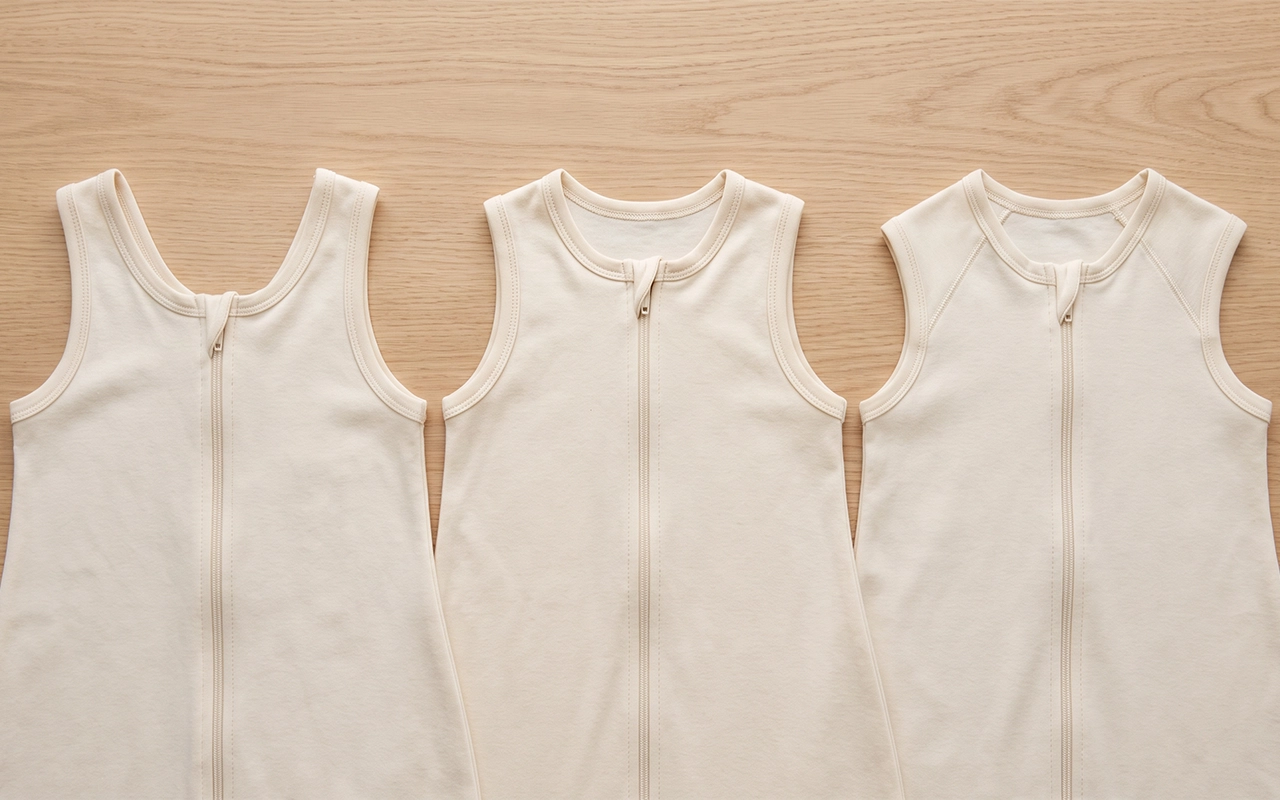
A straight center zipper creates a simple and symmetrical appearance.
A diagonal zipper creates a more directional design and can make the front panel look more dynamic.
However, diagonal zippers require careful pattern planning.
The sewing line needs to remain smooth, and both sides of the garment should keep their intended shape after the zipper is installed.
This becomes especially important with soft knitted fabrics, where stretching during sewing can cause the front panel to look uneven.
For buyers, zipper path should be reviewed together with the overall pattern rather than treated as a separate trim choice.
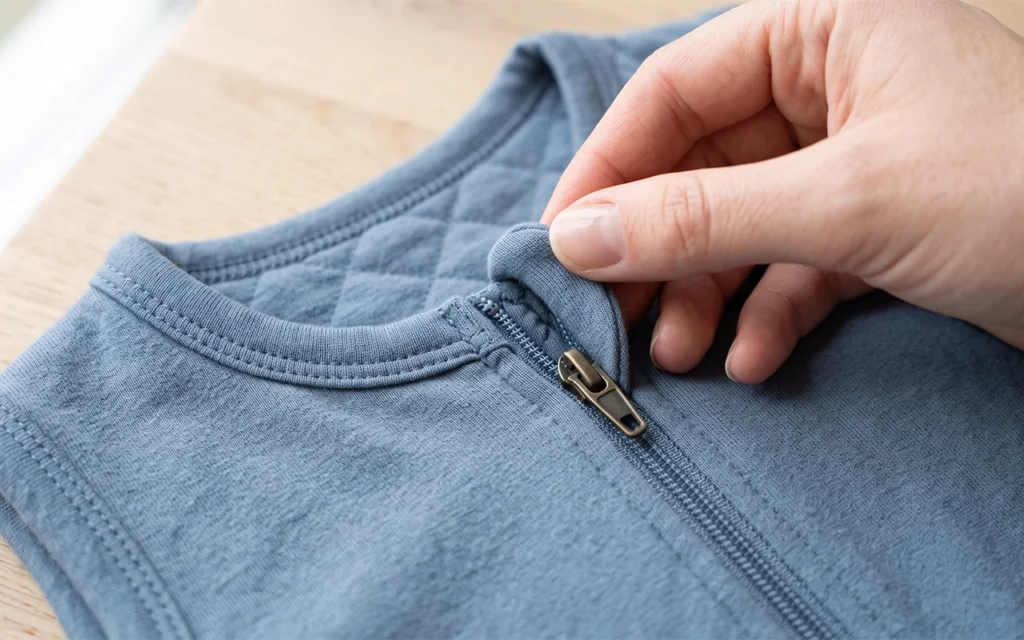
The Zipper Guard Protects the Upper Area
The top end of the zipper needs particular attention.
A zipper guard or cover can help keep the zipper pull from sitting directly against the upper chest or neck area.
This detail also creates a more finished appearance.
During sampling, buyers should check:
• Guard size
• Guard shape
• Stitching
• Position
• Whether the zipper pull is fully covered
• Whether the guard remains flat after washing
A guard that is too small may not cover the zipper pull properly.
A guard that is too large may look bulky.
The right size should match the neckline structure and the zipper hardware.
Zipper Tape and Fabric Need to Work Together
The zipper is not only the slider and teeth.
Zipper tape also becomes part of the construction.
Its stiffness, width, and color can influence the finished product.
If the tape is much firmer than the sleep sack fabric, the front area may not drape naturally.
If the tape is too soft, installation may become less stable.
Buyers should therefore review:
• Tape width
• Tape stiffness
• Color matching
• Stitching width
• Fabric compatibility
This is especially important with knitted cotton and other soft fabrics.
The goal is not simply to attach the zipper securely. The surrounding fabric should still remain smooth and balanced.
Zipper Color Can Support the Product Design
Zipper color can either blend into the garment or become part of the visual design.
A matching zipper creates a clean and minimal appearance.
A contrasting zipper can create a stronger design accent.
Brands can coordinate zipper color with:
• Binding
• Neckline trim
• Armhole trim
• Embroidery
• Printed motifs
• Labels
For example, a soft pink sleep sack may use a matching pink zipper for a subtle look.
Another version may use a slightly darker contrast zipper to create a more visible design detail.
Color selection should remain consistent with the rest of the collection.
Zipper Installation Quality Affects the Finished Appearance
Even a good zipper can look poor if it is installed incorrectly.
Common development issues may include:
• Wavy zipper lines
• Uneven stitching
• Fabric pulling
• Misaligned lower ends
• Uneven top guards
• Distorted front panels
These problems can become more visible after washing.
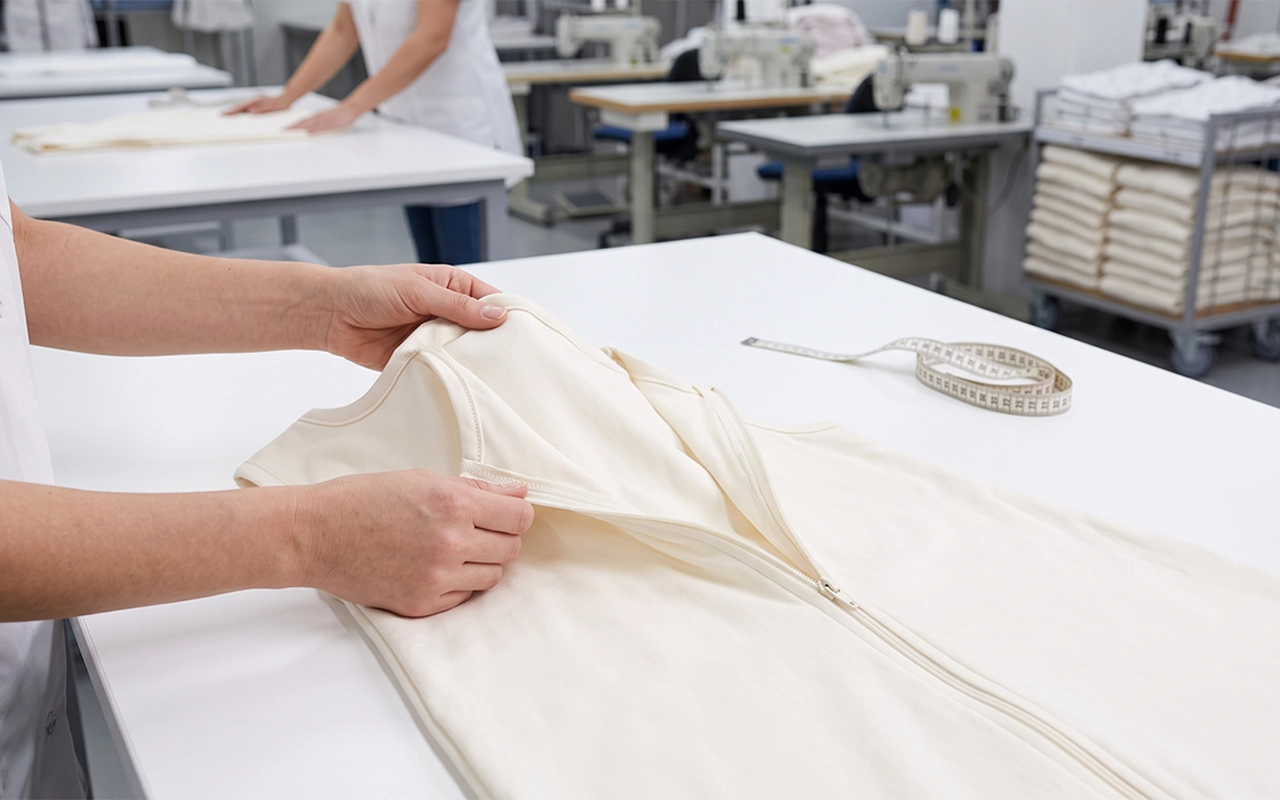
During sample review, buyers should inspect the zipper both when the sleep sack is laid flat and when it is fully closed.
The front should remain balanced, and the zipper line should sit naturally without twisting the fabric.
This is why zipper installation should be treated as a quality point, not only a design detail.
Zipper Design Should Be Confirmed During Sampling
A zipper system may look correct in a technical drawing but behave differently in a real sample.
Before mass production, buyers can review:
• Zipper direction
• Zipper length
• Zipper path
• Puller size
• Zipper guard
• Tape color
• Stitching
• Opening range
• Finished garment balance
Inorange Baby can support custom sleep sack development with different zipper structures, fabric options, TOG levels, neckline and armhole finishes, colors, prints, embroidery, labels, and packaging.
The zipper can be adjusted together with the garment pattern rather than treated as an isolated component.
Conclusion
Zipper design has a larger effect on a baby sleep sack than it may first appear.
Direction changes access.
Length changes the opening.
The zipper path changes the front structure.
The guard affects the upper finish.
Installation quality affects how the entire garment looks.
For buyers, a better development process considers:
Zipper Direction + Length + Path + Guard + Tape + Installation
together with the sleep sack pattern.