The neckline can change the balance of an entire baby bib.
A bib may use the right fabric and shape. However, the product can still look awkward if the neck opening is too wide. Narrow straps can also weaken the upper structure. In addition, poorly placed snaps can make the closure look uneven.
For buyers, the neckline should be part of the main product specification. It should not be treated as a small finishing detail.
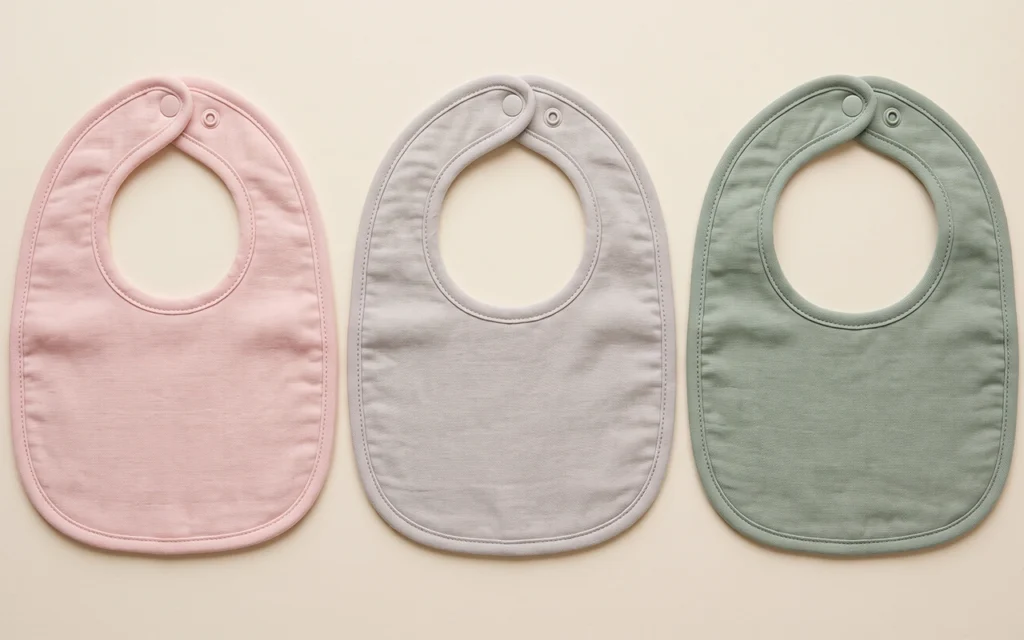
Start with the Neck Opening
The neck opening affects both fit and visual balance.
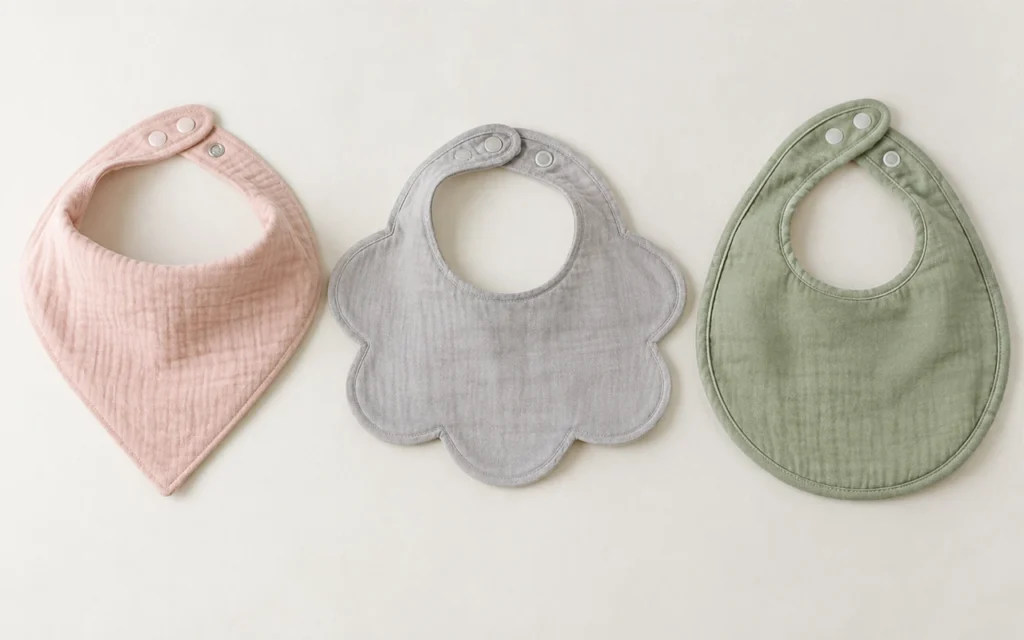
Triangle, petal, and round bibs all have different outer shapes. Therefore, the same neckline should not be copied across every pattern.
Buyers should check:
- Neck opening width
- Neck opening depth
- Neck curve
- Left-right symmetry
- Distance from the neckline to the outer edge
- Relationship between the neckline and bib body
A very large opening can make the upper section look loose. On the other hand, a very small opening can make the product look crowded.
Therefore, the neck opening should be developed together with the full bib shape.
Strap Width Changes the Upper Structure
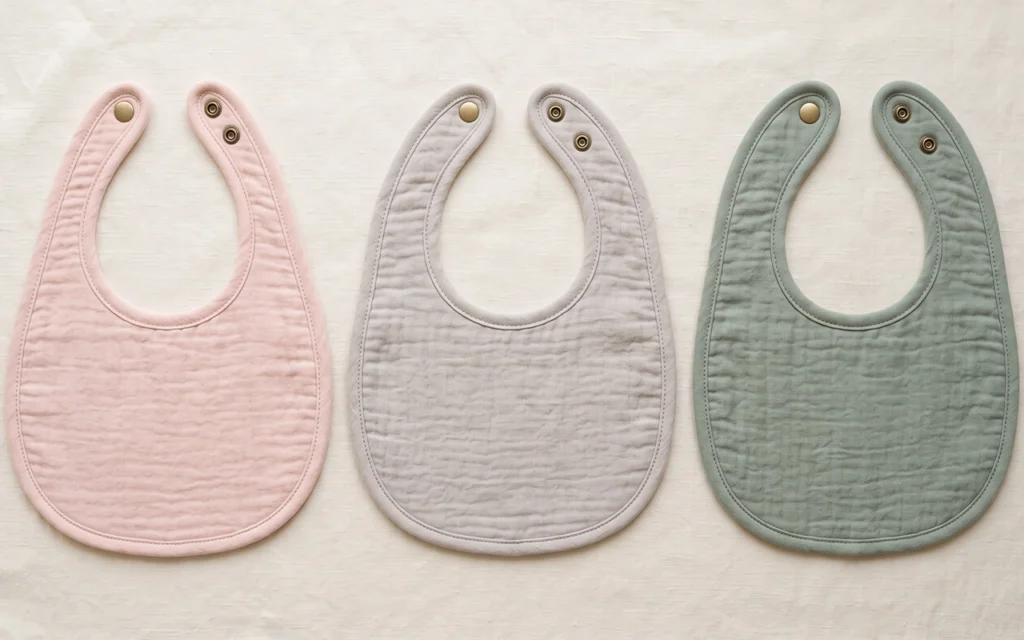
The two neck straps connect the bib body to the closure area.
Their width affects both appearance and structure.
Wider straps can make the upper section look more stable. They also leave more room for snap placement. Narrower straps create a lighter look. However, they can make the closure area feel less substantial.
During development, buyers should review:
- Strap width
- Strap length
- Left-right consistency
- Transition into the bib body
- Edge finish
- Snap position
The strap should connect smoothly with the bib body. In addition, the width should remain consistent near the closure area.
Snap Position Controls Adjustability
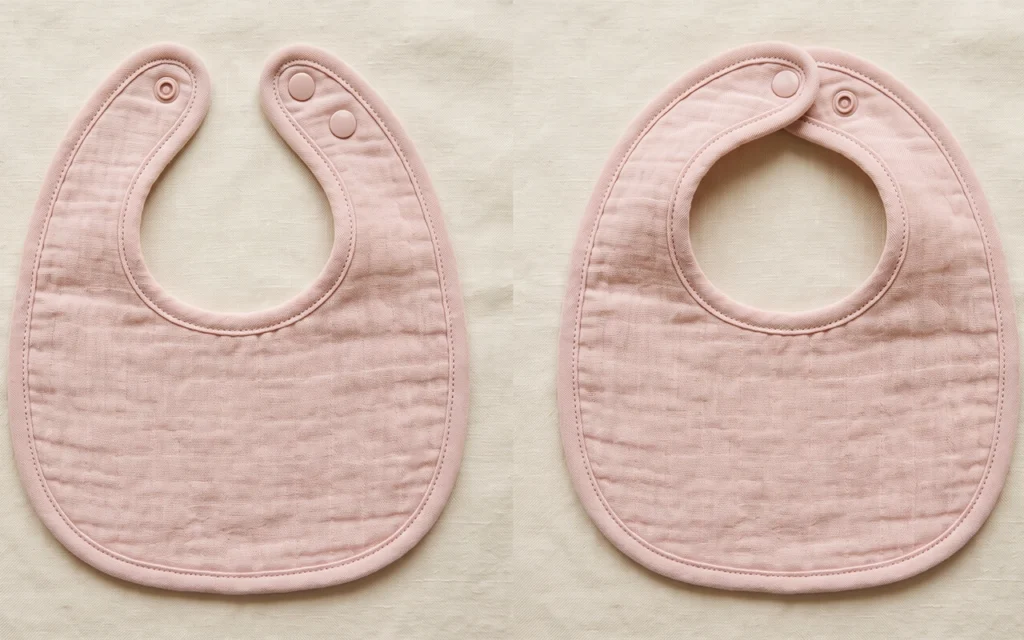
Adjustable snaps help define the finished neck opening.
Their position affects both closure and adjustment range.
Buyers should review:
- Number of snap positions
- Distance between snaps
- Distance from the fabric edge
- Snap alignment
- Left-right position
- Finished neck opening at each setting
If the snaps sit too close together, the adjustment range may be limited. However, if they sit too far apart, each setting may feel very different.
The snap should also stay away from the very edge. This helps keep the closure area cleaner and more balanced.
The Snap Area Needs Enough Support
Snap placement is not only about distance.
The surrounding fabric also matters.
If the snap sits too close to a narrow or curved edge, the strap may twist after closing. As a result, the upper part of the bib can look uneven.
During sample review, buyers should check:
- Does the strap stay flat after closing?
- Do both sides align correctly?
- Does the snap area remain smooth?
- Does the closure sit naturally?
- Does the fabric pull around the snap?
Soft knitted and muslin fabrics can behave differently. Therefore, the snap area should always be checked on the real sample.
Different Bib Shapes Need Different Necklines
Bib shape changes the way the neckline should be planned.
Triangle Bib
Triangle bibs usually have a compact front area.
Therefore, the neckline should keep enough structure at the top. At the same time, it should not make the bib look too wide.
Petal Bib
Petal bibs already have a strong decorative outline.
For this reason, the neckline should stay simple and symmetrical. This helps keep the outer petal shape as the main visual feature.
Round Bib
Round bibs usually offer a broader front area.
Therefore, the neckline can use a slightly different proportion while still keeping the overall product balanced.
In short, one neckline pattern should not be reused automatically across every bib shape.
Edge Finish Also Affects the Neckline
The neckline may use binding, merrow finishing, or another edge treatment.
Each method can change the final shape.
For example, binding adds another layer around the curve. If it is too wide or too stiff, the neckline may look bulky.
A merrow edge creates a lighter finish. However, the curve still needs to stay smooth.
Buyers should check:
- Edge width
- Edge tension
- Curve smoothness
- Stitch consistency
- Finish around the snap area
The neckline should remain flat after finishing. In addition, the edge should not become wavy or distorted.
Fabric Structure Changes the Result
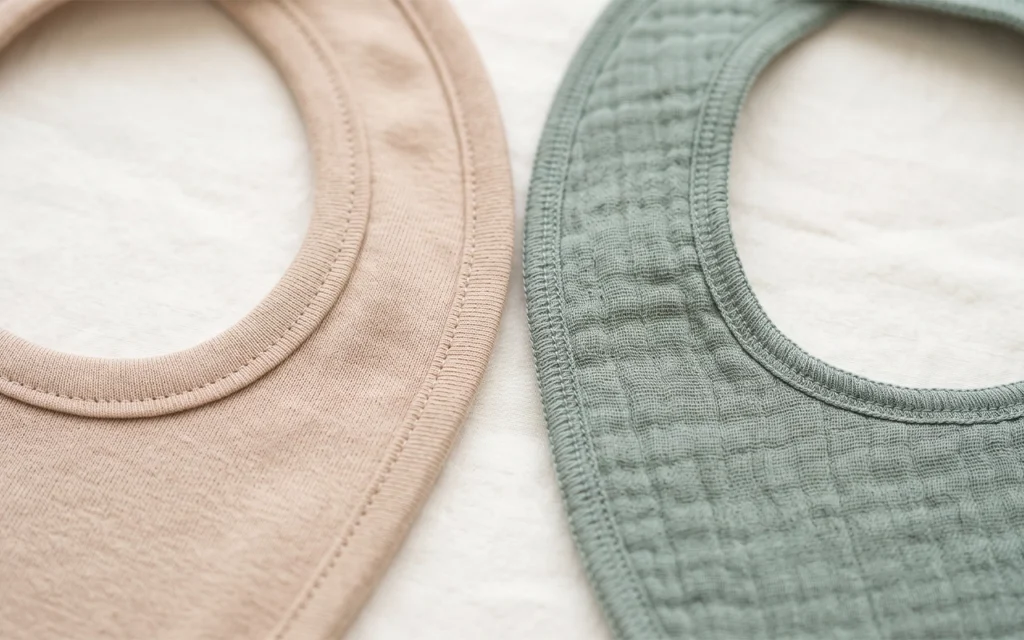
Different fabrics behave differently around curves and closures.
Knitted fabric may offer more flexibility. Muslin can feel lighter and softer. Multi-layer bibs can become thicker around the neckline.
These differences can affect:
- Neck opening shape
- Strap stiffness
- Snap stability
- Edge appearance
- Finished thickness
For example, a pattern that works well with one layer may behave differently with three layers.
Therefore, buyers should review the neckline after all layers are assembled.
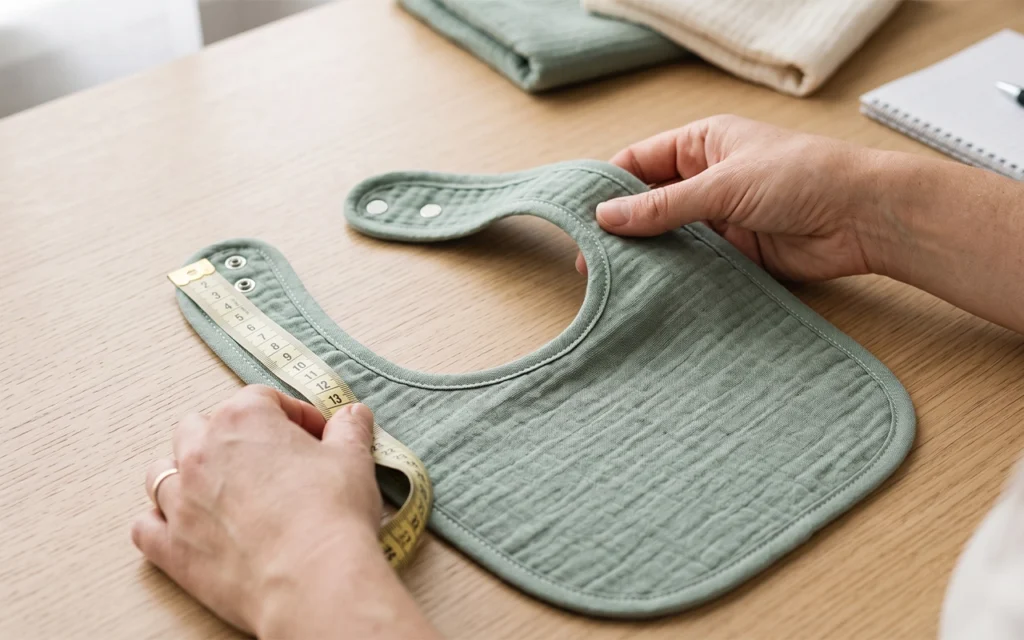
Symmetry Matters During Sample Review
The neckline makes pattern problems easy to notice.
When the bib lies flat, buyers should check whether:
- The neck opening is centered
- The left and right straps match
- The snaps align correctly
- The curve remains smooth
- The edge width stays consistent
- The closure sits naturally
Small differences can make the entire bib look less refined.
Therefore, neckline symmetry should be confirmed before mass production.
Choose the Right Snap Setup
A bib can use different closure options.
Single Snap
A simple design with one fixed setting.
Two Snaps
A common option that provides two adjustment positions.
Multiple Snaps
A wider adjustment range when the strap length and pattern allow it.
More snaps do not always create a better product.
Instead, the closure should stay simple, clear, and well balanced.
The best setup depends on the bib size, strap width, and intended adjustment range.
Confirm the Neckline Early
The neckline should appear clearly in the development specification.
Buyers should confirm:
- Neck opening size
- Strap width
- Strap length
- Snap quantity
- Snap spacing
- Snap color
- Edge finish
- Fabric structure
- Bib shape
Inorange Baby can support custom bib development with different neck openings, strap widths, snap positions, outer shapes, fabrics, absorbent layers, embroidery, edge finishes, labels, and packaging.
Early confirmation can reduce later adjustments. It also helps keep the final bib balanced and consistent.
Conclusion
A baby bib neckline connects several important details.
It links the bib body, straps, snaps, fabric, and edge finish.
Therefore, buyers should review:
Neck Opening + Strap Width + Snap Position + Fabric + Edge Finish + Bib Shape
as one complete system.
When these details work together, the finished bib looks cleaner, more symmetrical, and easier to control during production.