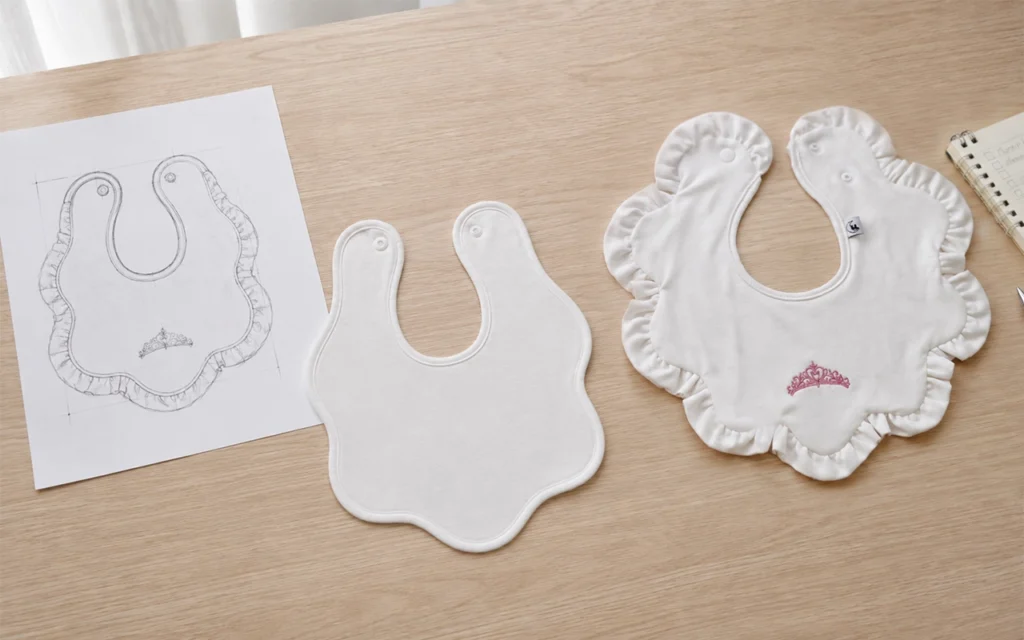
Why Product Samples Are Important Before Mass Production
Product samples are a critical step in custom baby textile development.
For many brands, moving directly from an idea to mass production can create unnecessary risks.
Even when a product looks perfect in a design image or reference picture, the actual product may have differences in:
- Fabric performance
- Product size
- Color appearance
- Product structure
- Manufacturing details
Sample development allows brands and manufacturers to evaluate the product before large-scale production begins.
Through sample approval, brands can:
- Confirm product design
- Evaluate materials
- Adjust product details
- Reduce production risks
Therefore, samples are not an additional step that slows down production.
They are an important process that helps create a more reliable final product.
For international baby brands, sample confirmation provides confidence before investing in bulk manufacturing.
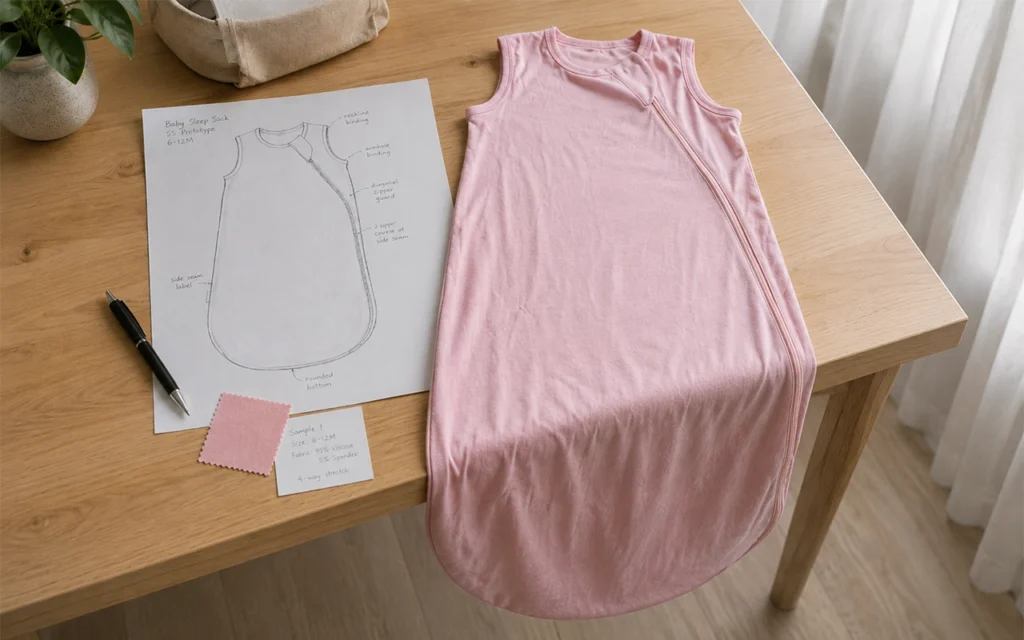
Samples Help Brands Confirm Product Design
A design idea needs to be transformed into a physical product before it can be fully evaluated.
Images, sketches, and descriptions cannot always show:
- Actual product structure
- Real size proportions
- Functional performance
- User experience
Through samples, brands can review:
- Product appearance
- Product dimensions
- Design details
- Practical performance
For example:
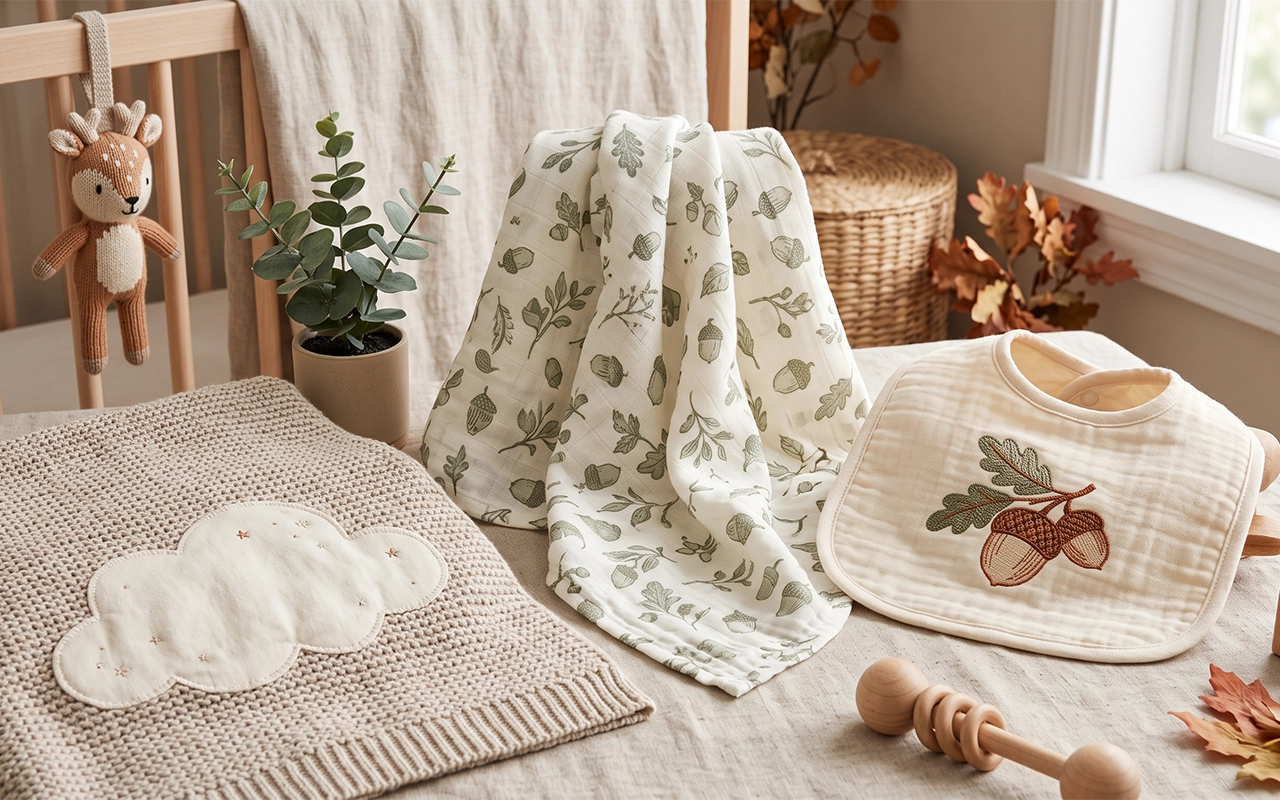
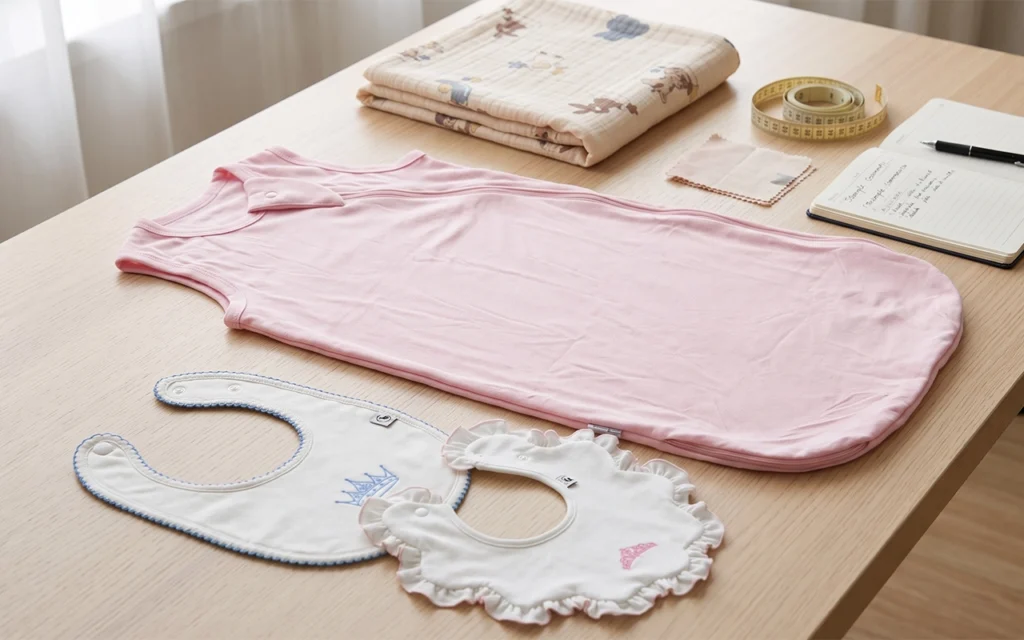
Baby Bib Samples
Brands can check:
- Bib shape
- Wearing comfort
- Fabric appearance
- Button position
- Embroidery placement
Bedding Samples
Brands can confirm:
- Product dimensions
- Pattern appearance
- Fabric effect
- Overall product style
Samples help brands turn product ideas into real products and identify possible improvements before production.
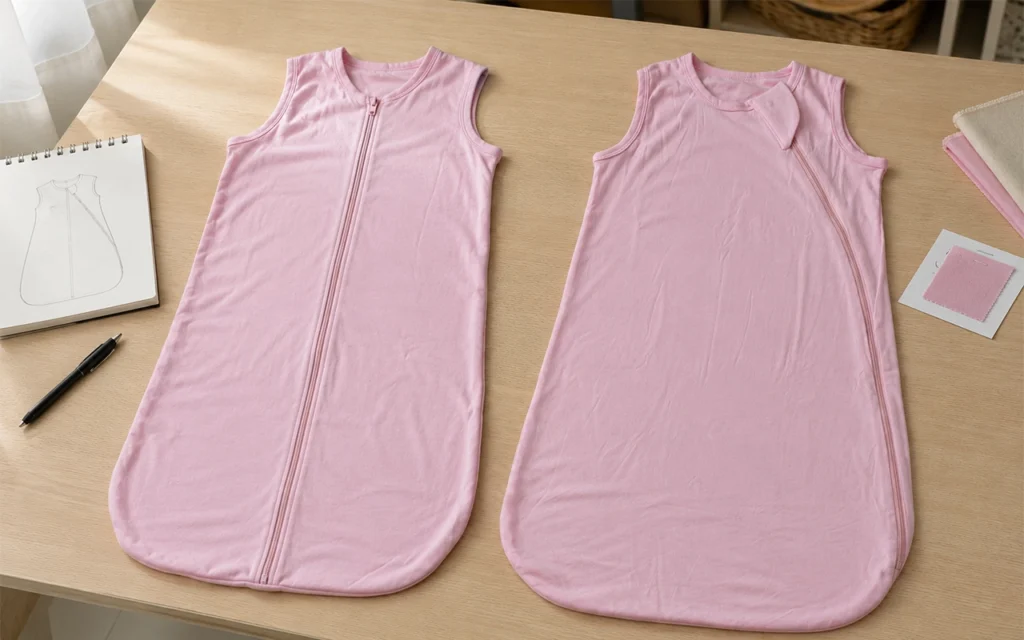
Samples Allow Brands to Evaluate Materials
Material selection plays an important role in baby textile products.
Even when a brand has already selected a fabric, a physical sample is still necessary to confirm the actual result.
Samples allow brands to evaluate:
- Hand feel
- Fabric thickness
- Softness
- Appearance
- Product performance
For example:
Baby Bibs
Brands can evaluate:
- Fabric comfort
- Absorbency
- Wearing experience
Sleep Sacks
Brands can check:
- Fabric softness
- Comfort during use
- Overall wearing experience
Bedding Products
Brands can review:
- Fabric appearance
- Surface texture
- Overall quality feeling
A physical sample provides more accurate information than images or descriptions alone.
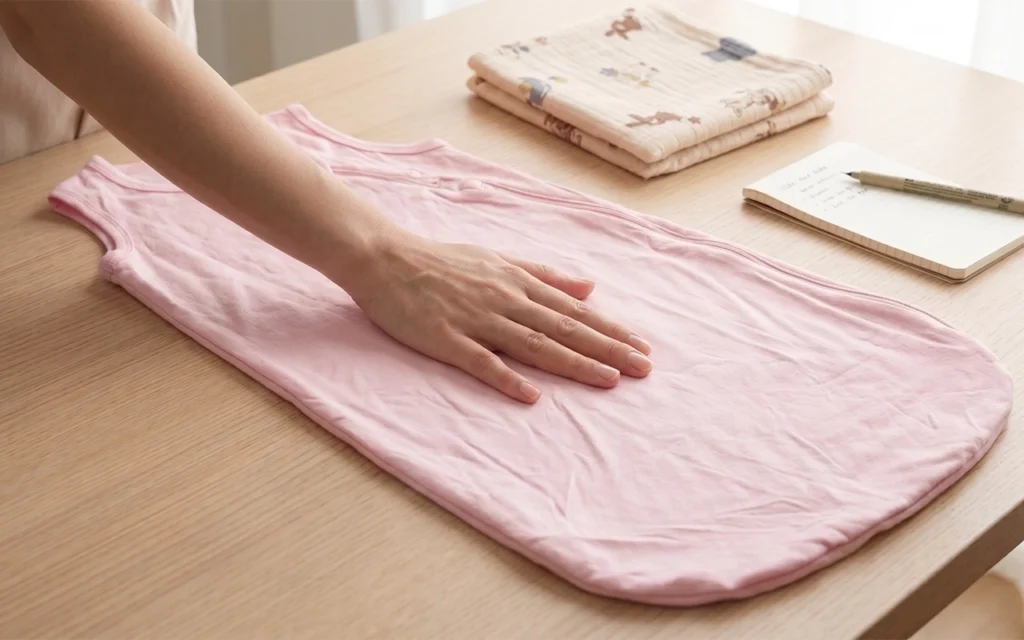
Samples Help Identify Problems Before Production
Finding problems before mass production is much easier than correcting them after production begins.
During the sample stage, brands and manufacturers can identify:
- Size issues
- Design problems
- Material differences
- Production difficulties
For example:
A brand may discover that:
- The product size needs adjustment
- The fabric does not match expectations
- A design detail needs improvement
Solving these problems during the sample stage helps reduce:
- Material waste
- Production delays
- Additional costs
Therefore, sample approval is an effective way to reduce manufacturing risks.
Understanding the Sample Approval Process
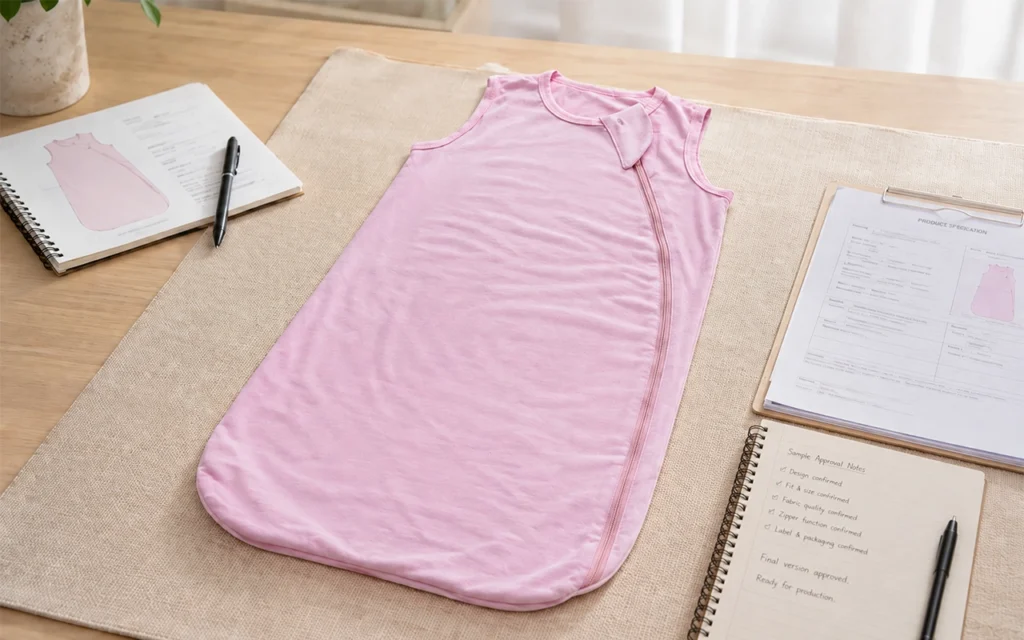
A complete sample development process usually includes several stages.
Step 1: Product Discussion
The brand provides:
- Product ideas
- Reference images
- Product requirements
- Target market information
The manufacturer reviews the requirements and provides development suggestions.
Step 2: Material Selection
The brand and manufacturer confirm:
- Fabric options
- Filling materials
- Accessories
- Product details
Suitable materials are selected based on:
- Product function
- Market needs
- Brand positioning
Step 3: Sample Development
The manufacturer creates the first product sample based on the confirmed requirements.
This sample allows both sides to evaluate the actual product.
Step 4: Sample Review
The brand reviews:
- Product appearance
- Size
- Materials
- Workmanship
- Functional details
Feedback is collected and discussed with the manufacturer.
Step 5: Adjustment and Final Approval
Based on feedback, the product sample may be adjusted.
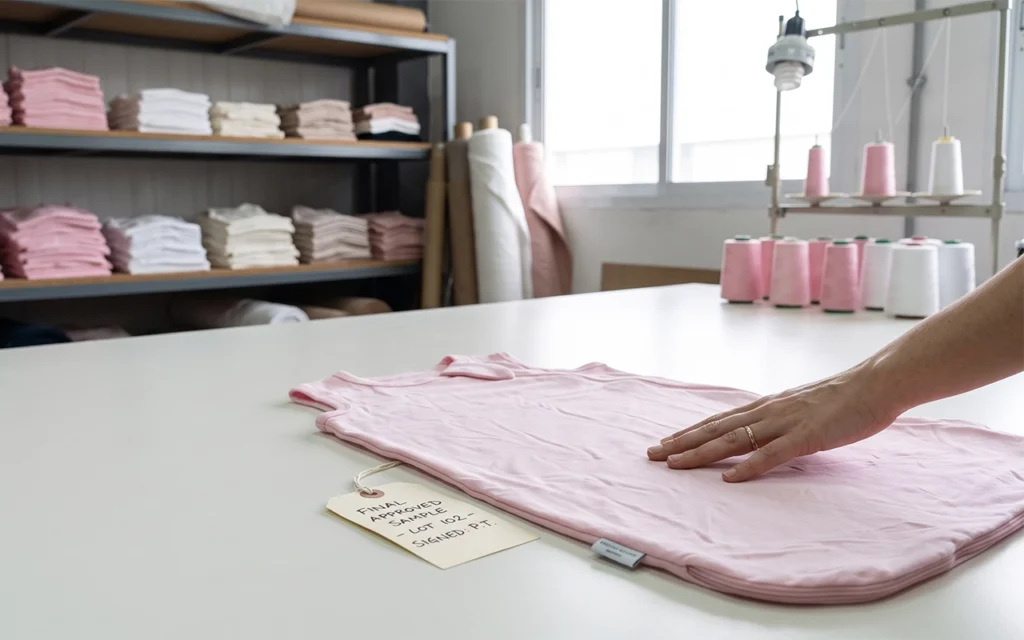
After all details are confirmed, the final approved sample becomes the reference standard for mass production.
Factors That Influence MOQ Requirements
MOQ is affected by many factors during product development.
Understanding these factors helps brands plan better.
Material Selection
Different materials may require different production arrangements.
For example, customized fabrics or special colors may require additional preparation.
Material choices can influence:
- Production quantity
- Production cost
- Development time
Product Complexity
Products with more details may require additional processes.
Examples include:
- Embroidery
- Printing
- Special structures
- Customized accessories
More complex designs may require different MOQ considerations.
Product Category
Different product categories have different manufacturing requirements.
For example:
Baby bibs may have different production needs compared with:
- Sleep sacks
- Bedding sets
- Mattresses
- Nursery accessories
Therefore, brands should communicate product details clearly with manufacturers before confirming orders.
Samples Improve Communication Between Brands and Manufacturers
Clear communication is essential during custom product development.
However, written descriptions or images may not always fully express product expectations.
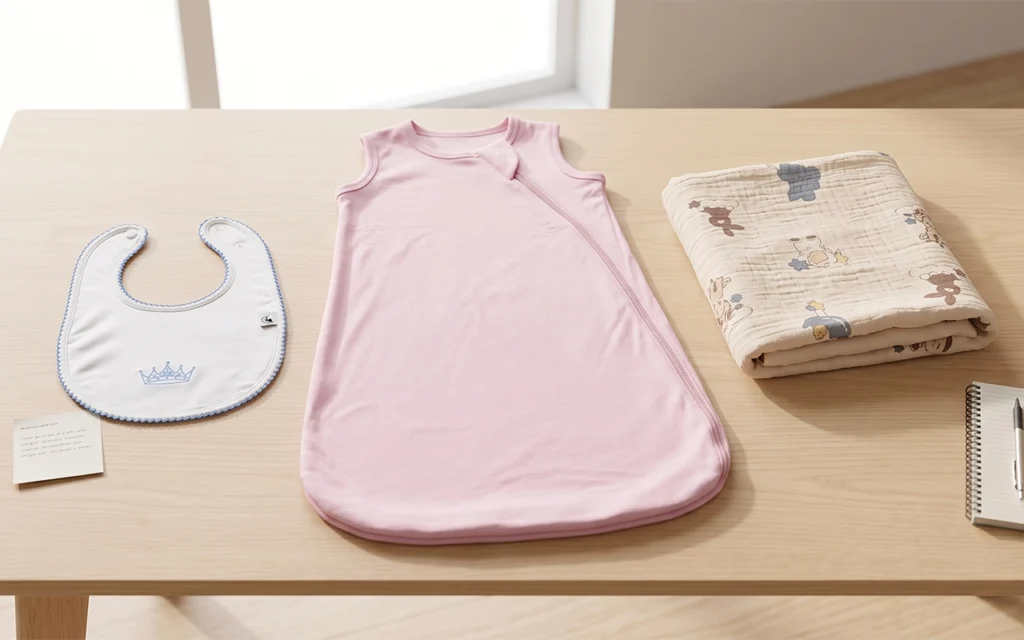
Samples provide a physical reference for both brands and manufacturers.
Both sides can discuss:
- What needs improvement
- Which details should be adjusted
- Whether the product meets expectations
This helps reduce misunderstandings and creates a more efficient development process.
Furthermore, sample communication allows manufacturers to better understand brand requirements.
It also helps brands make decisions with more confidence before production.
Different Products Require Different Sample Checks
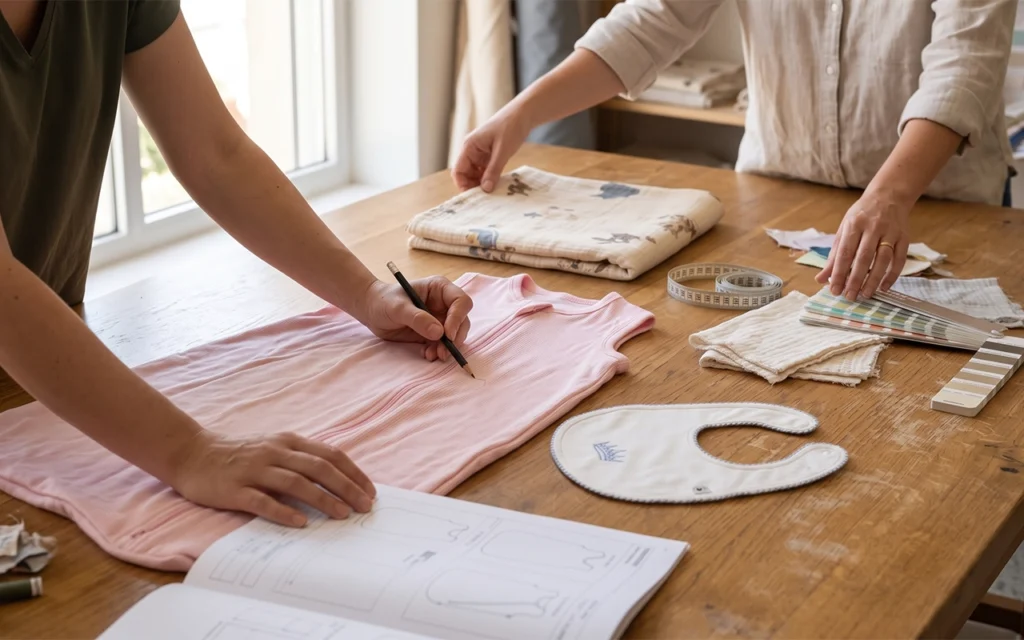
Different baby textile products require different evaluation points during the sample stage.
Baby Bibs
Important checks include:
- Product shape
- Fabric selection
- Size
- Embroidery details
- Button position
- Edge finishing
Sleep Sacks
Important checks include:
- Fabric comfort
- Product size
- Wearing experience
- Product structure
Bedding Products
Important checks include:
- Product dimensions
- Pattern placement
- Sewing quality
- Overall appearance
Baby Mattresses
Important checks include:
- Cover material
- Product thickness
- Internal structure
- Support performance
Each product category has different requirements, so sample evaluation should focus on the key features that influence final performance.
How Manufacturers Support Sample Development
An experienced manufacturer does more than simply produce samples.
A professional supplier can support brands throughout the development process.
Support may include:
- Product recommendations
- Material suggestions
- Manufacturing advice
- Sample adjustments
During development, manufacturers can help brands:
- Identify potential issues
- Improve product designs
- Increase production efficiency
This cooperation allows brands to create products that better match market expectations.
Conclusion: Samples Reduce Risk Before Mass Production
Product samples are an essential part of custom baby textile development.
They allow brands to confirm:
- Product design
- Material selection
- Product dimensions
- Manufacturing feasibility
By reviewing and approving samples before production, brands can reduce risks and improve final product quality.
Choosing a manufacturer with strong sample development capabilities helps brands move from product ideas to successful production more efficiently.
With more than 40 years of experience in baby textile manufacturing, Inorange Baby supports global brands with OEM and ODM product development solutions.
From initial concepts and sample creation to final mass production, we help brands develop customized baby textile products that meet international market needs.