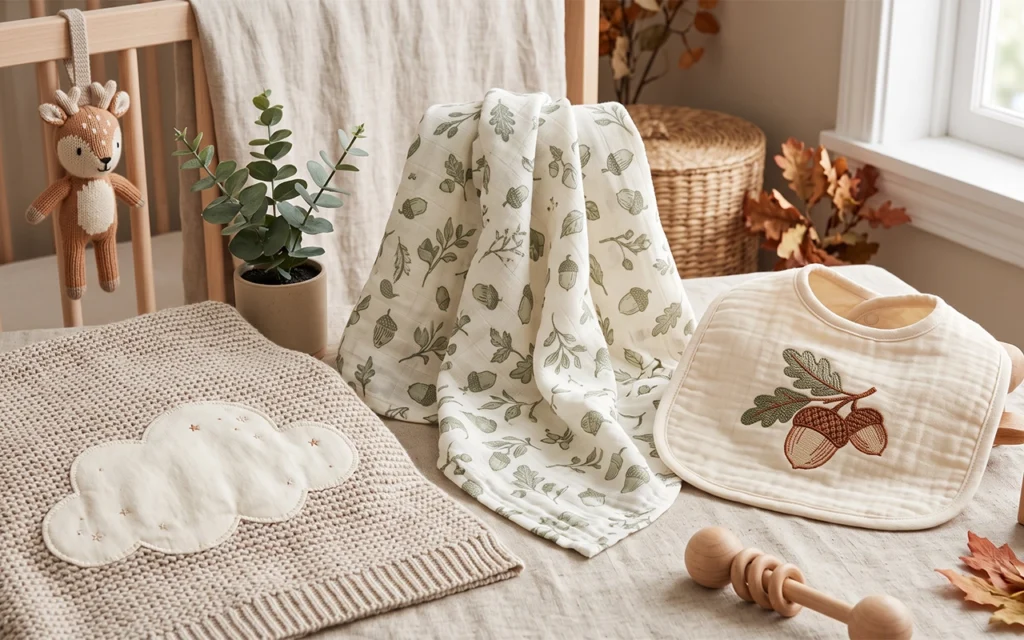
The same design can look completely different when the production method changes.
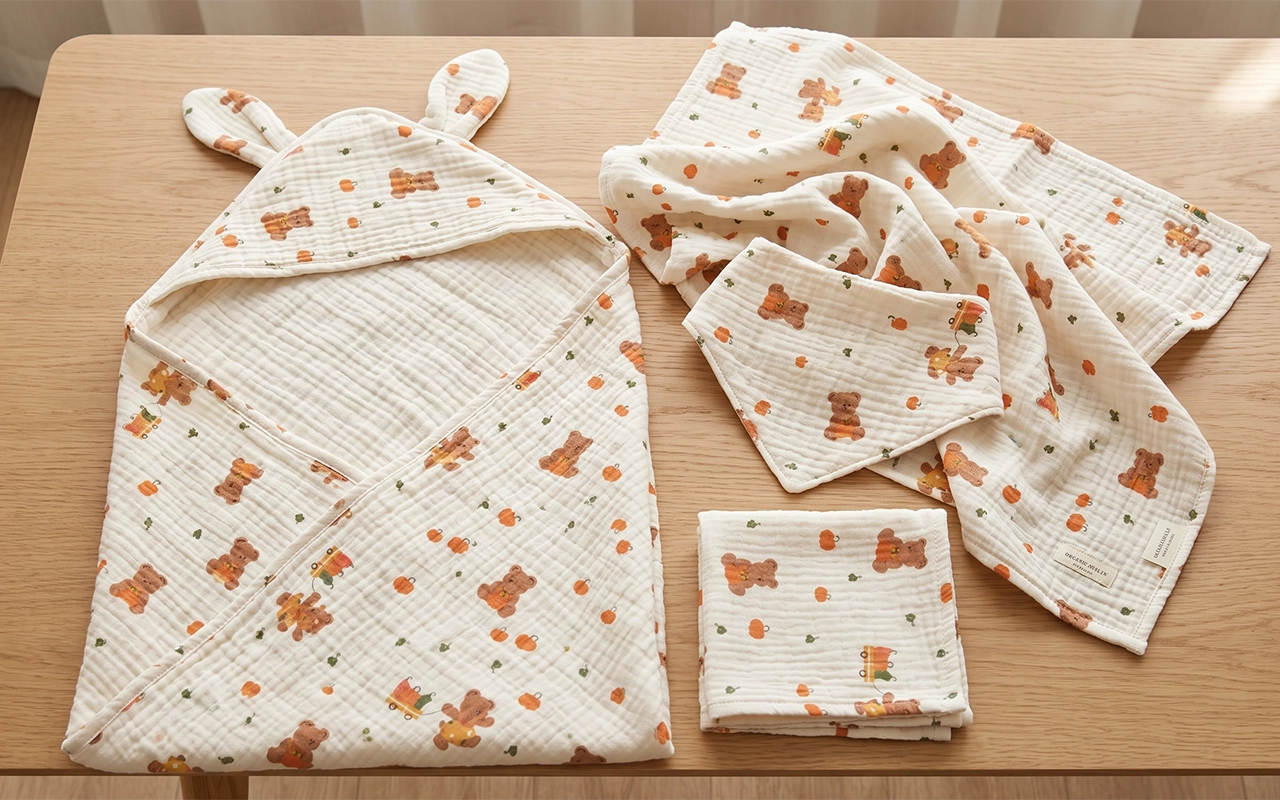
A small bear motif might become an all-over print on a muslin swaddle. On a baby bib, the same idea could appear as embroidery. On a knitted blanket, it could become a fabric appliqué with stitched edges.
So choosing the artwork is only the first step.
Brands also need to decide how that design should appear on the final product.
Printing, embroidery, and appliqué each suit different fabrics, product sizes, and visual directions. Using the right technique can also help one design theme extend across several products without making every SKU look identical.
Printing Works Well for Repeated and Larger Patterns
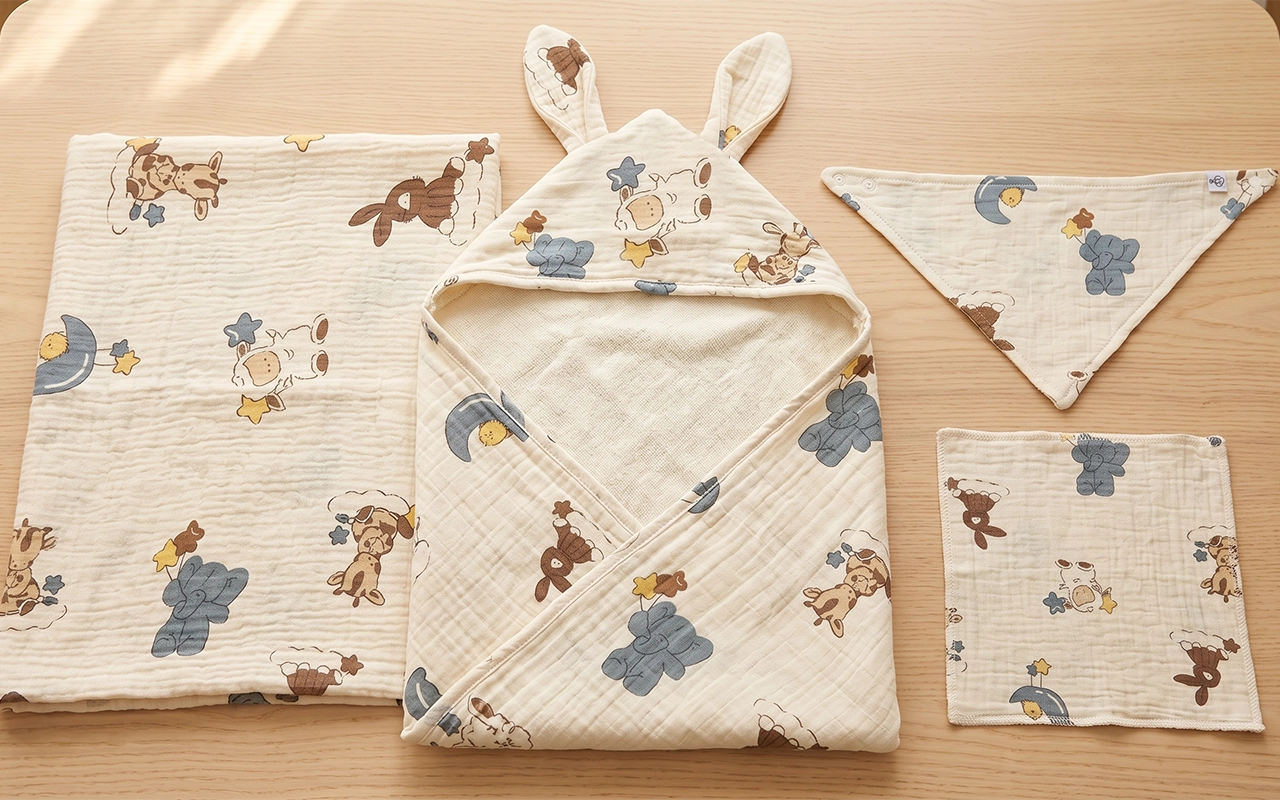
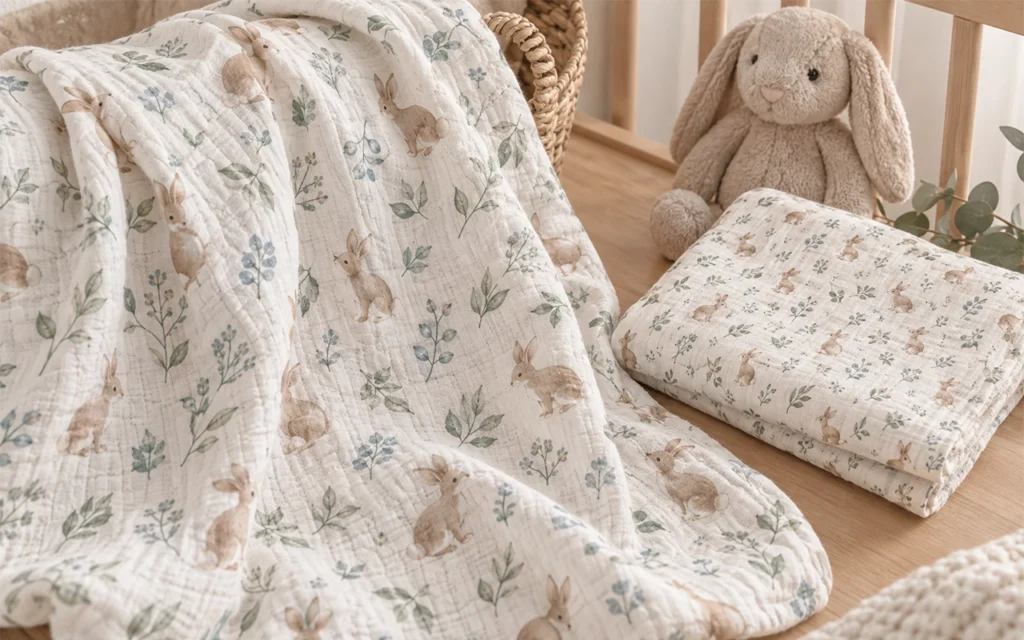
Printing is often a practical choice when a design needs to cover a larger surface.
It can work well for products such as:
• Muslin swaddles
• Baby blankets
• Bedding
• Towels
• Other larger textile products
Animal motifs, botanical patterns, stars, moons, clouds, geometric designs, and original brand artwork can all be developed into repeated prints.
However, print development involves more than placing artwork on fabric.
Brands should also consider:
• Pattern scale
• Repeat size
• Motif spacing
• Color combinations
• Pattern direction
• Cutting position
For example, a motif that works well on a 120 × 120 cm swaddle may look too large on a small bib. If the repeat is not adjusted, important parts of the design may also be cut off.
Therefore, one collection can share the same design language while using different print scales across products.
Embroidery Creates a Clear Decorative Focus
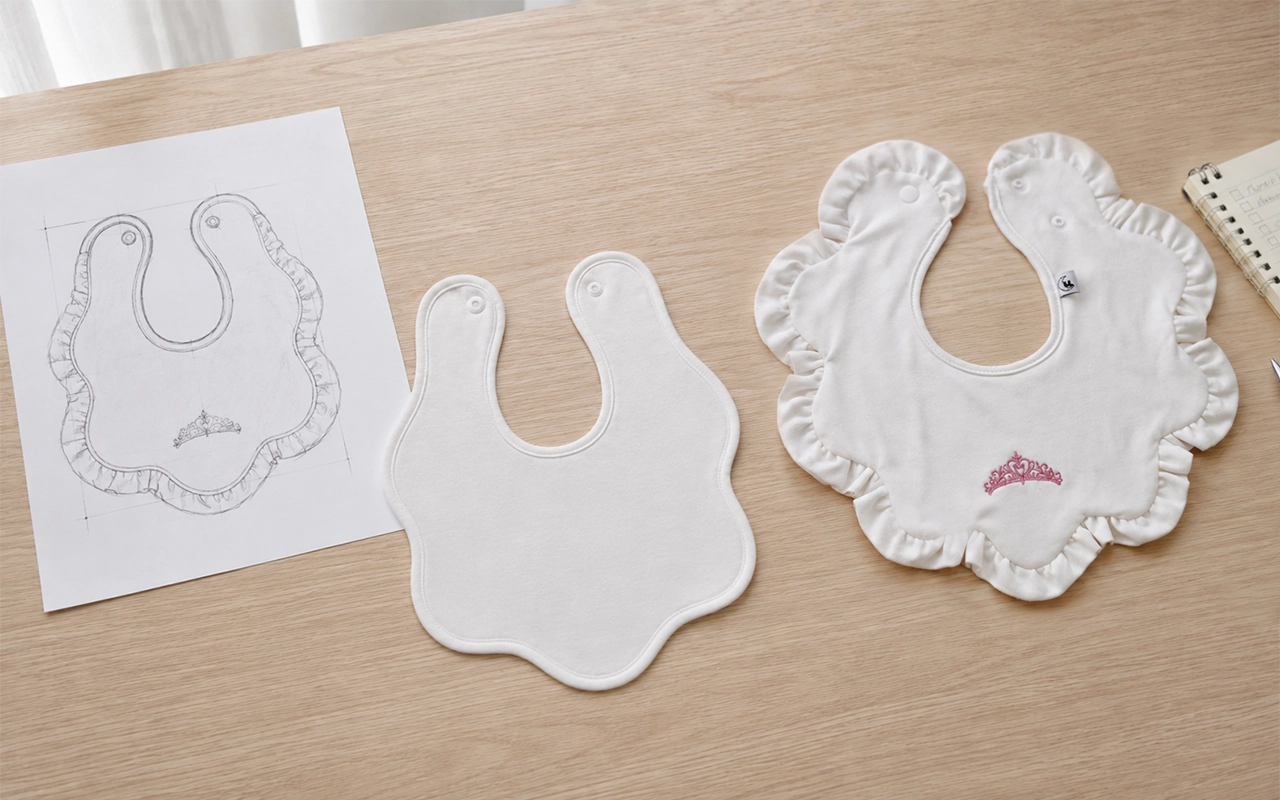
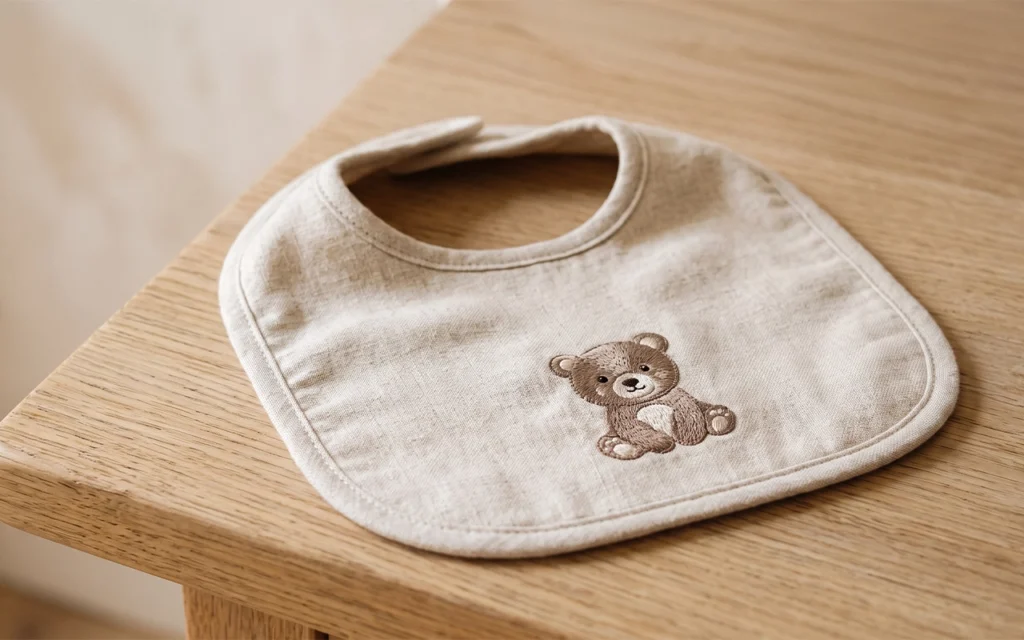
Embroidery works especially well when a product needs one strong visual detail rather than an all-over pattern.
It can be used on:
• Baby bibs
• Sleep sacks
• Blankets
• Bedding details
• Small textile accessories
A solid-color bib, for example, may only need one crown, cloud, animal, or other custom motif to create a clear design identity.
During embroidery development, several details matter:
• Embroidery size
• Placement
• Thread color
• Stitch density
• Direction
• Fabric behavior after stitching
A highly detailed digital artwork may not always translate well into a very small embroidery.
Likewise, dense embroidery on a lightweight fabric can change the way the fabric sits or drapes.
For this reason, the final size and stitch structure should be checked on a physical sample rather than judged only from a digital file.
Appliqué Adds Fabric Texture and Dimension
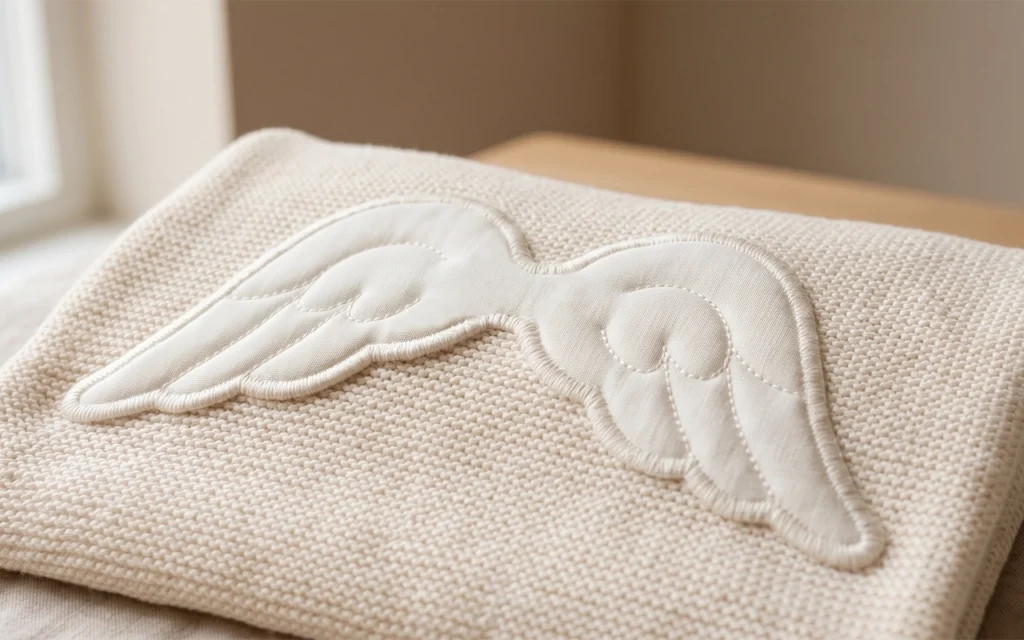
Appliqué creates a different effect because it adds another piece of fabric to the product surface.
The decorative piece can be cut into shapes such as:
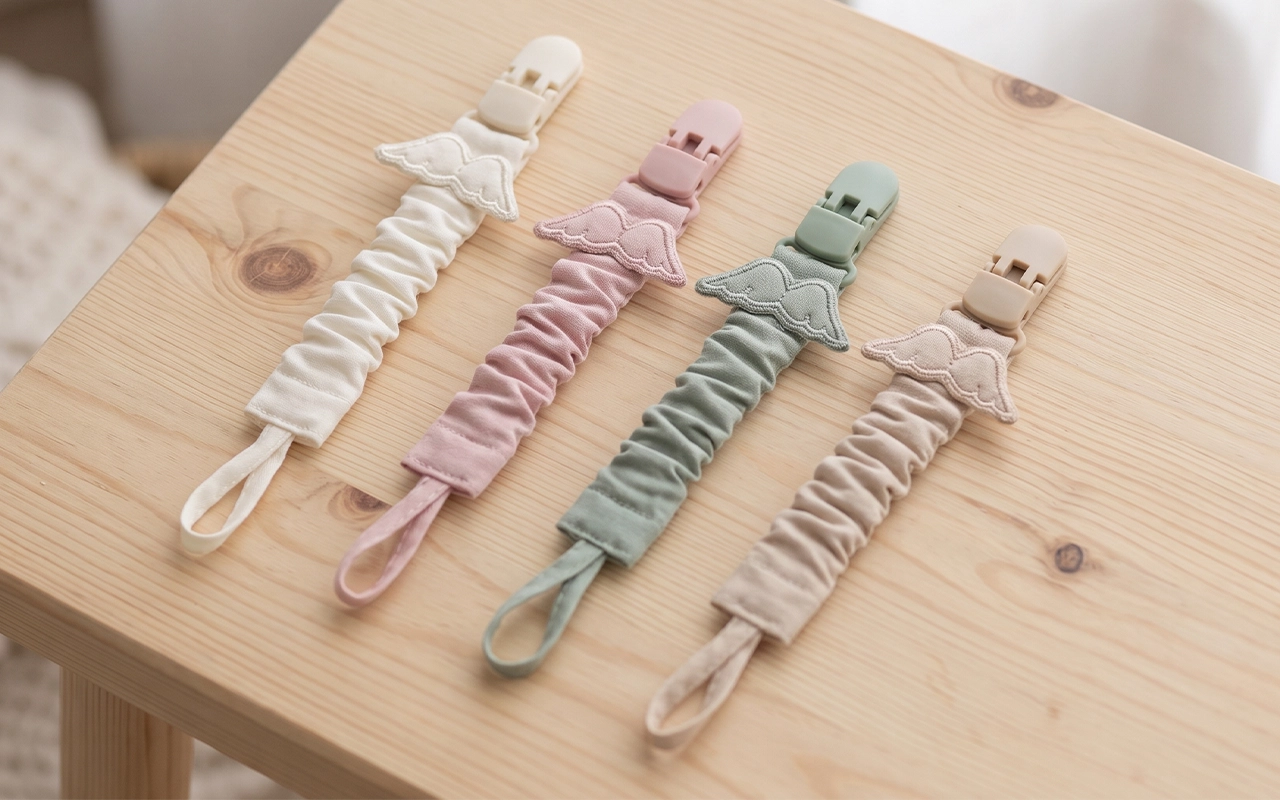
• Angel wings
• Animals
• Clouds
• Leaves
• Stars
• Other custom decorative elements
The piece can then be secured with stitching or embroidered edges.
This method can work particularly well on knitted blankets, bibs, and other products where the decoration needs more visible structure.
Brands can customize:
• Decorative shape
• Fabric type
• Size
• Placement
• Edge stitching
• Thread color
• Color combinations
Even when the basic shape stays the same, changing the appliqué fabric or border treatment can create a very different result.
Since appliqué adds both material and sewing steps, sample development should also check placement, edge quality, flatness, and how the decoration works with the base fabric.
One Design Theme Can Use Different Techniques
A coordinated product collection does not need to repeat the exact same decoration method.
In fact, using different techniques can make the collection feel more developed.
For example, one cloud theme could become:
Muslin Swaddle
→ All-over cloud print
Baby Bib
→ Small cloud embroidery
Knitted Blanket
→ Cloud appliqué
Sleep Sack
→ Minimal embroidered cloud detail
The products still belong to the same design family, but each one uses a method that fits its fabric and structure.
Brands can maintain consistency through:
• Core colors
• Motif style
• Design language
• Labels
• Packaging
• Product naming
The technique itself does not need to stay identical.
Match the Decoration Method to the Fabric and Product
The best decoration method depends on more than visual preference.
Before choosing a technique, buyers can consider:
• What fabric will be used?
• How large is the product?
• Is the design repeated or localized?
• How detailed is the artwork?
• Should the decoration look flat or more dimensional?
• What is the target product positioning?
• Will the same design extend across other products?
For example, a large muslin swaddle may suit an all-over print. A solid knitted bib may work better with localized embroidery. A knitted blanket may support a larger appliqué detail.
A more useful development sequence is:
Product → Fabric → Design → Decoration Method
rather than choosing one technique first and applying it to every SKU.
Customization Can Combine More Than One Technique
One product does not always need to use only one decoration method.
A printed fabric can also include small embroidery details. An appliqué can use embroidered edges. A solid product can combine embroidery with contrasting edge finishing.
During OEM and ODM development, brands may further customize:
• Artwork
• Pattern scale
• Embroidery size
• Thread colors
• Appliqué fabrics
• Decorative placement
• Product colors
• Labels
• Packaging
Inorange Baby can support decoration development based on different products, fabrics, and brand directions. Existing samples can provide a reference, while buyers can also provide their own artwork, sketches, or design ideas for further sample development.
Conclusion
Printing, embroidery, and appliqué are not simply three versions of the same decoration.
Each one creates a different visual effect and works better with different product structures.
Printing suits larger or repeated patterns. Embroidery creates a focused decorative detail. Appliqué adds fabric texture and a more dimensional appearance.
For brands, the better approach is to define the overall design language first and then choose the most suitable method for each product.
This keeps the collection coordinated without making every SKU look like the same pattern copied onto a different item.