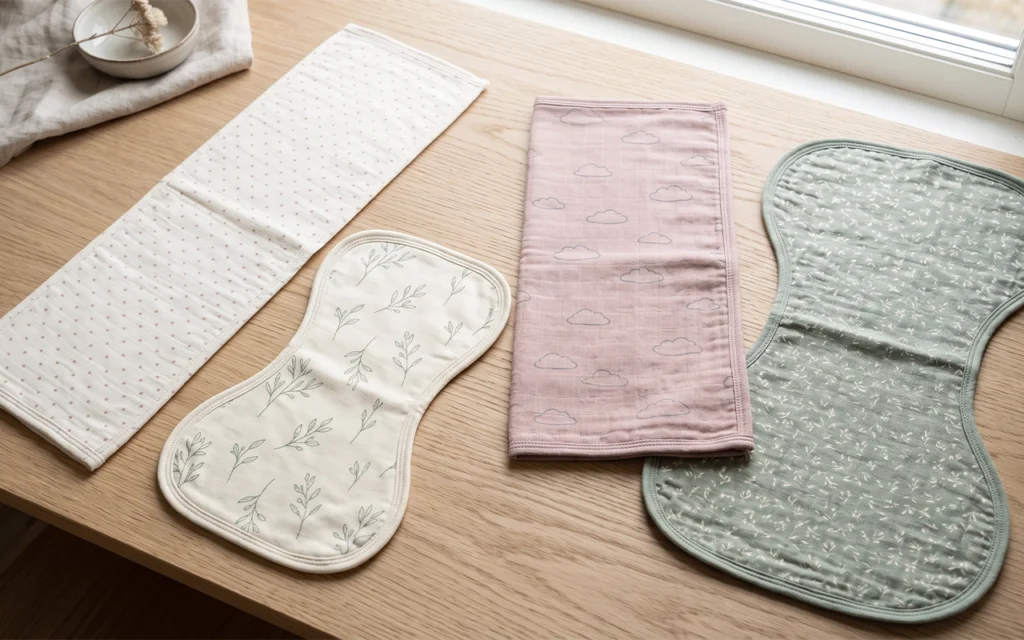
A burp cloth may only differ by a few centimeters on paper, but those small changes can noticeably affect coverage, folding, packaging, and the overall product feel.
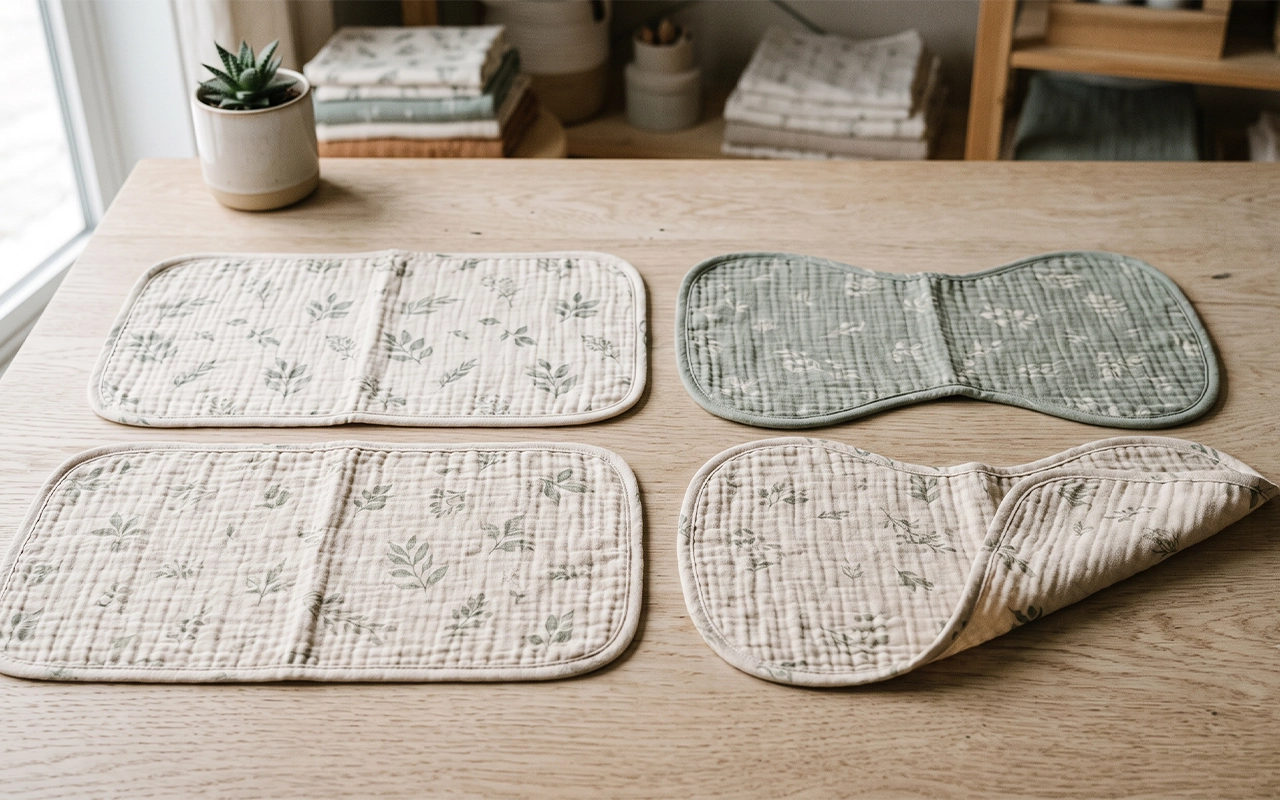
This is why the market includes many different dimensions rather than one universal standard size. Some brands prefer longer rectangular styles, while others choose shorter and wider formats. Contoured products may also use completely different width measurements because their shape narrows through the center.
For buyers, the better question is not:
“What is the standard burp cloth size?”
It is:
“What size best matches the shape, material, and product position we want to develop?”
There Is No Single Standard Burp Cloth Size
Burp cloth dimensions vary widely across brands and product structures.
A longer product can provide more shoulder coverage. A wider product may create more surface area. Meanwhile, a smaller design can feel lighter, fold more compactly, and fit more easily into multi-piece packaging.
Market products can therefore appear in many different dimensions.
When developing a new burp cloth, buyers should look at more than length and width alone.
A useful specification can include:
• Finished length
• Finished width
• Maximum width
• Narrowest width for contoured styles
• Finished weight
• Number of layers
• Fabric construction
This is especially important when comparing rectangular and contoured products, because the same “overall size” can create very different usable areas.
Longer Burp Cloths Provide a Different Coverage Direction
A longer burp cloth can cover more of the shoulder and upper body area.
This may suit brands that want a product with a more generous appearance or a larger textile surface.
Longer dimensions also create more room for:
• Repeated prints
• Larger motifs
• Decorative borders
• Brand labels
• Different folding styles
However, increasing length also changes material consumption and finished weight.
If the product uses several muslin layers, even a modest increase in size can noticeably change the total amount of fabric used.
Therefore, longer is not automatically better. The final dimensions should still fit the desired product weight, packaging format, and target price.
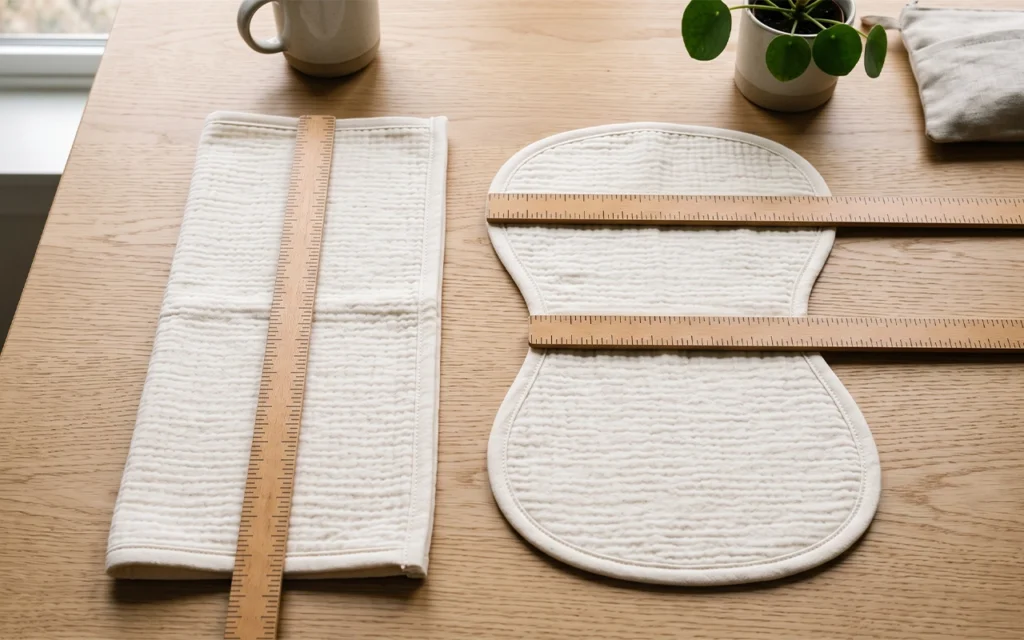
Width Changes Coverage and Product Proportion
Width is just as important as length.
A narrow burp cloth can look long and compact, while a wider style may feel more substantial and provide a larger surface.
For rectangular products, width is relatively straightforward.
For contoured burp cloths, however, buyers should usually consider at least two measurements:
Maximum width
and
Narrowest center width
This helps describe the actual silhouette more accurately.
If only the maximum width is listed, two contoured products can appear similar in a specification sheet while looking very different in real life.
The center curve also affects how the product sits on the shoulder, so shape and width should be developed together.
Size Should Match the Fabric and Layer Structure
A 20 × 10 inch burp cloth made from lightweight muslin will not feel the same as a product of the same dimensions made from heavier knitted fabric or several absorbent layers.
The larger the product becomes, the more material structure influences:
• Finished weight
• Thickness
• Folding volume
• Drying time
• Packaging size
• Cost
This is why size should not be finalized before material selection.
For example, a larger multi-layer muslin burp cloth may still feel relatively soft and flexible, while a smaller product made from heavier materials can feel denser and more structured.
A more complete development decision should consider:
Size + Material + Layers + GSM + Finished Weight
rather than choosing the dimensions alone.
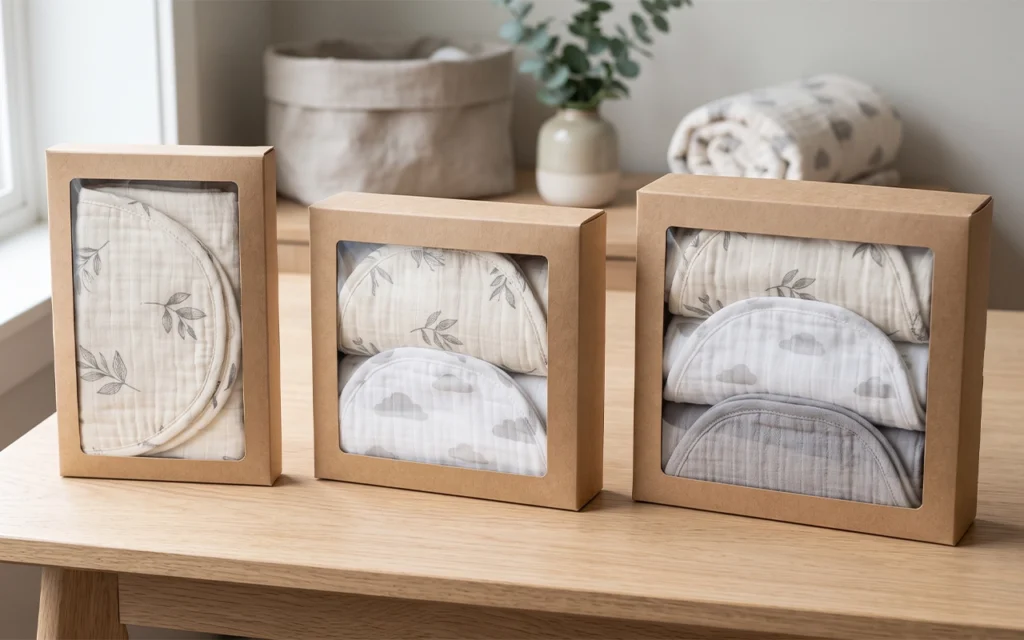
Packaging Can Influence the Final Size Decision
Packaging is often overlooked during early product development.
However, burp cloths are frequently sold in:
• Single packs
• 2-piece packs
• 3-piece packs
• Larger coordinated sets
• Gift boxes
A larger burp cloth may look premium when displayed individually, but several thick products can quickly increase pack volume.
Folded dimensions also affect:
• Polybag size
• Box dimensions
• Shelf presentation
• Shipping volume
• Set arrangement
Therefore, brands planning a multi-piece burp cloth collection should test the finished products in their intended packaging before confirming the final size.
This becomes especially important when layer count and GSM are also relatively high.
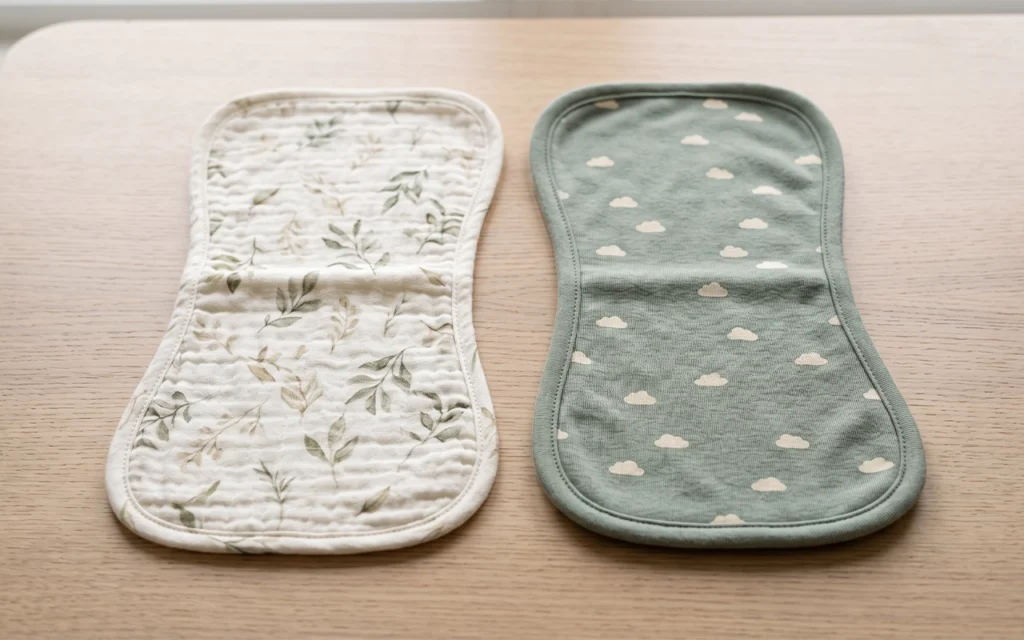
Print and Design Scale Should Follow the Product Size
Changing product size also changes how artwork appears.
A large animal motif may work well on a longer rectangular cloth, while the same pattern could feel oversized on a smaller product.
Likewise, very small repeated prints may look balanced on a compact burp cloth but too dense when applied across a larger surface.
During design development, buyers can review:
• Motif size
• Repeat scale
• Pattern spacing
• Placement
• Edge clearance
• Label position
If several sizes belong to one collection, the artwork may need to be rescaled rather than copied at exactly the same dimensions.
This helps keep the visual balance consistent across different SKUs.
Use Sampling to Compare Different Sizes
When the target size is still uncertain, comparing several samples can be more useful than deciding from numbers alone.
For example, a development round might include:
Compact Version
Smaller dimensions and lower material consumption.
Balanced Everyday Version
A middle size for general use.
Larger Coverage Version
More surface area and a fuller product appearance.
Buyers can then compare:
• Shoulder coverage
• Hand feel
• Finished weight
• Folded size
• Packaging
• Printing area
• Production cost
This creates a clearer basis for choosing the final specification.
Inorange Baby can support custom burp cloth development with different sizes, shapes, materials, layer structures, GSM, prints, edge finishing, labels, and packaging. Existing samples can provide a reference, while dimensions can be adjusted according to the intended product range.
Conclusion
There is no single ideal burp cloth size for every brand.
Length affects coverage and print area. Width changes the overall proportion. Shape changes how those dimensions work together, while material and layer structure determine how heavy or bulky the finished product becomes.
For buyers, the most useful approach is to evaluate:
Size + Shape + Material + Layers + GSM + Packaging
as one complete product specification.
This makes it easier to choose dimensions that fit both the intended user experience and the commercial position of the final burp cloth.