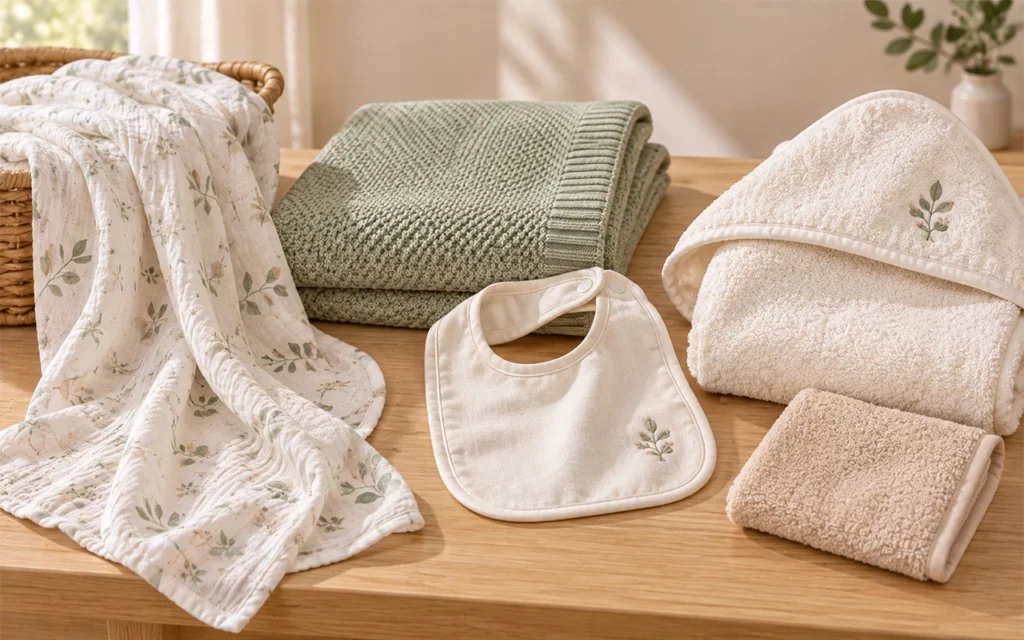
Fabric selection can directly affect the feel, appearance, structure, and positioning of a baby textile product.
However, no single fabric works equally well for every category. A material chosen for a swaddle may not suit a bib. Likewise, a fabric used for a knitted blanket may serve a very different purpose from one used for a washcloth.
Therefore, brands should begin with the product function, intended use, and target positioningbefore choosing a fabric.
Muslin, knitted cotton, and terry cloth are all common options in baby textile development. Each material can support different products and different design directions.
Muslin: A Flexible Choice for Lightweight Baby Textiles
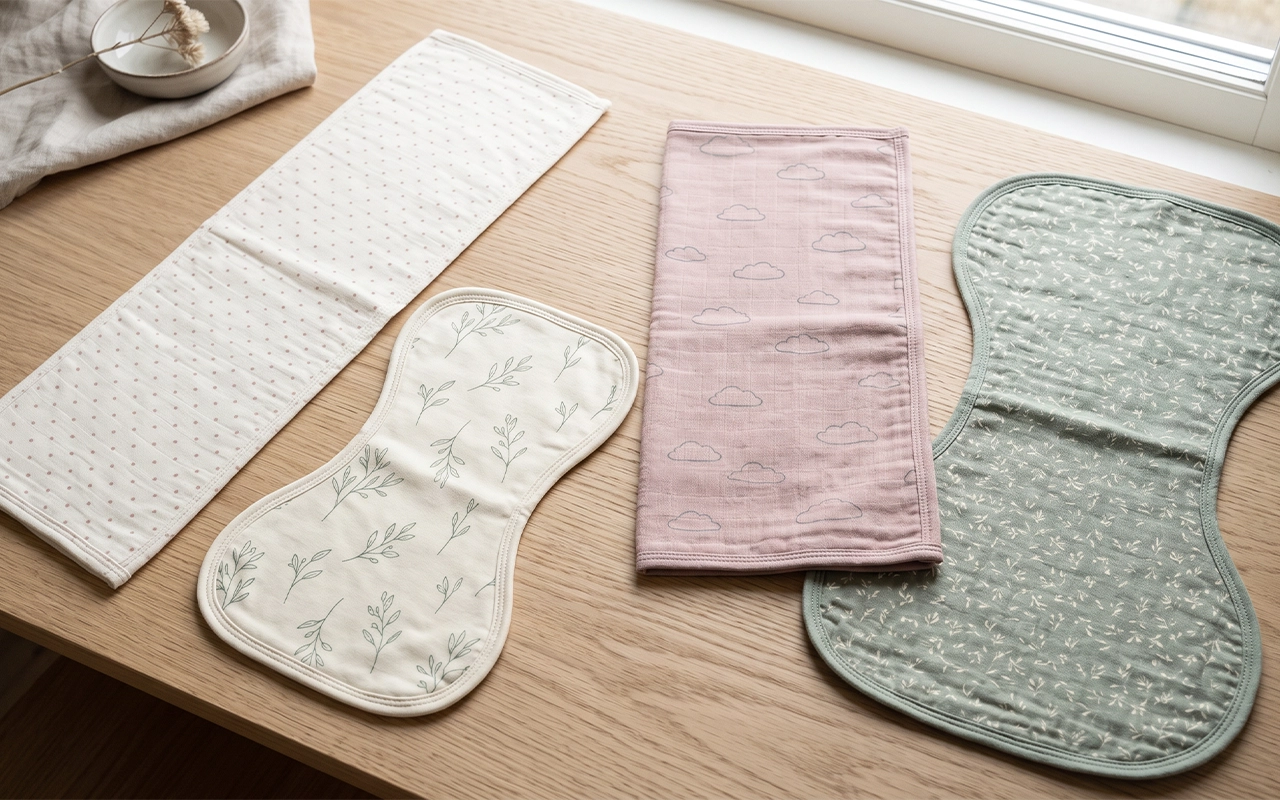
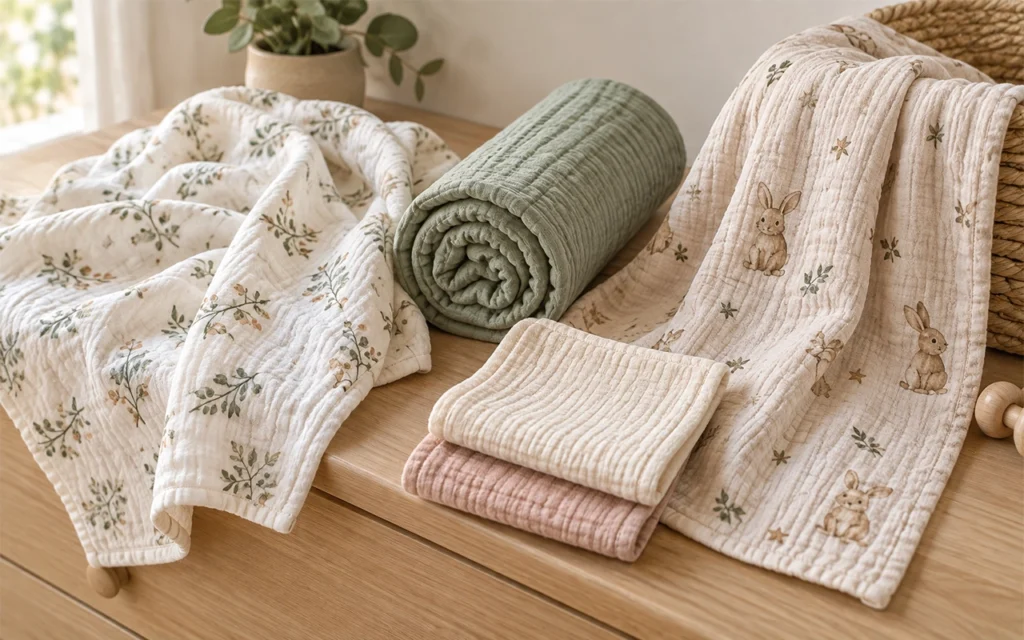
Muslin is widely used for lightweight baby textile products.
Its recognizable gauze texture creates a soft and relaxed appearance. Depending on the project, brands can also adjust the number of layers, size, color, print, and finishing details.
Common product directions may include:
• Swaddles
• Lightweight baby blankets
• Washcloths
• Baby towels
• Bedding textiles
Muslin also provides plenty of room for visual customization.
For example, brands can develop animal prints, botanical patterns, stars, moons, clouds, geometric designs, or original artwork. Solid-color muslin can also work well for more minimal collections.
Still, brands should not apply the same fabric construction to every SKU. A swaddle, blanket, and washcloth may all use muslin, but their dimensions, layers, finishing, and product requirements can differ.
As a result, material selection should always remain connected to the final product structure.
Knitted Cotton: More Structure and Textile Detail
Knitted cotton creates a different look and feel from muslin.
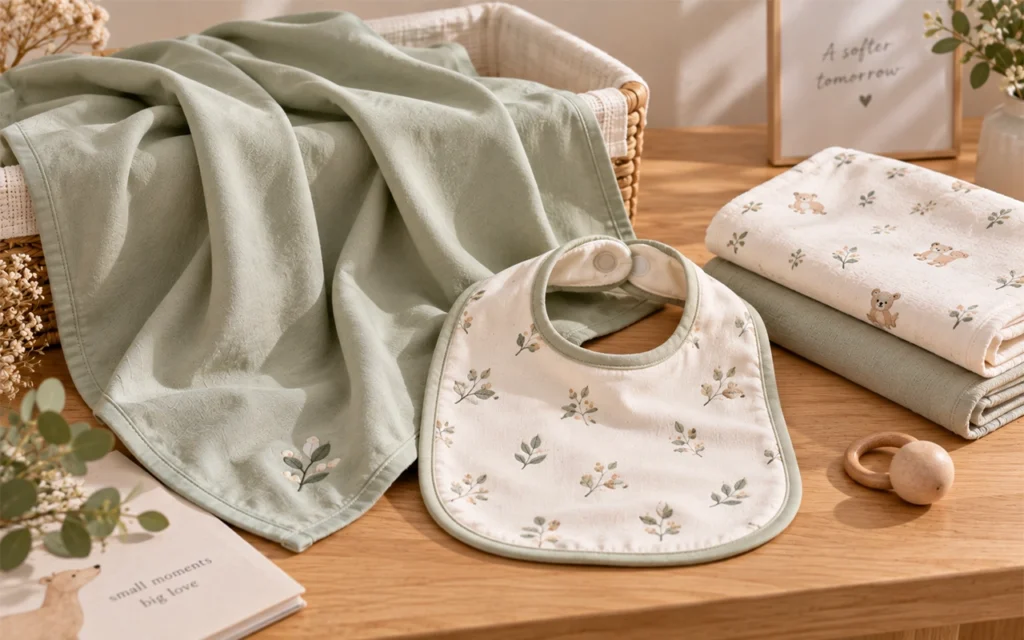
Its knitted construction can give products a more defined surface and stronger textile character. Therefore, it can work well when brands want the product itself to show more visible texture or structure.
Possible applications include:
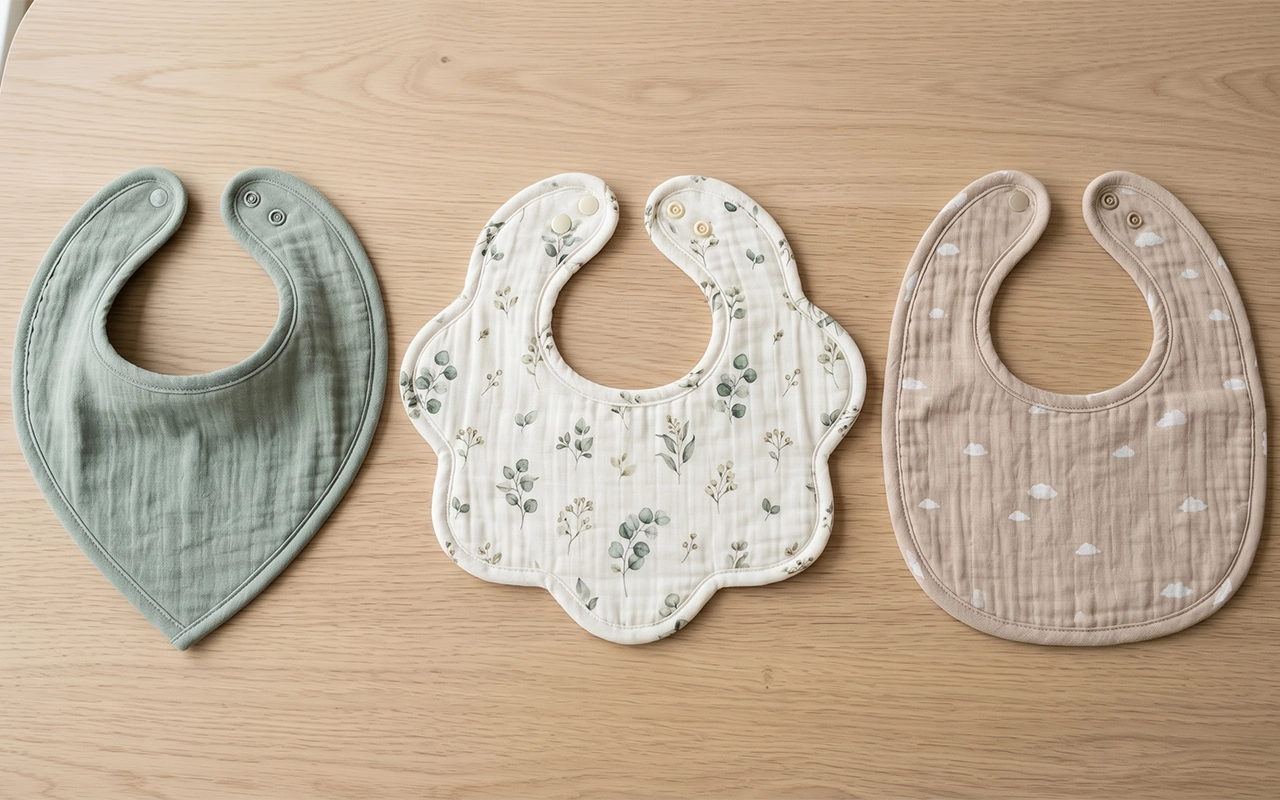
• Baby bibs
• Baby blankets
• Sleep sacks
• Decorative textile products
For baby bibs, knitted cotton can be used as an outer fabric while other layers provide additional product functions.
For blankets, brands can combine the knitted surface with embroidery, appliqué, decorative edges, or custom labels.
Customization may include:
• Knitted textures
• Custom colors
• Embroidery
• Appliqué details
• Decorative finishing
• Brand labels
Therefore, knitted cotton can be useful for brands that want a more structured appearance while keeping room for additional decorative development.
Terry Cloth: Useful for Absorbent Product Structures
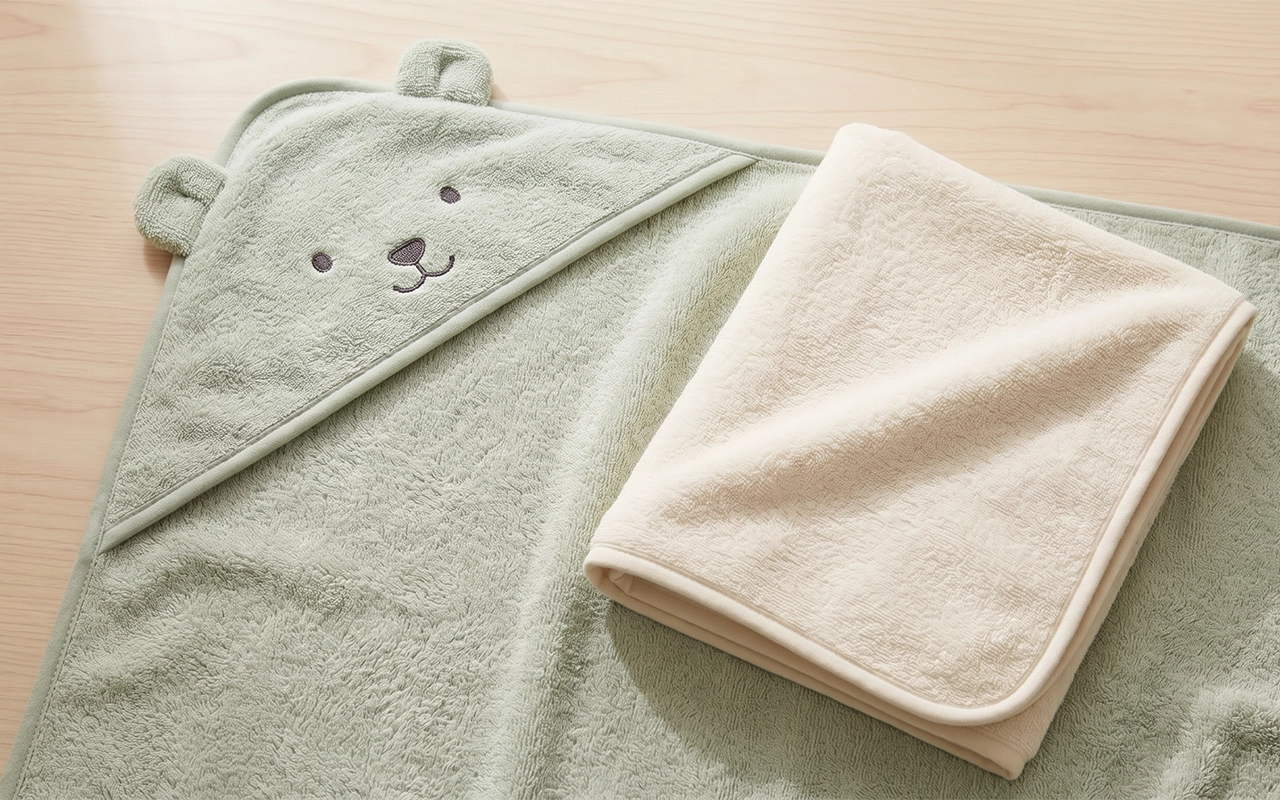
Terry cloth has a different surface structure from both muslin and knitted cotton.
Because of this, it is often selected for baby textile products where absorbency is an important consideration.
Typical product directions include:
• Baby bibs
• Washcloths
• Towels
• Bath textiles
However, a product does not need to be made entirely from terry cloth.
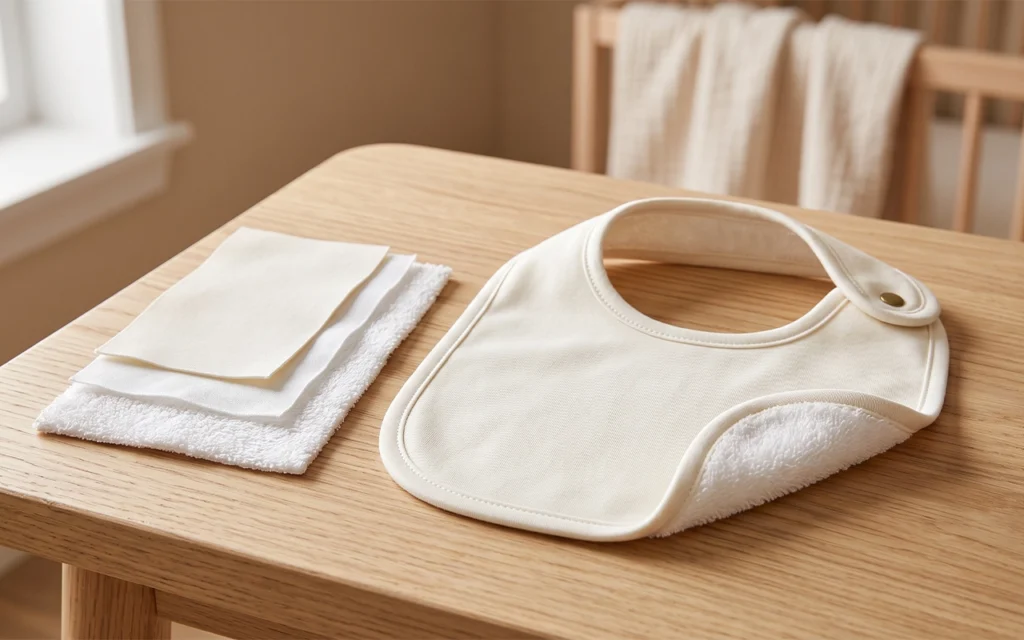
For example, a baby bib may combine a knitted outer fabric, an absorbent middle layer, and a terry cloth backing. This allows the outer surface and functional layers to serve different purposes within one product.
Similarly, washcloth and towel projects can vary in size, thickness, edge finishing, color, and surface design.
Therefore, terry cloth is better viewed as a flexible material option that can be used alone or combined with other fabrics according to the product structure.
One Baby Product Can Use More Than One Fabric
Brands do not always need to choose only one material.
Many baby textile products use layered or mixed constructions.
For example, a bib might use:
Knitted outer fabric + absorbent middle layer + terry cloth backing
Another bib could use a muslin-based structure for a lighter product direction.
The same principle applies across blankets, sleep sacks, and bedding products. Existing samples can provide useful references, but brands do not need to copy the exact same material combination for every new project.
Before sampling, buyers can first clarify several points:
• What is the main product use?
• Should the product feel lightweight or more structured?
• Does the product need an absorbent layer?
• Will the design use printing, embroidery, or appliqué?
• What is the target product positioning and price level?
Clear answers can help manufacturers recommend more suitable material and construction options.
Choose Fabrics Based on Product Positioning, Not Appearance Alone
A fabric swatch does not show the complete final product.
The same material can look and perform differently when used with different layers, sizes, stitching, and finishing methods.
Therefore, a coordinated baby collection does not need to use one fabric across every product.
For example:
Muslin Swaddle → All-over botanical print
Knitted Blanket → Embroidered version of the same botanical theme
Terry Washcloth → Coordinated color and edge finishing
The materials are different, but the products can still belong to one collection.
Inorange Baby supports OEM and ODM development across different baby textile categories. Fabrics, structures, sizes, colors, prints, embroidery, labels, and packaging can be adjusted according to each project rather than being limited to existing samples.
Conclusion
Muslin, knitted cotton, and terry cloth do not compete for one “best” position.
Instead, they serve different product needs.
Muslin works well for many lightweight textile products. Knitted cotton offers more visible texture and structure. Terry cloth is commonly considered when absorbency matters.
For brands, the better approach is to define the product function first and then select the material.
With flexible OEM and ODM development, different fabrics can also be combined across one product or one collection while maintaining a consistent brand style.