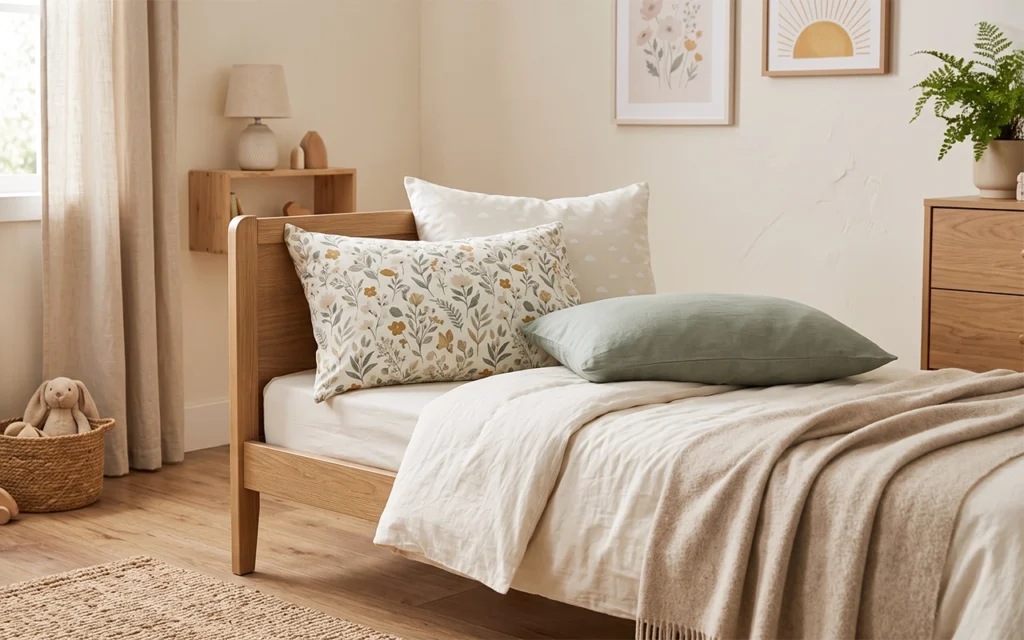
A pillow can look simple from the outside, yet small changes in filling quantity or dimensions can completely change the finished product.
Two pillow inners may use the same filling material and the same outer size. However, one can feel flatter and softer, while the other looks fuller and more substantial. Shape, loft, filling distribution, and pillowcase fit all influence the final result.
For product development, the specification should therefore consider:
Filling + Filling Weight + Loft + Shape + Size + Pillowcase Fit + Product Positioning
rather than focusing only on the filling material.
Filling Material Is Only the Starting Point
Filling affects softness, loft, resilience, and the overall hand feel of a pillow.
Depending on the project, buyers may need to confirm:
- Filling material
- Filling weight
- Finished loft
- Softness
- Filling distribution
- Washing performance
For some existing pillow inner projects, Inorange Baby can use an ELK + Huvis blended filling. Other filling directions can also be discussed according to the specific product requirements.
However, using the same filling material does not guarantee the same finished pillow.
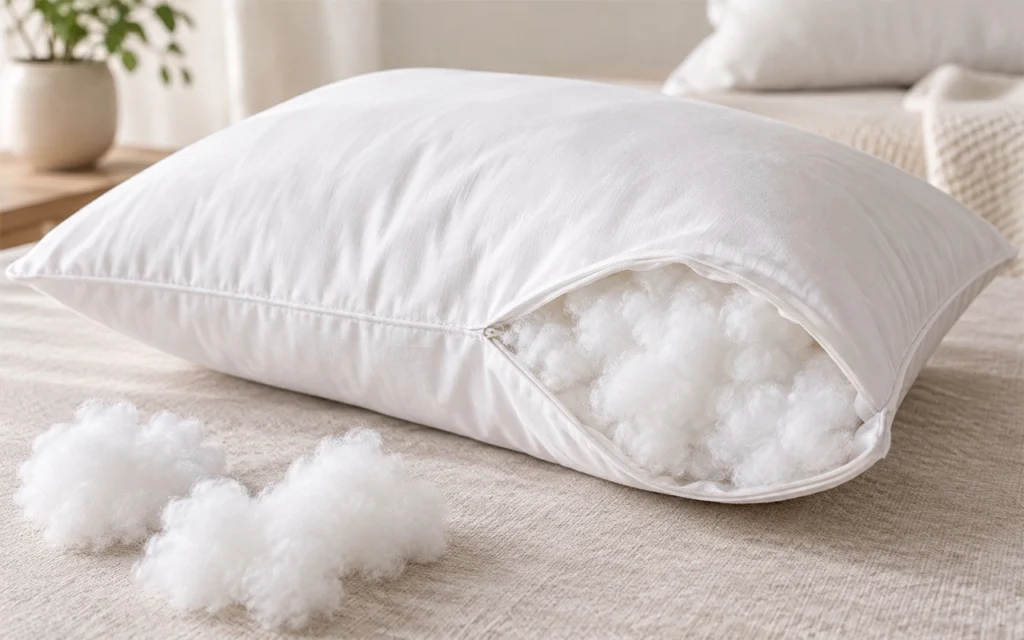
A higher filling quantity may create a fuller product, while a lower quantity may produce a flatter profile. Pillow dimensions and internal construction can also change how the filling behaves.
That is why a sourcing specification should describe the desired finished result, not only the fiber name.
Loft and Filling Amount Need to Be Developed Together
Loft is one of the most important variables in pillow development.
It depends on several factors working together:
• Filling quantity
• Filling material
• Pillow dimensions
• Internal construction
• Filling distribution
For example, two 40 × 60 cm pillow inners can have noticeably different heights if their filling weights are different.
A brand may choose to develop several directions:
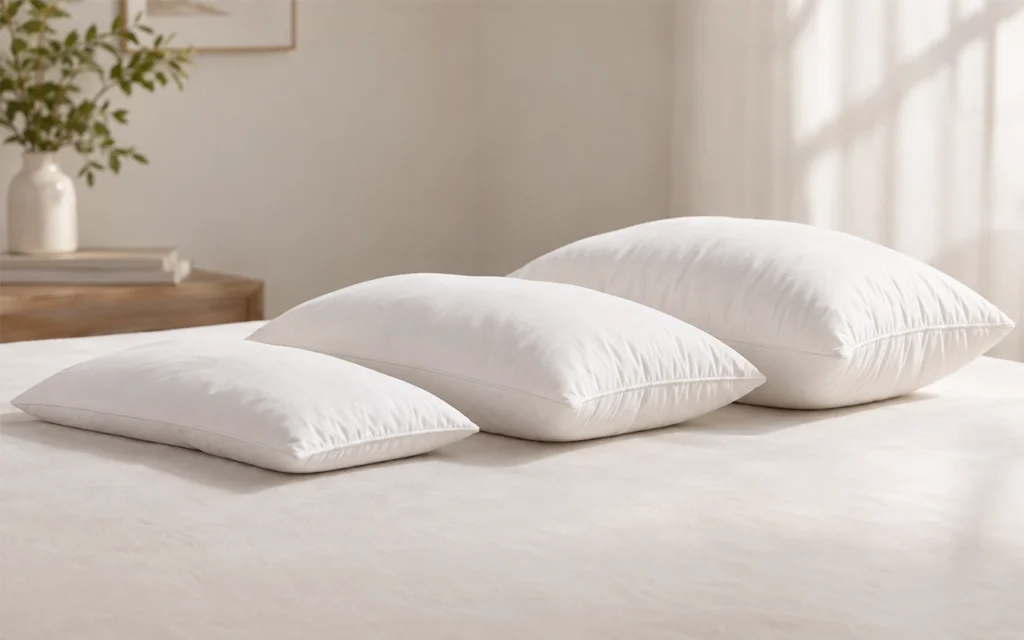
Low-Loft Pillow
Less filling and a flatter finished profile.
Medium-Loft Pillow
A more balanced amount of filling and visible volume.
Fuller Pillow
More filling for a fuller appearance and greater visual volume.
These descriptions are useful for product development, but they should not automatically be connected to a specific child age.
The intended market, actual product structure, and applicable guidance should determine how the finished pillow is positioned..
Pillow Shape and Size Change the Final Result
Filling is only one part of the specification. The pattern itself also influences the final appearance.
Development variables may include:
• Length
• Width
• Corner shape
• Overall silhouette
• Edge construction
• Seam position
A smaller toddler pillow and a standard rectangular pillow require different proportions and filling quantities.
If the pillow is part of a bedding collection, the size should also be planned together with the other products.
For example:
Pillow Inner + Pillowcase + Duvet Cover
should follow a coordinated size system.
If the pillow inner is too large, the pillowcase may become overly tight. If it is too small, excess fabric may remain around the edges.
For this reason, pillow inner and pillowcase dimensions should be developed together.
Filling Distribution Matters as Much as Total Filling Weight
A pillow can meet its target filling weight and still look poorly finished.
Uneven fiber distribution may cause:
• Empty corners
• Uneven left and right sides
• Localized lumps
• Excess volume in the center
• Filling movement after washing
Therefore, sample evaluation should involve more than weighing the product.
Buyers can also check:
• Is the filling evenly distributed?
• Are the corners naturally filled?
• Is the pillow symmetrical?
• Does the surface remain smooth?
• Does the shape recover after compression?
• How does the pillow look after washing?
This helps distinguish between a pillow that simply meets a weight specification and one that also achieves the intended finished appearance.
Plan the Pillow Inner and Pillowcase as Two Related Products
The pillow inner and pillowcase belong to the same bedding system, but they have different development priorities.
The pillow inner focuses more on:
• Filling
• Loft
• Shape
• Dimensions
• Internal construction
The pillowcase offers more room for visual customization, such as:
• Muslin or cotton fabrics
• Custom colors
• Printed patterns
• Embroidery
• Jacquard designs
• Decorative details
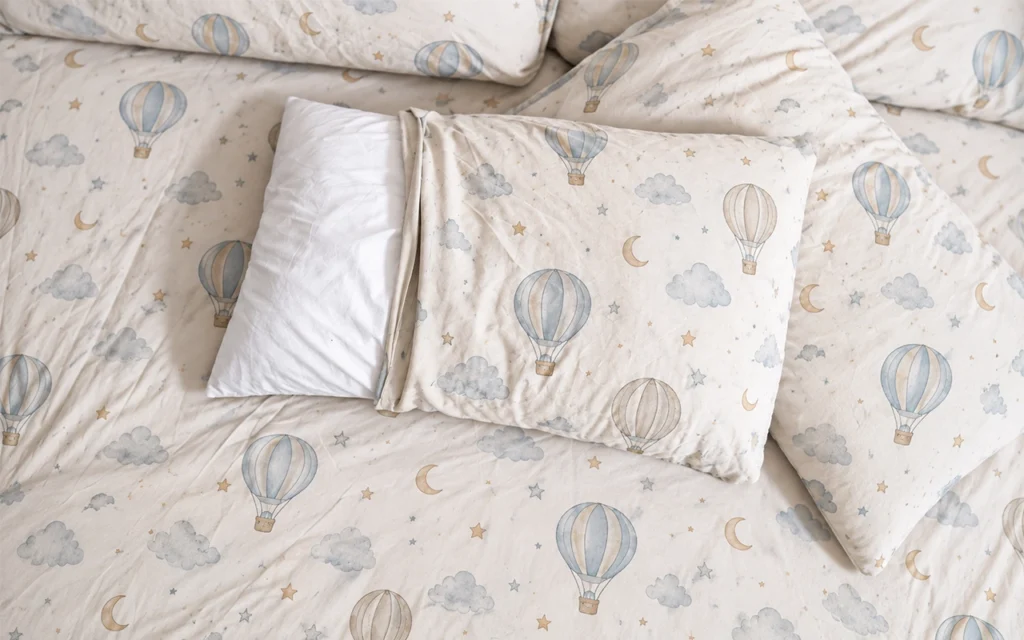
For example, one coordinated toddler bedding collection might use:
Pillow Inner → Simple white construction
Pillowcase → Cloud print
Duvet Cover → Coordinated all-over pattern
Blanket → Matching color or small embroidered detail
The products remain visually connected without requiring every component to use exactly the same fabric or decoration.
Product Positioning Needs Careful Attention
Pillows require especially clear positioning because infant sleep and toddler bedding should not be treated as the same product category.
A standard pillow should not simply be marketed for all baby sleep situations.
From a product range perspective, it is more useful to distinguish between:
Infant Sleep Products
and
Toddler / Older-Child Bedding
If a pillow is developed for a toddler bedding collection, its dimensions, packaging, product page, and marketing language should support that positioning.
The exact age and intended use should follow the actual product, target sales market, and applicable guidance rather than one universal age statement.
Use Customization to Create Different Pillow Positions
One basic pillow shape can support several product directions.
For example:
Basic Pillow Inner
Simple outer fabric with a standard filling specification.
Customized Loft Version
Adjusted filling quantity and finished height.
Coordinated Bedding Pillow
Developed together with a pillowcase, duvet cover, and related bedding.
Premium Presentation Version
Enhanced through fabric, labels, packaging, or other presentation details.
Inorange Baby can support customization of pillow filling, filling quantity, dimensions, shape, outer fabric, pillowcases, prints, embroidery, labels, and packaging.
Existing samples can provide a starting point, while the final construction can be adjusted according to the brand’s product positioning.
Conclusion
Developing a baby or toddler pillow involves much more than selecting a filling material.
The full specification should consider:
Filling Material + Filling Weight + Loft + Shape + Size + Pillowcase Fit + Product Positioning
Filling defines the basic hand feel. Filling quantity influences loft and volume. Shape and dimensions determine the overall proportion, while the pillowcase provides more room for visual customization.
Planning these elements together gives brands a clearer and more controllable product development process.