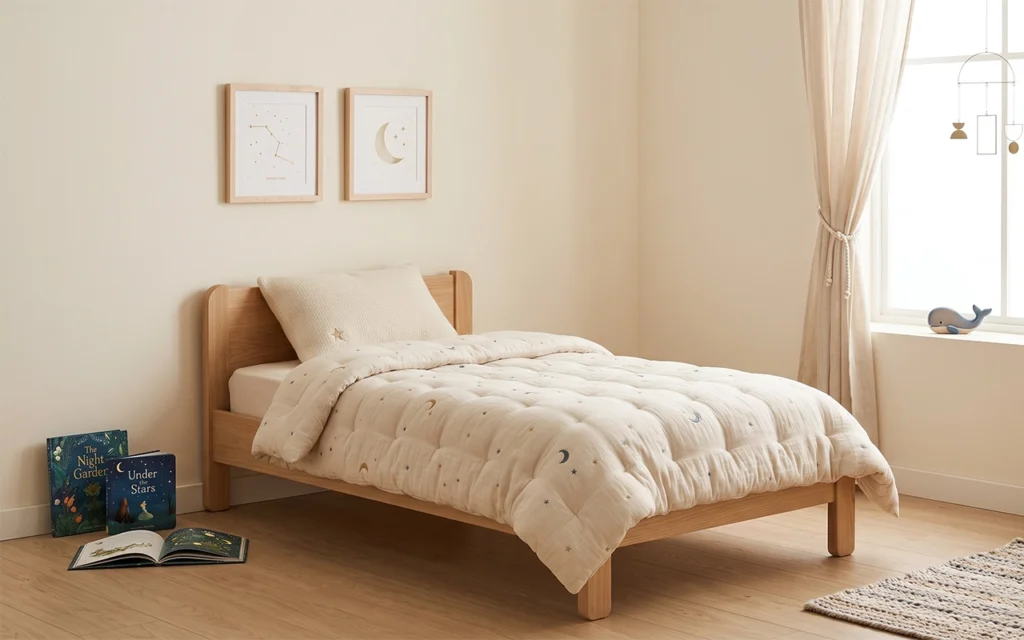
wo baby quilts can share the same dimensions and still feel completely different in hand.
One may be light and easy to fold. Another may look fuller, softer, and more substantial. That difference does not come from filling material alone. Outer fabric, filling weight, quilting structure, finished weight, and size all influence the final product.
For buyers, the better starting point is not simply asking, “What filling should we use?”
A more useful question is:
“What kind of quilt are we trying to develop?”
Once the intended product position is clear, decisions about fabric, filling, construction, and size become much easier.
Start with the Outer Fabric and Product Positioning
The outer fabric creates the first visual and tactile impression of a quilt.
Some projects may require a simple and soft surface. Others may need prints, jacquard textures, or subtle patterns to fit a coordinated bedding collection.
During development, buyers can consider:
• Fabric composition
• Surface texture
• GSM
• Color
• Prints or patterns
• Stitching appearance
• Care requirements
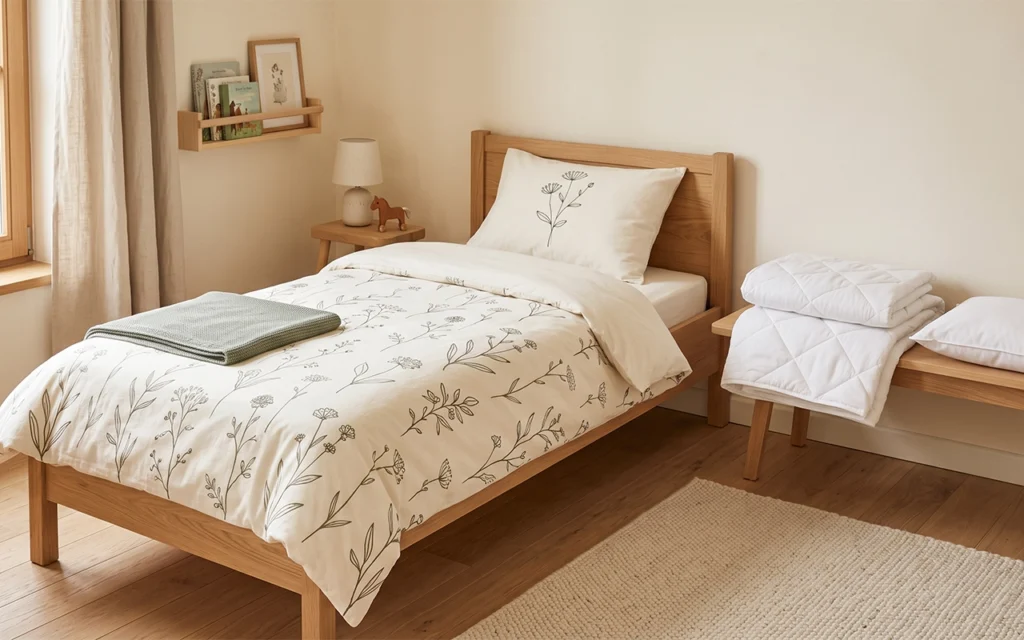
If the quilt will be sold together with pillowcases, duvet covers, blankets, or other bedding products, the fabrics do not always need to match exactly.
For example, the quilt can use a solid or low-contrast surface, while the duvet cover uses an all-over print. Coordinated colors, motifs, labels, and packaging can still connect the whole range.
This gives brands more flexibility than applying the same fabric to every product.
Filling Material Changes the Feel of the Quilt
Once the outer construction is defined, filling becomes another major development decision.
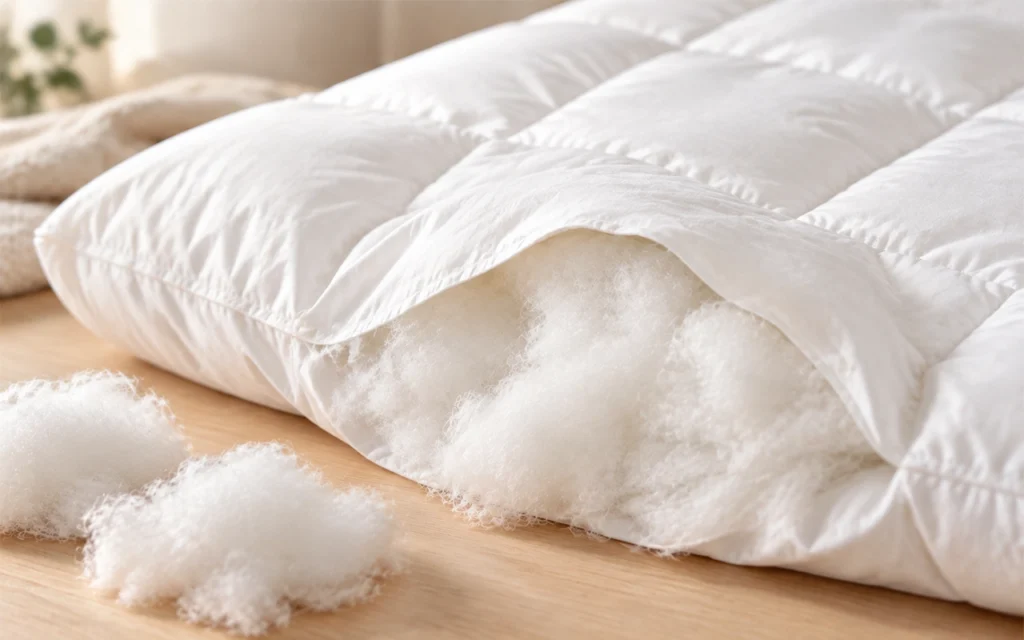
The filling influences loft, softness, weight, and the overall hand feel of the finished quilt.
Depending on the project, buyers may need to confirm:
• Filling material
• Filling weight
• Loft
• Filling distribution
• Finished hand feel
• Washing performance
For some existing pillow and quilt inner projects, Inorange Baby can use an ELK + Huvis blended filling. Other filling directions can also be discussed according to the project.
However, filling material alone does not define the final result.
Two quilts using the same fiber can still feel very different if the filling quantity, dimensions, or quilting pattern changes.
That is why buyers should review the full specification instead of focusing only on the name of the filling.
If material certifications are referenced, claims should also follow the actual scope of the relevant raw-material certificates rather than being extended automatically to the finished quilt.
Filling Weight Matters as Much as Filling Type
The same filling can support several product positions simply by changing the filling quantity.
This can affect thickness, finished weight, loft, and overall appearance.
For example, a brand might develop:
Lightweight Quilt
A lighter filling direction with less bulk and easier storage.
Regular Quilt
A balanced version for a more general bedding range.
Fuller Quilt
A higher-volume construction with a more substantial visual appearance.
These are useful development categories, but they should not automatically be linked to fixed room temperatures or seasonal performance claims.
If a brand wants to market a quilt for a specific climate, temperature range, or warmth level, that positioning should be supported by the actual product specification, testing, and target-market requirements.
In other words, more filling does not automatically equal the right quilt for a specific season.
Quilting and Stitching Help Control the Filling
A quilt is not simply filling placed between two layers of fabric.
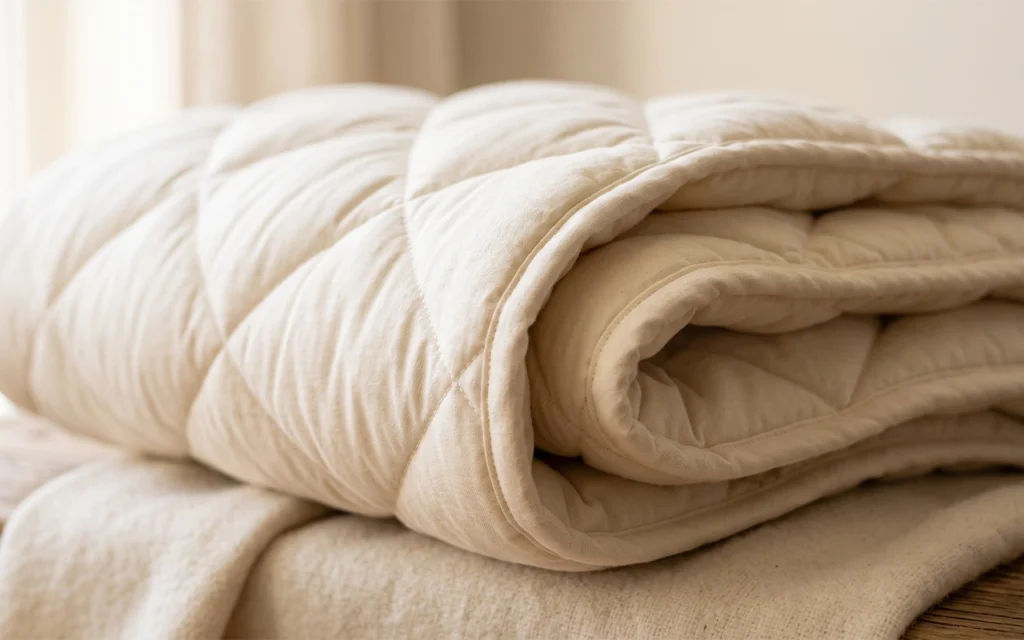
Quilting and stitching help control how the filling is distributed, while also shaping the final surface design.
Development details may include:
• Quilting pattern
• Stitching distance
• Edge construction
• Filling distribution
• Corner shape
• Finished thickness
A diamond quilting pattern, for example, creates a different appearance from square, channel, or larger-scale quilting.
The spacing also matters. Dense quilting and wider quilting sections can create different surface effects even when the same filling is used.
After sampling, buyers should check whether the filling remains evenly distributed, whether the corners look balanced, and whether the surface shows obvious empty or overloaded areas.
For this reason, filling and quilting should be developed together as one structure.
Plan Quilt Size Together with the Bedding Collection
Quilt dimensions should not always be decided in isolation.
If a quilt inner will be used with a duvet cover, both products need to be planned together. The same applies when the quilt is part of a wider bedding collection.
A coordinated range may include:
• Quilt inner
• Duvet cover
• Pillow inner
• Pillowcase
• Blanket
• Bedding set
Different markets may also use different bedding dimensions. Therefore, copying the size of an existing sample is not always the best approach.
The target market and final product specification should be confirmed before sampling.
Filling quantity also needs to be reconsidered when dimensions change.
If a larger quilt uses exactly the same total filling weight as a smaller version, its thickness and finished feel can change significantly.
That means:
Size + Filling Weight + Finished Feel
should be evaluated together.
Position Quilts Carefully Within Baby and Toddler Bedding
Quilt products also need clear age and use positioning.
For infant sleep environments, loose quilts, pillows, and similar soft bedding should not simply be marketed as crib sleep essentials. Brands need to distinguish infant sleep products from bedding intended for later stages.
From a product planning perspective, it is more useful to separate:
Infant Sleep Range
from
Toddler / Older-Child Bedding Range
The exact positioning should then follow the product dimensions, intended use, sales market, labeling, and applicable safety guidance.
This does not prevent brands from developing quilt products. It simply means the product page, packaging, and marketing language should match the intended stage and use.
Conclusion
Developing a baby or toddler quilt involves much more than choosing an outer fabric and a filling.
The full structure should consider:
Outer Fabric + Filling Material + Filling Weight + Quilting + Size + Product Positioning
The filling material affects the hand feel, but filling quantity matters too. Size influences both product proportions and filling requirements. Quilting controls the internal structure while also shaping the final appearance.
Inorange Baby supports custom quilt inner and bedding development for different brand projects. Fabrics, filling options, filling weight, dimensions, quilting structures, colors, patterns, labels, and packaging can all be adjusted according to the intended product direction.