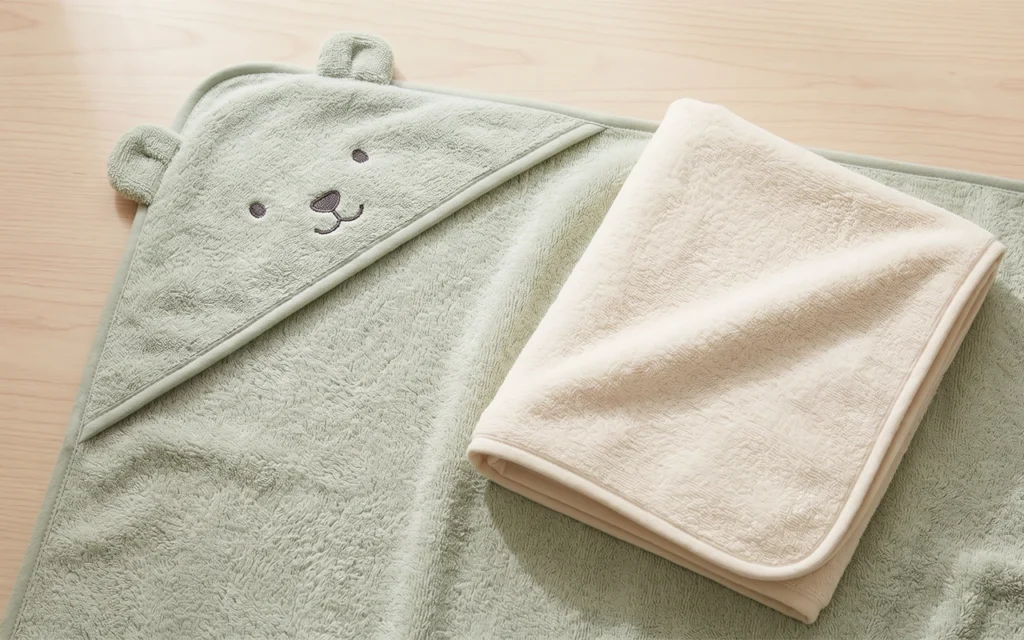
A baby bath towel may look like a simple textile product, but different structures can lead to very different development priorities.
Some brands may prefer a hooded baby towel. Others may need a simpler non-hooded bath towel. Even when the same fabric is used, the hood structure, towel dimensions, edge details, and decoration can change the final product significantly.
For buyers, the first development question should therefore be:
What type of baby bath towel are we trying to create?
Start by Choosing Hooded or Non-Hooded
Baby bath towels can follow different basic structures.
Two common directions are:
Hooded Baby Towel
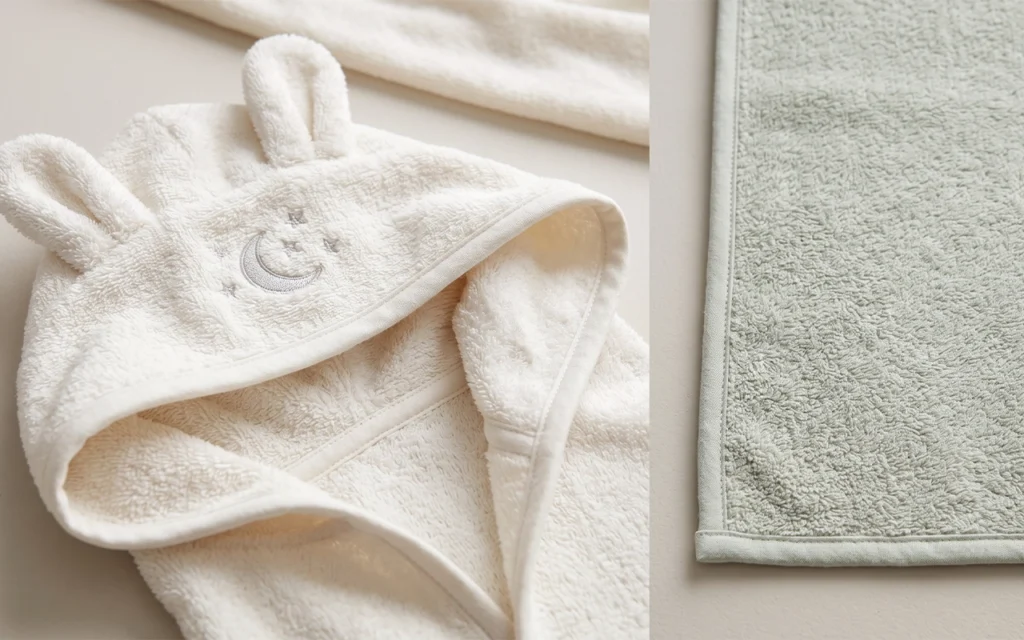
A hood is added to one corner of the towel. This creates a more distinctive product shape and provides more space for embroidery, animal ears, or other decorative details.
Non-Hooded Baby Bath Towel
This version keeps the structure simple. More attention can then go to fabric, dimensions, color, edge details, and overall hand feel.
Neither structure is automatically better.
The more useful choice depends on the intended product position.
For example, a basic range may use a simple non-hooded towel, while a gift-oriented or more decorative collection may use a hooded version.
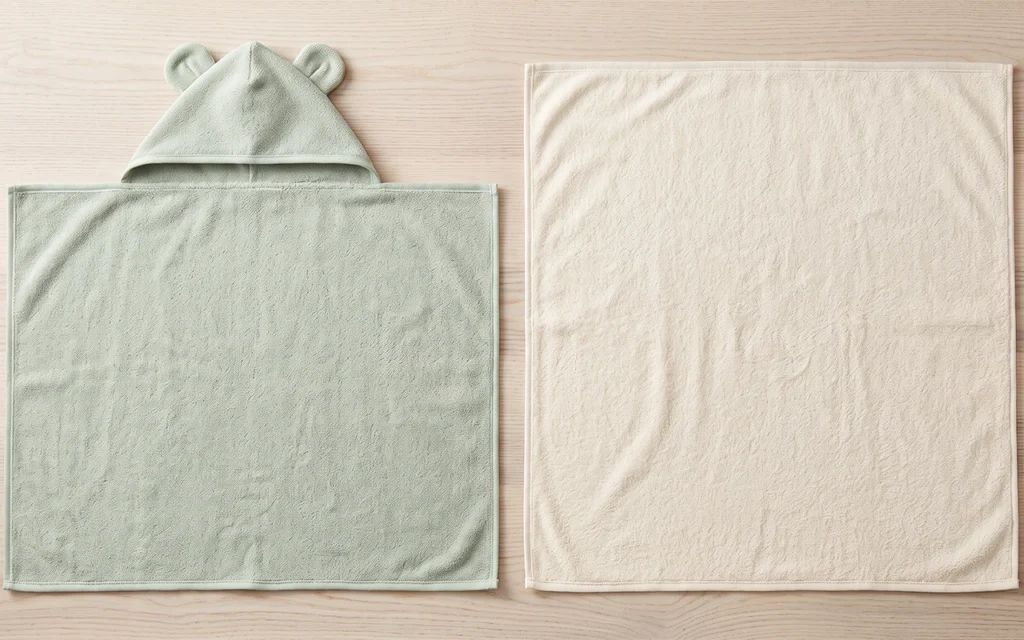
Hooded Towels Need the Right Hood-to-Body Proportion
If a hooded design is selected, the hood should be developed together with the towel body.
A hood that is too small can look visually weak.
A hood that is too large may make the product feel heavy or unbalanced.
Buyers can review:
- Hood width
- Hood depth
- Hood shape
- Hood position
- Towel dimensions
- Hood-to-body proportion
The hood shape also affects the visual style.
A simple triangular or softly rounded hood creates a classic look.
Rabbit ears, bear ears, or other small decorative details can make the product more playful and easier to recognize as part of a themed collection.
The hood should therefore be treated as part of the complete towel pattern rather than a separate piece added at the end.
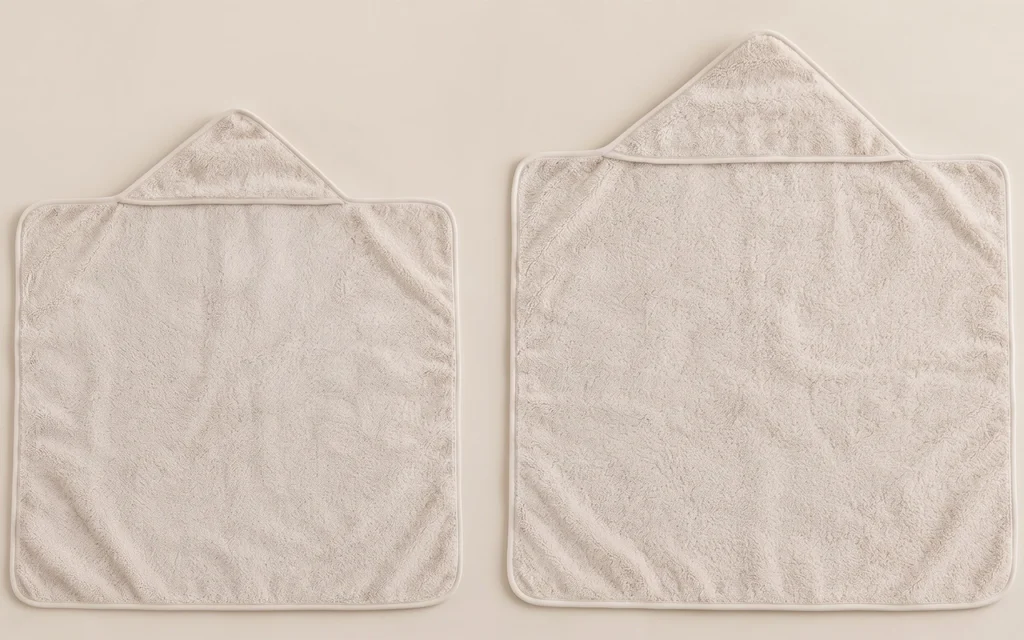
Non-Hooded Towels Depend More on Size, Fabric, and Visual Details
Without a hood, the towel body becomes the main visual focus.
Brands can create product differences through:
- Different dimensions
- Colors
- Fabric textures
- Embroidery
- Jacquard designs
- Prints
- Edge details
- Brand labels
A non-hooded towel has a simpler structure, so the fabric and finishing become more noticeable.
For a solid-color product, surface texture, edge consistency, and color selection can strongly affect the final appearance.
Brands can also connect a non-hooded towel with other baby textiles through repeated embroidery, matching colors, or consistent labels.
Towel Dimensions Should Match the Product Position
Towel size should be planned whether the product has a hood or not.
A more compact towel can be easier to fold and pack.
A larger towel can create more coverage and a fuller product appearance.
During development, buyers can consider:
- Finished length
- Finished width
- Finished weight
- Folded dimensions
- Packaging volume
- Intended product position
A larger towel may create a more substantial retail presentation.
However, it can also increase fabric consumption, product weight, and shipping volume.
For this reason, dimensions should not be copied automatically from an existing sample.
It is better to review size together with the fabric, product structure, and packaging plan.
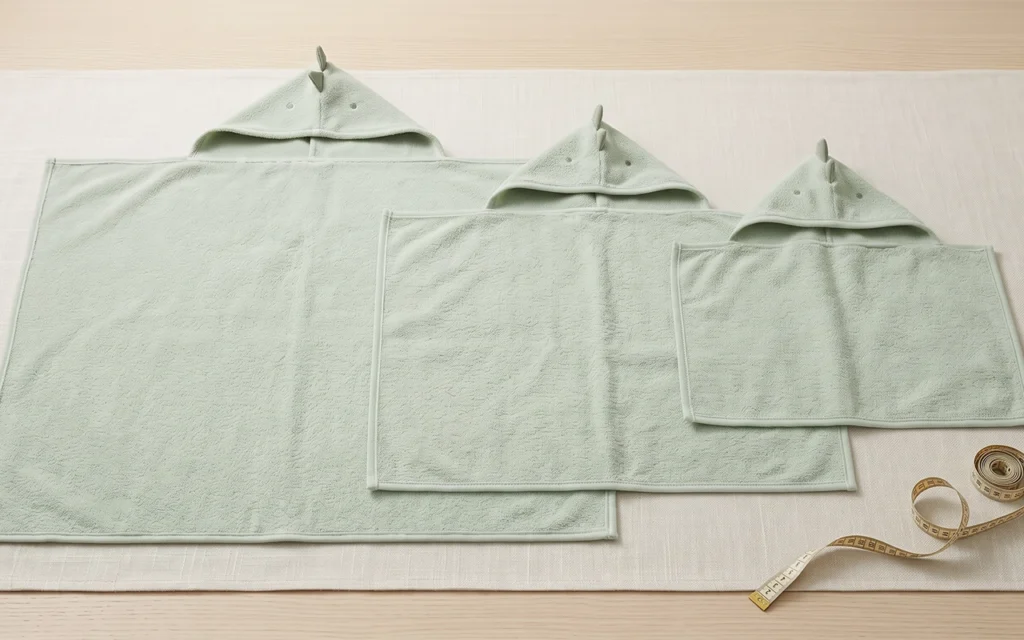
Fabric Defines the Main Feel of the Towel
Fabric is one of the most important development decisions for a baby bath towel.
Different fabrics can create different:
- Surface textures
- Thickness levels
- Softness
- Absorbent feel
- Finished weights
- Folded volumes
For a hooded towel, the hood and body may use the same material.
Another option is to introduce a different decorative fabric or surface detail in the hood area.
For a non-hooded towel, more attention can go to the overall fabric texture and finish.
The material choice therefore affects both the functional feel and the visual positioning of the product.
Decoration Placement Should Follow the Product Structure
Hooded and non-hooded towels usually need different decoration layouts.
On a hooded towel, embroidery often appears on the hood because this area naturally becomes a visual focal point.
Buyers can review:
- Embroidery size
- Embroidery position
- Distance from the hood edge
- Thread color
- Proportion to the hood
On a non-hooded towel, embroidery can be placed near a corner, along the edge area, or in another suitable position.
Because there is no hood, the visual layout is more flexible.
The same embroidery should not simply be copied to every towel size or structure.
When dimensions change, the decoration scale and position may also need adjustment.
Edge Details Can Change the Final Style
The edge takes up only a small part of the product, but it can noticeably affect the finished appearance.
Buyers can review:
- Edge width
- Corner shape
- Color coordination
- Stitch consistency
- Compatibility with the main fabric
A matching edge can create a simple and clean look.
A slightly contrasting edge can add more visual definition.
Brands can also coordinate towel edge colors with bibs, blankets, or other textile products in the same range.
This creates a consistent collection without requiring every product to use exactly the same design.
One Basic Towel Can Support Several Product Directions
A baby bath towel does not need to remain a single SKU.
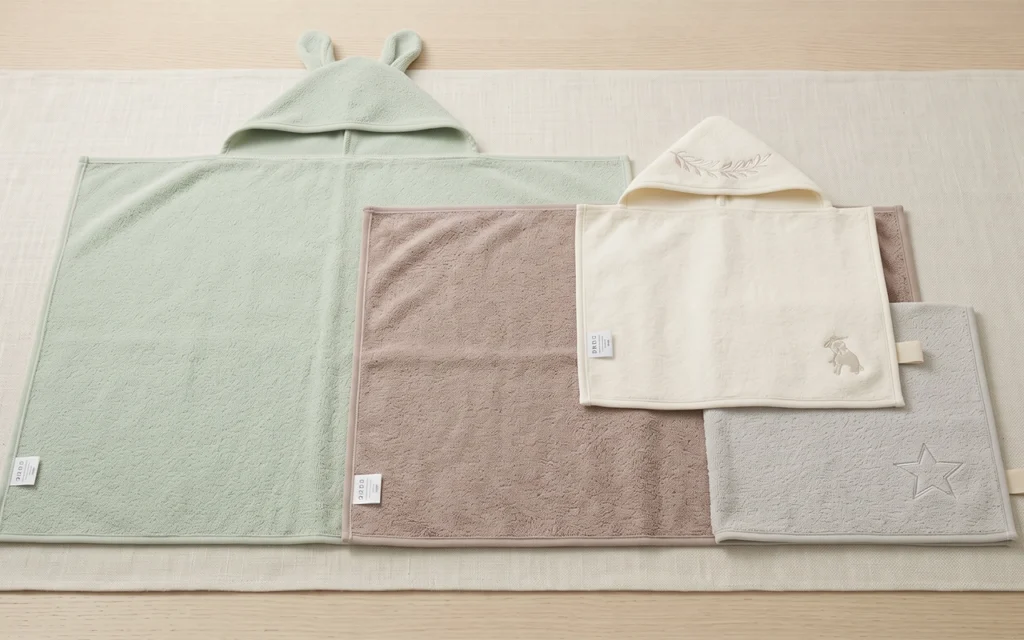
One basic development direction can become several product types:
Basic Bath Towel
A non-hooded structure with a simple focus on fabric and dimensions.
Hooded Bath Towel
A hood is added to create a more distinctive product form.
Decorative Hooded Towel
The hood includes embroidery, ears, or other decorative details.
Coordinated Bath Collection
The towel shares colors, embroidery, or branding details with other bath-related items.
This allows one fabric direction to support several product positions.
Brands can then select the combination that fits their target market, price range, and sales channel.
Use Samples to Confirm the Final Result
Many towel details are difficult to judge from a flat drawing alone.
Samples allow buyers to check:
- Overall dimensions
- Hood proportion
- Fabric hand feel
- Finished weight
- Embroidery placement
- Folding result
- Packaging volume
If both hooded and non-hooded versions are being considered, the two structures can also be compared during the same sampling stage.
This helps buyers decide whether one format is more suitable or whether both should remain in the collection.
OEM/ODM Customization Can Cover Different Towel Directions
Once the basic structure is confirmed, brands can continue adjusting:
- Hooded or non-hooded structure
- Towel dimensions
- Hood size and shape
- Fabric
- Colors
- Embroidery
- Prints
- Edge details
- Labels
- Packaging
Inorange Baby can support custom development for both non-hooded baby bath towels and hooded baby towels.
Brands can start from an existing product or reference sample, then adjust the final specification according to target size, fabric, design, and branding requirements.
Conclusion
Developing a baby bath towel should not begin with the hood alone.
The first step is to confirm the overall product direction:
Hooded or Non-Hooded + Size + Fabric + Decoration + Edge Details + Product Positioning
Hooded towels can use the hood structure and decoration to create a more recognizable product.
Non-hooded towels can rely more on fabric, dimensions, color, and simple visual details.
Planning these elements together makes it easier to develop a baby bath towel that fits the intended collection and target market.