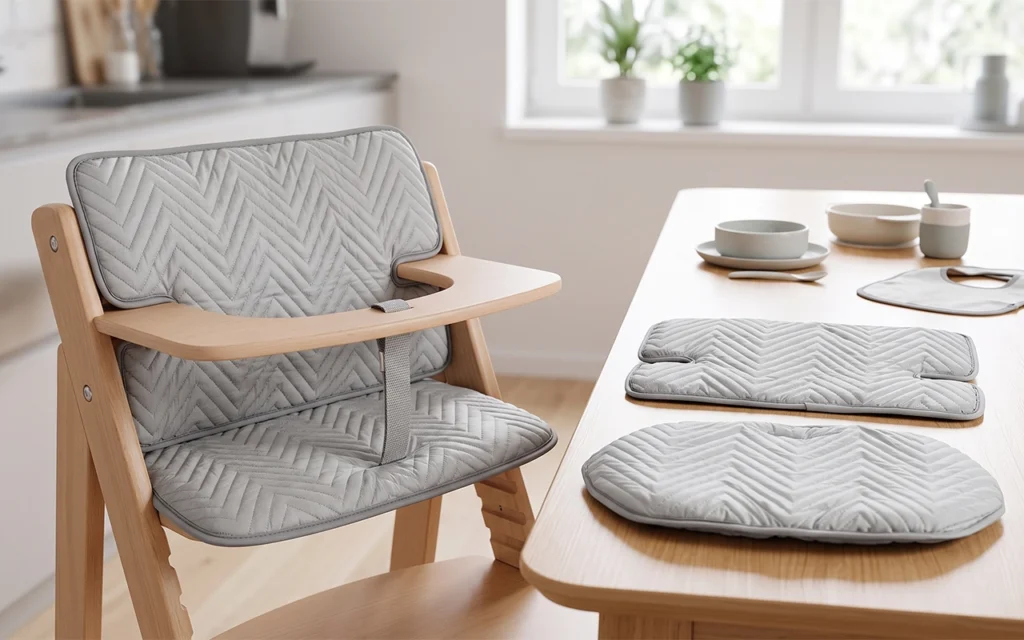
A high-chair cushion may look like a soft accessory. However, its structure needs careful development.
The cushion must match the chair shape. The harness openings also need to align with the actual restraint system. In addition, padding thickness can change the fit and overall appearance.
For buyers, the main development question is not only:
“Which fabric should we use?”
A better question is:
“Does the cushion fit the chair, harness, and intended product position?”
Start with the Chair Shape
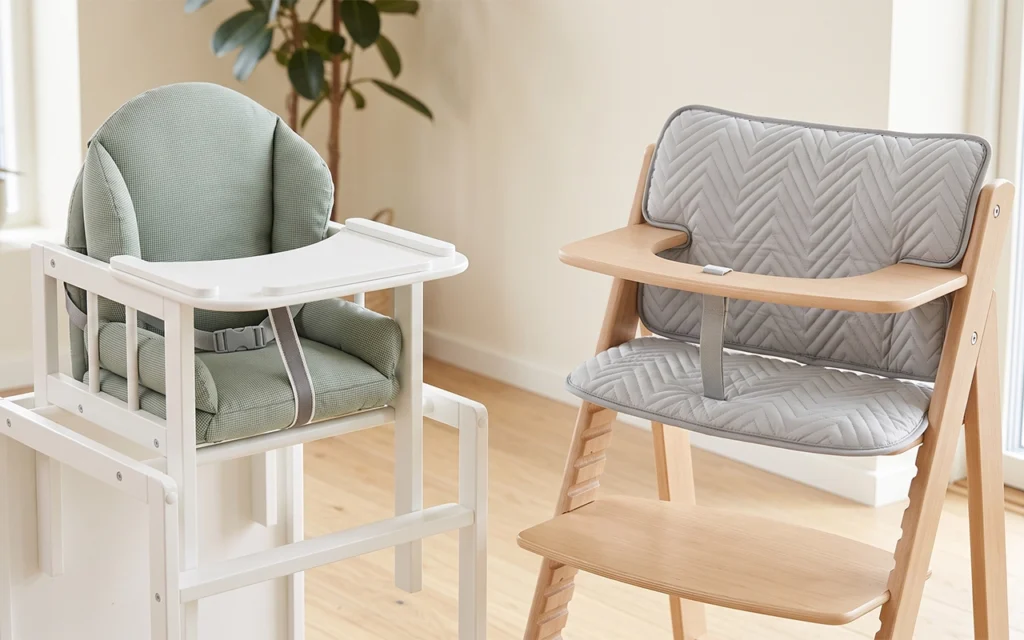
The chair itself should guide the cushion pattern.
Different high chairs can have different:
- Seat widths
- Backrest heights
- Side curves
- Seat depths
- Harness positions
- Attachment points
Therefore, one cushion pattern cannot always fit several chair models.
A cushion that is too wide may fold at the sides. On the other hand, a narrow cushion can leave visible gaps.
The backrest also matters.
If the upper section is too tall, it may extend beyond the chair. If it is too short, the cushion can look incomplete.
For this reason, buyers should confirm the chair dimensions before finalizing the pattern.
Seat and Backrest Proportions Need Balance
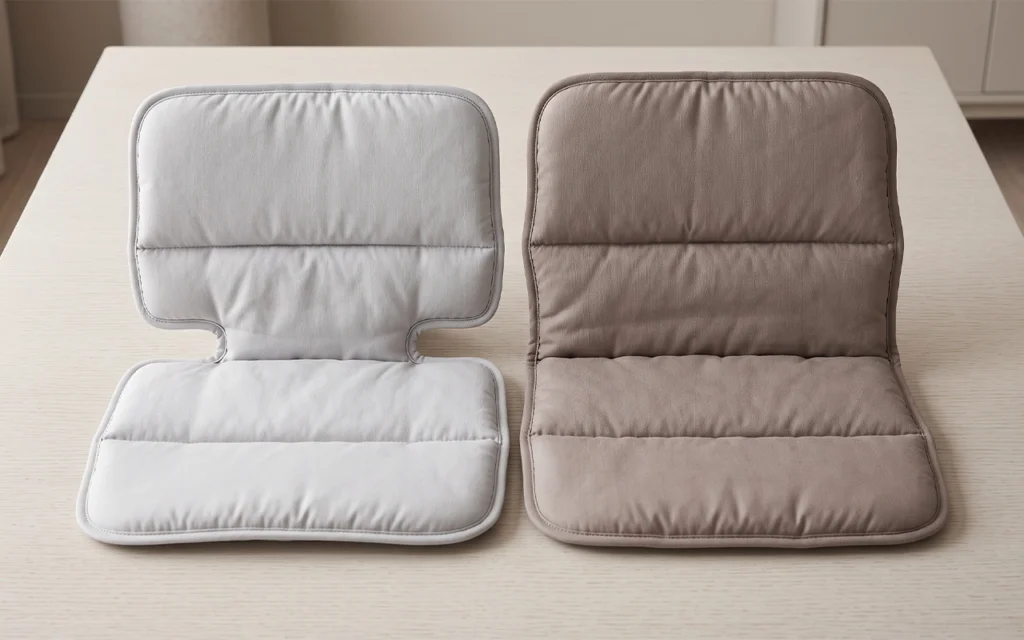
A high-chair cushion usually includes both a seat section and a back section.
These two areas should work together.
For example, a thick seat pad with a very thin back section can look unbalanced. Meanwhile, a large back cushion can push the product forward if the seat area is too small.
Buyers can review:
- Seat length
- Seat width
- Backrest height
- Backrest width
- Transition between seat and back
- Overall cushion thickness
The pattern should follow the real chair shape.
Therefore, development should begin with measurements or a physical chair reference whenever possible.
Harness Openings Must Match the Actual Restraint System
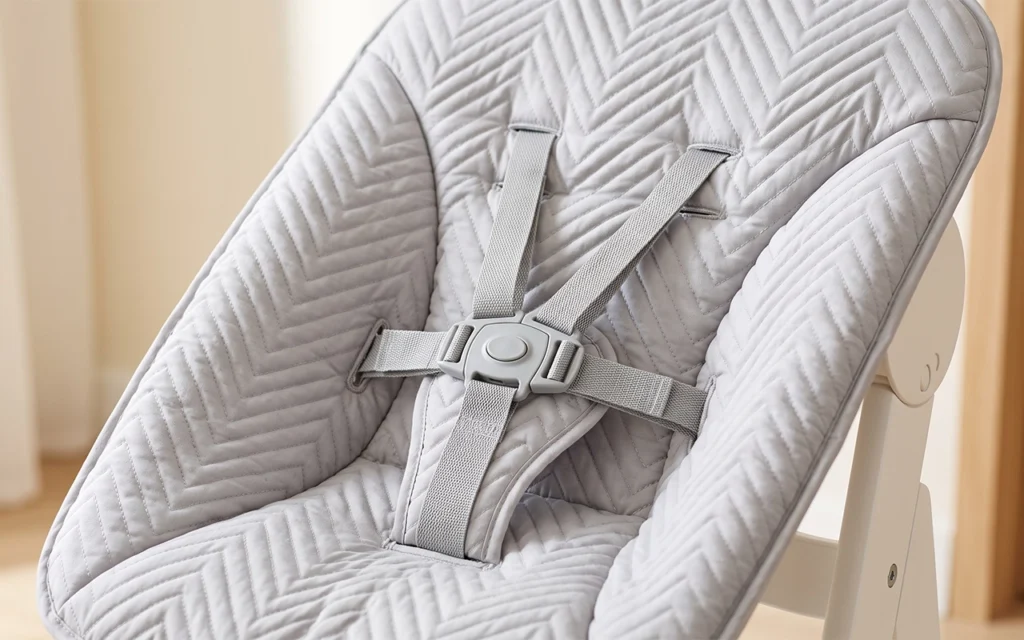
Harness openings are one of the most important structural details.
A five-point harness usually needs openings around the shoulder, waist, and lower center area.
However, the exact position depends on the chair.
During development, buyers should confirm:
- Number of openings
- Opening position
- Opening length
- Opening width
- Distance between openings
- Alignment with the chair harness
If one opening sits too high or too low, the harness may not pass through naturally.
In addition, the cushion can pull or twist after installation.
Therefore, the opening layout should follow the real harness system rather than a generic diagram.
Opening Shape Also Matters
The size of each harness opening is not the only concern.
Its shape can also affect the finished product.
A narrow slit may look clean. However, it still needs enough room for the strap and buckle structure.
A wider opening can make installation easier. Still, it should not create unnecessary gaps in the cushion surface.
Buyers should also check the edge around each opening.
The fabric should remain flat and stable after stitching.
As a result, both opening dimensions and finishing need to be reviewed during sampling.
Padding Thickness Changes the Fit
Padding affects comfort and appearance. However, more padding is not always better.
A very thick cushion can reduce the usable seat space.
It may also shift the harness position relative to the child and chair.
A thinner cushion creates a cleaner profile. However, it may offer less visible volume.
During product development, buyers can compare:
Light Padding
A slimmer profile with less bulk.
Medium Padding
A balanced structure for everyday use.
Fuller Padding
More visible volume and a softer appearance.
The best option depends on the chair shape and product position.
Therefore, padding thickness should be tested on the actual chair.
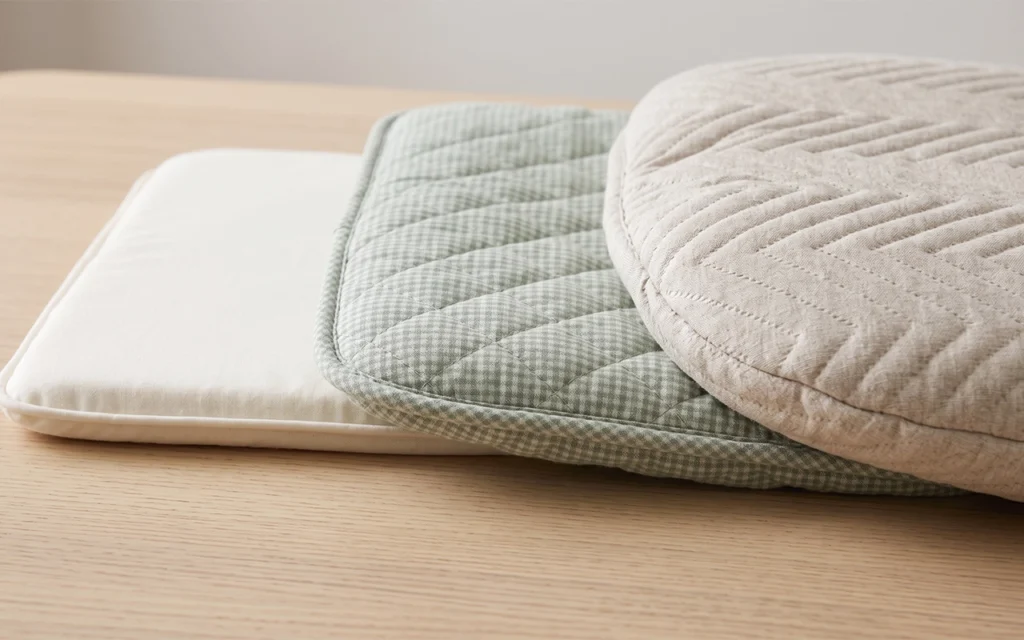
Fabric Choice Should Match the Product Use
Fabric changes both the look and feel of the cushion.
Buyers may consider:
- Cotton fabric
- Knitted fabric
- Quilted fabric
- Ultrasonic embossed fabric
- Other suitable textile structures
Surface texture can influence the final style.
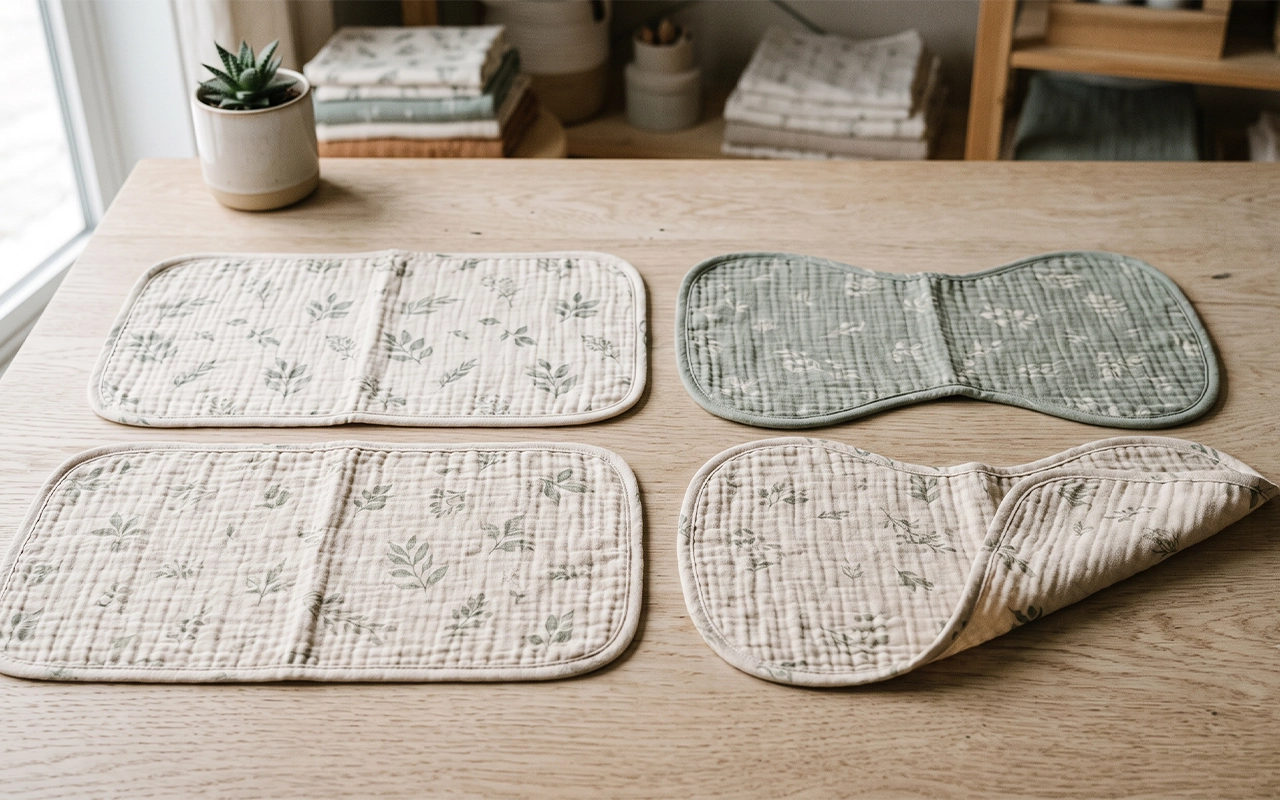
For example, a plain cotton surface creates a simple look. A quilted or embossed surface adds more visual structure.
Color also matters.
Soft gray, cream, sage green, or light pink can create a calm baby-product direction. Meanwhile, prints can support a more decorative collection.
However, fabric should still work with the padding and harness openings.
Attachment and Stability Need Attention
A cushion should stay in the intended position after installation.
If the product shifts easily, the harness openings may no longer align correctly.
Therefore, buyers should review how the cushion sits on:
- The seat
- The backrest
- The side areas
- Harness points
- Any chair attachment areas
The exact attachment method depends on the chair design.
Some products may rely mainly on the harness system to help hold the cushion in place. Others may need additional structural details.
The sample should stay flat without excessive folding or movement.
Different Chair Models May Need Different Patterns
A common mistake is to develop one cushion and then assume it will fit many high-chair models.
In practice, small differences can matter.
For example, one chair may have:
- A narrower seat
- A more curved backrest
- Higher shoulder harness slots
- A different crotch strap position
- More pronounced side supports
As a result, the same cushion may fit one model well but look distorted on another.
Brands should therefore decide whether the product is:
Model-Specific
Designed for one chair structure.
or
More Universal
Developed around a broader range of compatible dimensions.
The specification should make this clear from the beginning.
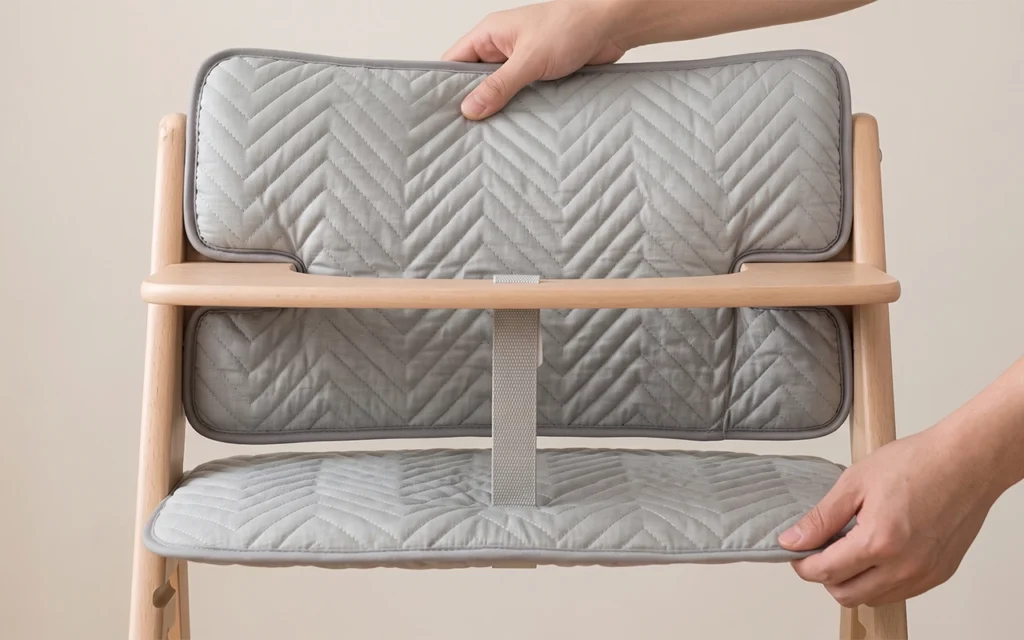
Sample Installation Is Essential
A flat sample can look correct on a table.
However, the real result only becomes clear after installation.
During sample review, buyers should check:
- Does the cushion sit flat?
- Do all harness straps pass through correctly?
- Does the seat section stay centered?
- Does the back section match the chair height?
- Does the padding create too much bulk?
- Do the openings remain smooth after use?
This installation step is especially important.
It can reveal problems that are difficult to see from pattern measurements alone.
Customization Can Support Different Product Directions
Once the basic fit is correct, brands can adjust many other details.
These may include:
- Cushion shape
- Seat dimensions
- Backrest dimensions
- Harness opening positions
- Padding thickness
- Fabric
- Quilting or embossing
- Colors
- Prints
- Labels
- Packaging
Inorange Baby can support custom high-chair cushion development based on different chair structures and brand requirements.
The final pattern can be adjusted according to fit, harness layout, padding, fabric, and product positioning.
Conclusion
A high-chair cushion is not only a padded textile accessory.
Its performance depends on how several details work together.
Buyers should review:
Chair Fit + Seat Proportion + Backrest Shape + Harness Openings + Padding + Fabric
as one complete system.
When these elements match the actual chair, the finished cushion looks cleaner, installs more naturally, and is easier to control during production.