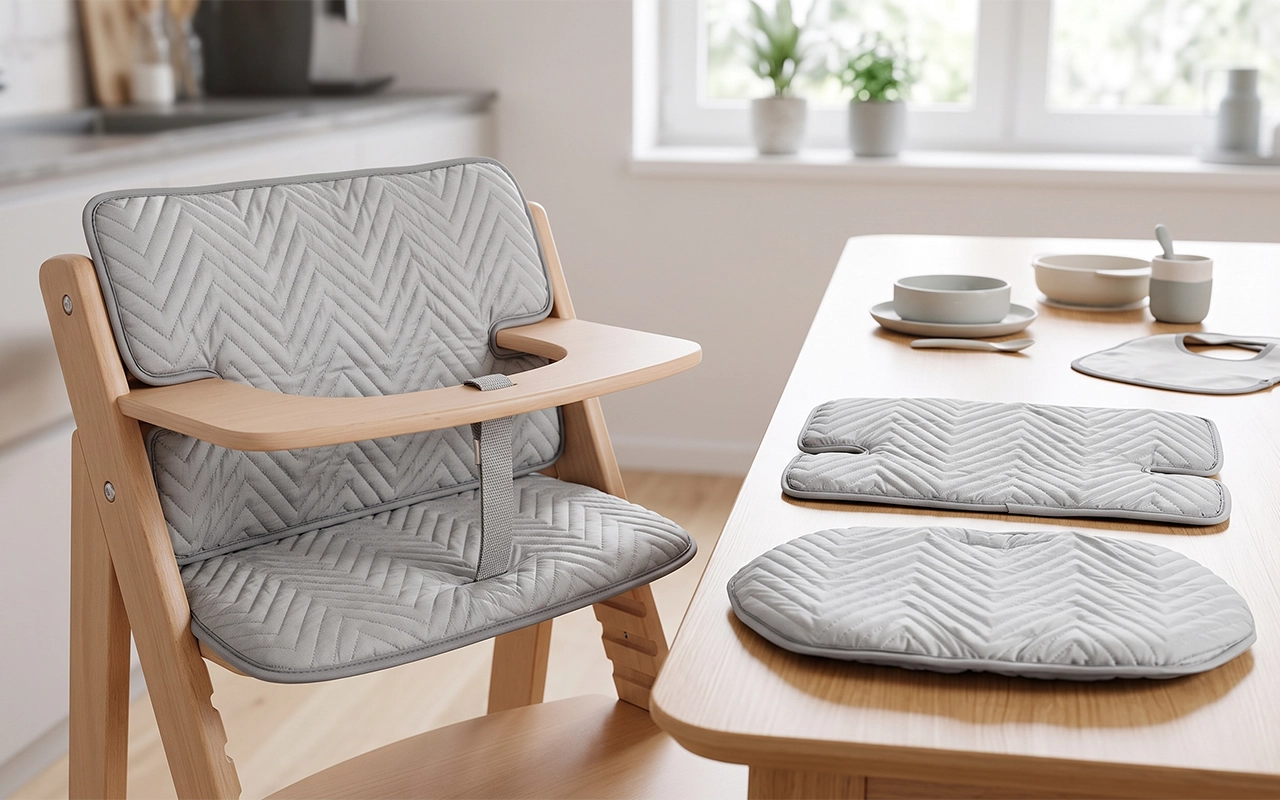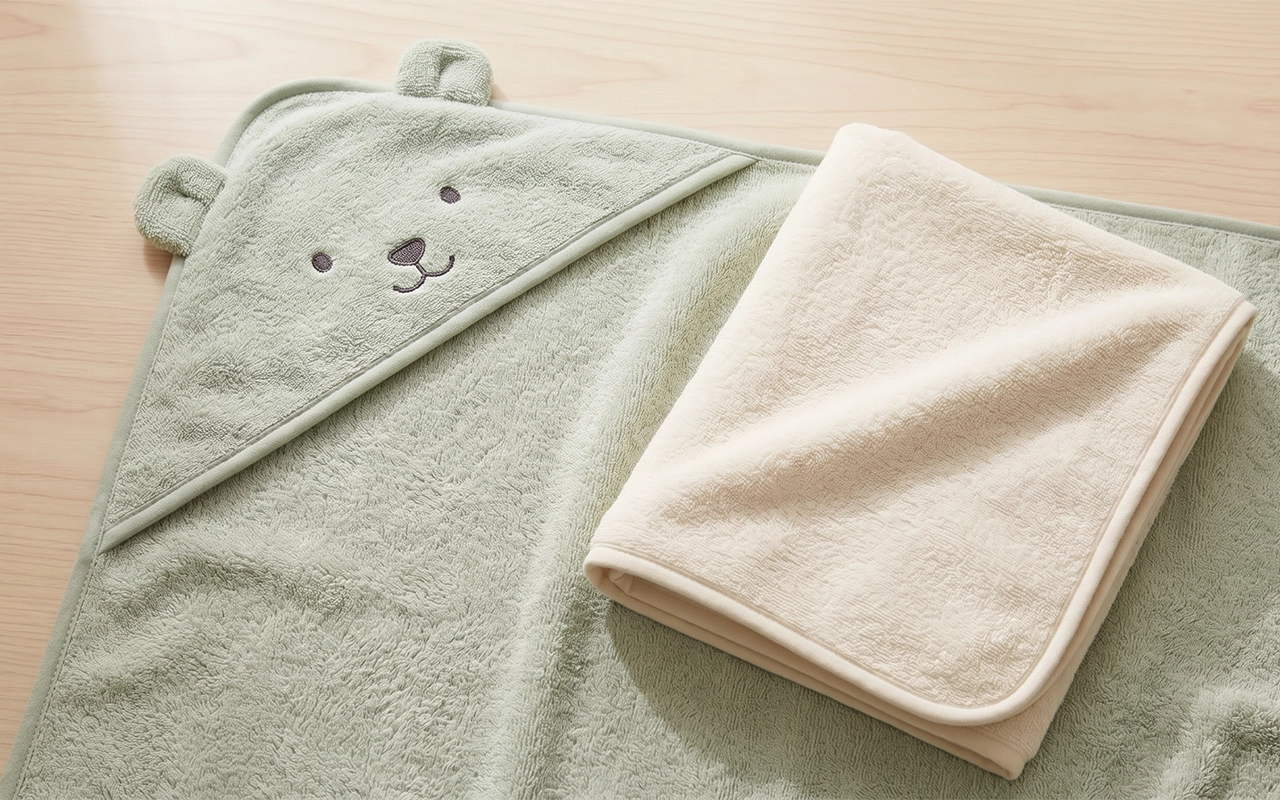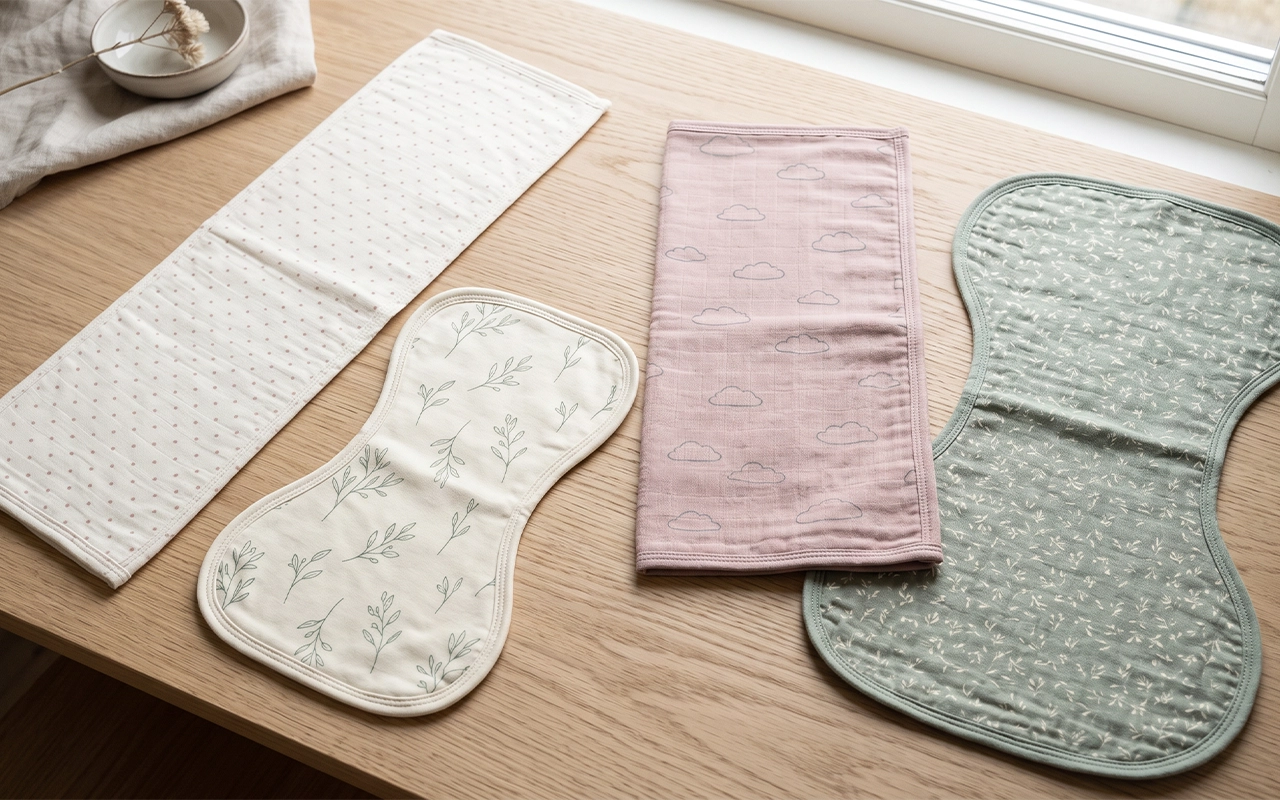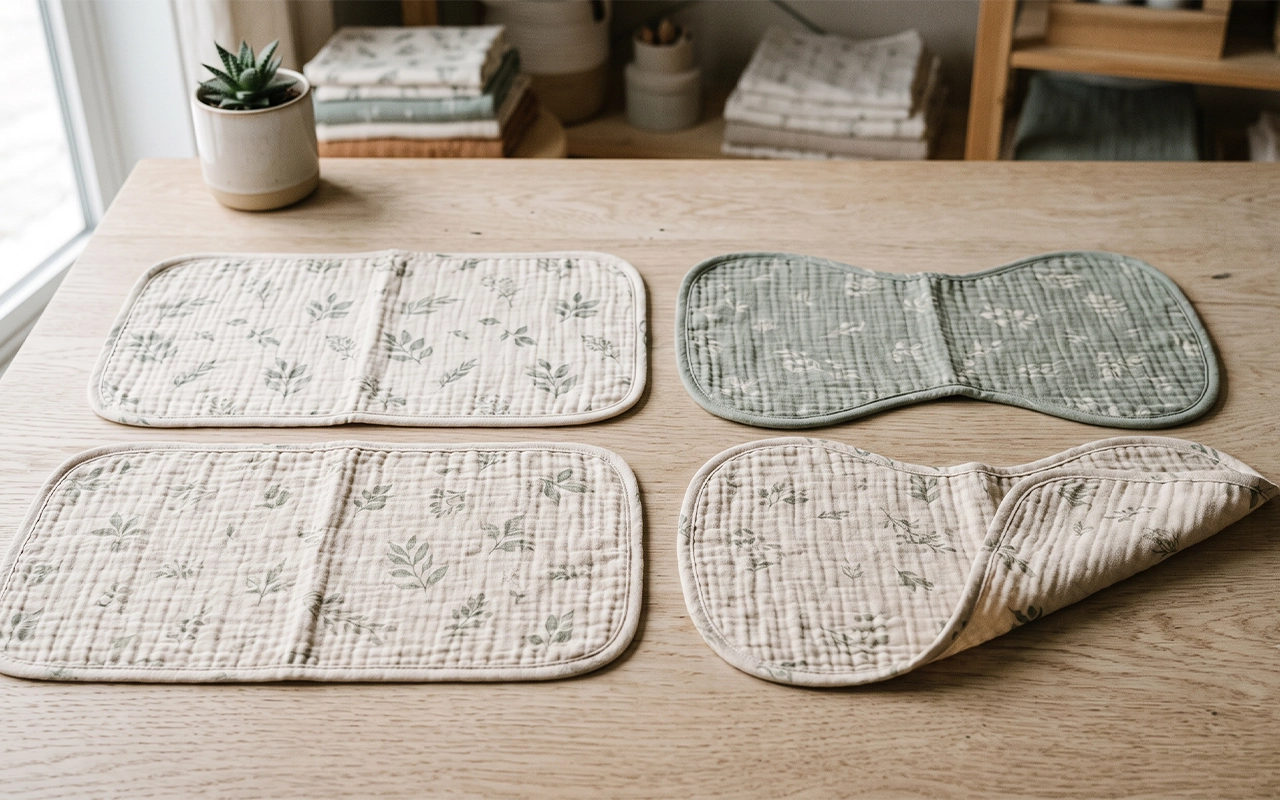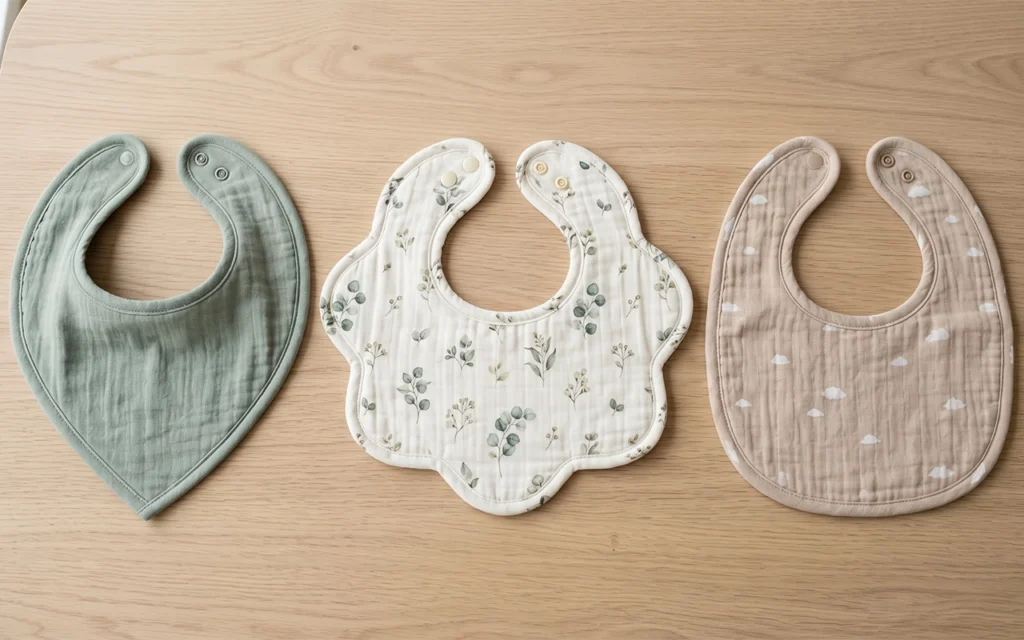
A baby bib can use the same fabric, the same embroidery, and even the same color, yet look like a completely different product once the shape changes.
A triangle bib feels more casual and compact. A petal bib creates a softer, more decorative silhouette. A rounded bib usually gives more front coverage and a more classic feeding-product appearance.
For buyers, bib shape is not only a styling decision.
It also affects coverage, embroidery placement, edge finishing, neck construction, product balance, and how the item fits into a wider collection.
Triangle Bibs Create a Compact and Casual Look
Triangle bibs are one of the most recognizable bib shapes.
Their pointed lower edge gives the product a more casual appearance and can work well in everyday or fashion-oriented baby collections.
This shape is often suitable for:
• Simple solid-color styles
• Small embroidery
• Printed fabrics
• Coordinated pacifier clip sets
• Lightweight bib constructions
Because the front area narrows toward the bottom, decorative placement needs to be planned carefully.
A large motif may look crowded or extend too close to the edge. Smaller embroidery or repeated prints often work more naturally.
Triangle bibs can also use:
• Standard binding
• Merrow edge
• Contrast edging
• Decorative stitching
The final look can change significantly depending on how the edge is finished.
Petal Bibs Offer a More Decorative Silhouette
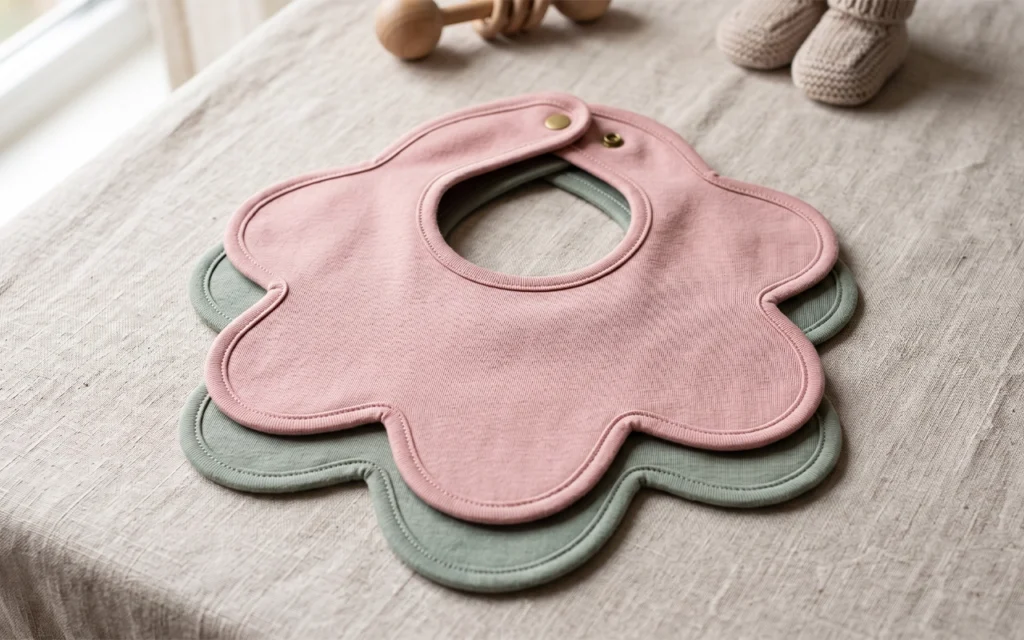
Petal bibs use multiple rounded sections around the outer edge.
This gives the bib a softer and more decorative appearance compared with a triangle or standard rounded style.
For product development, petal bibs require more attention to symmetry.
Buyers may need to check:
• Number of petals
• Petal width
• Petal depth
• Overall diameter
• Neck opening
• Snap position
• Edge consistency
Small differences between each petal can make the finished bib look uneven.
This shape can work especially well with:
• Embroidery
• Decorative merrow edges
• Contrast thread
• Soft solid colors
• Gift-oriented collections
Because the edge itself becomes part of the design, a petal bib does not always need a large print or complex decoration.
Round Bibs Provide More Front Coverage
Round or rounded bibs usually provide a broader front area.
This can make them suitable for feeding-focused collections or products that need more visible front coverage.
The larger surface also creates more room for:
• Embroidery
• Larger prints
• Appliqué
• Brand details
• Decorative stitching
Compared with a triangle bib, a rounded style may support a larger central motif without making the layout feel crowded.
However, the shape still needs to remain balanced.
The curve around the lower edge, neckline, and side area should stay smooth and symmetrical after sewing.
This is especially important when several fabric layers are used, because uneven shrinkage or stitching can distort the outline.
Shape Changes How Decoration Should Be Placed
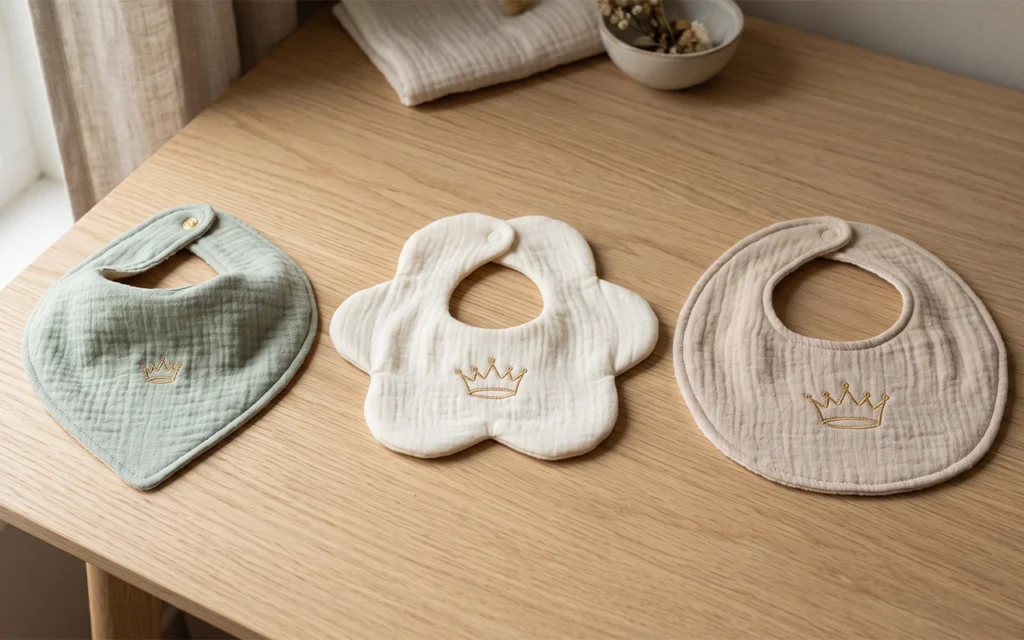
One embroidery design should not automatically be placed in exactly the same position on every bib shape.
A crown that looks balanced on a triangle bib may sit too high or too low on a rounded bib.
Likewise, a central motif on a petal bib needs to work with the decorative outer shape rather than compete with it.
During development, buyers can review:
• Motif size
• Motif position
• Distance from neckline
• Distance from bottom edge
• Alignment with the center line
• Relationship with snaps or fasteners
The same design can therefore be reused across several bib shapes, but the scale and placement may need to change.
This creates a more professional collection than simply copying the same artwork coordinates onto every SKU.
Edge Finishing Should Match the Shape
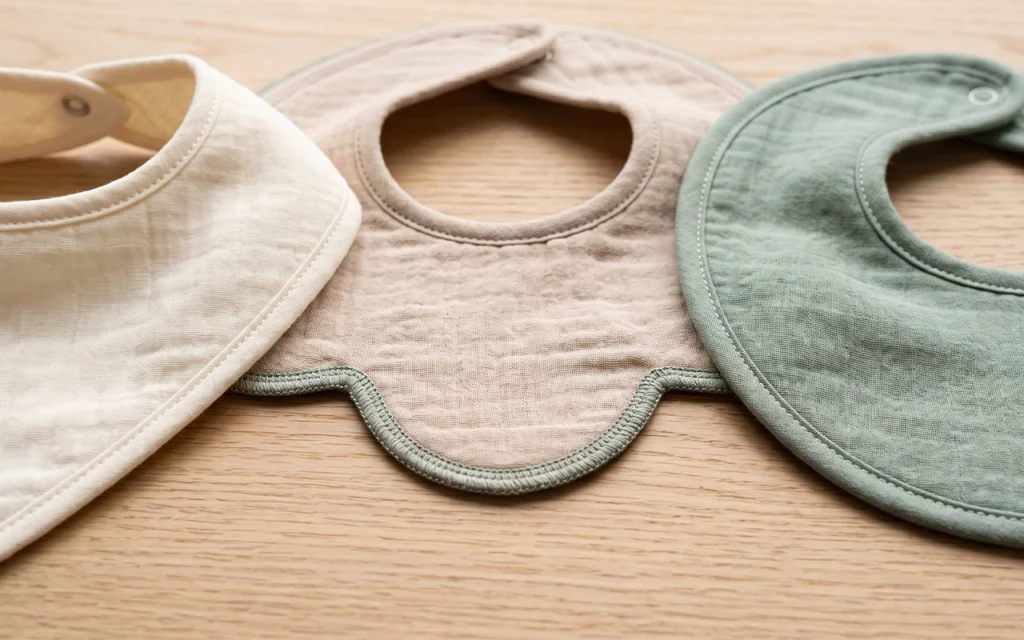
Different shapes also respond differently to edge finishing.
Triangle bibs usually include straighter sections and sharper directional changes.
Petal bibs contain repeated curves.
Round bibs rely on one continuous curved outline.
This affects how different finishes appear, including:
• Binding
• Merrow edge
• Decorative overlock
• Standard stitching
A merrow edge can emphasize the petal shape very clearly, while standard binding may create a cleaner outline on triangle or rounded styles.
Thread color also becomes part of the design.
A matching edge can keep the product subtle, while a contrasting edge can create a stronger visual identity.
Neck Opening and Snap Position Need Separate Development
Changing the outer bib shape does not mean the neck area should remain unchanged.
The neck opening, strap width, and snap position need to work with the overall product structure.
Buyers should check:
• Neck opening diameter
• Strap width
• Snap spacing
• Adjustment positions
• Left-right symmetry
• Finished neck shape
For adjustable bibs, the snap placement should create practical size options without distorting the fabric.
This is especially important on petal or rounded styles, where small changes in the neck curve can affect the whole silhouette.
Therefore, the neckline should be treated as part of the pattern development rather than copied automatically from another bib.
Use Shape to Build Different Product Positions
Different bib shapes can help one brand create several product directions without changing the entire material system.
For example:
Triangle Bib
Casual, compact, easy to coordinate with everyday sets.
Petal Bib
More decorative and suitable for gift or design-focused collections.
Round Bib
Broader front coverage and more space for embroidery or print.
A collection can use one fabric family and one color palette across all three shapes while adjusting the decoration and edge treatment for each product.
This allows the range to stay visually connected while still giving each SKU a clear identity.
Inorange Baby can support custom bib development with different shapes, neck openings, snap positions, fabrics, absorbent layers, prints, embroidery, appliqué, edge finishing, labels, and packaging.
Conclusion
Triangle, petal, and round bibs do more than create different silhouettes.
Shape affects coverage, decoration placement, edge finishing, neckline construction, and the overall visual position of the product.
For buyers, the best bib shape depends on:
Coverage + Design Style + Decoration + Edge Finish + Neck Construction + Collection Positioning
Planning these elements together makes it easier to create a bib range that feels coordinated without making every product look the same.