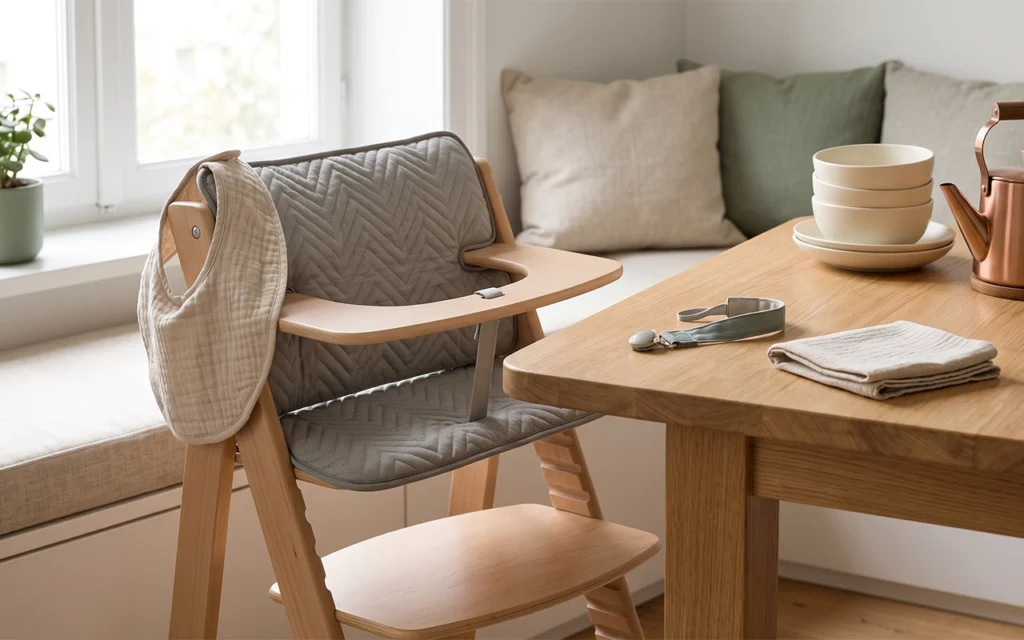
A baby feeding collection does not need to focus on only one bib. As babies move into more feeding and seated activity routines, brands can gradually add related products and turn a single SKU into a more complete collection.
For baby brands, this approach creates a clearer product structure. Different items can support the same daily feeding scene, while coordinated colors, patterns, and design details help the collection feel more consistent.
Therefore, a feeding collection can start with baby bibs and then expand into high-chair accessories, washcloths, and pacifier clips.
Start with Baby Bibs as the Core Product
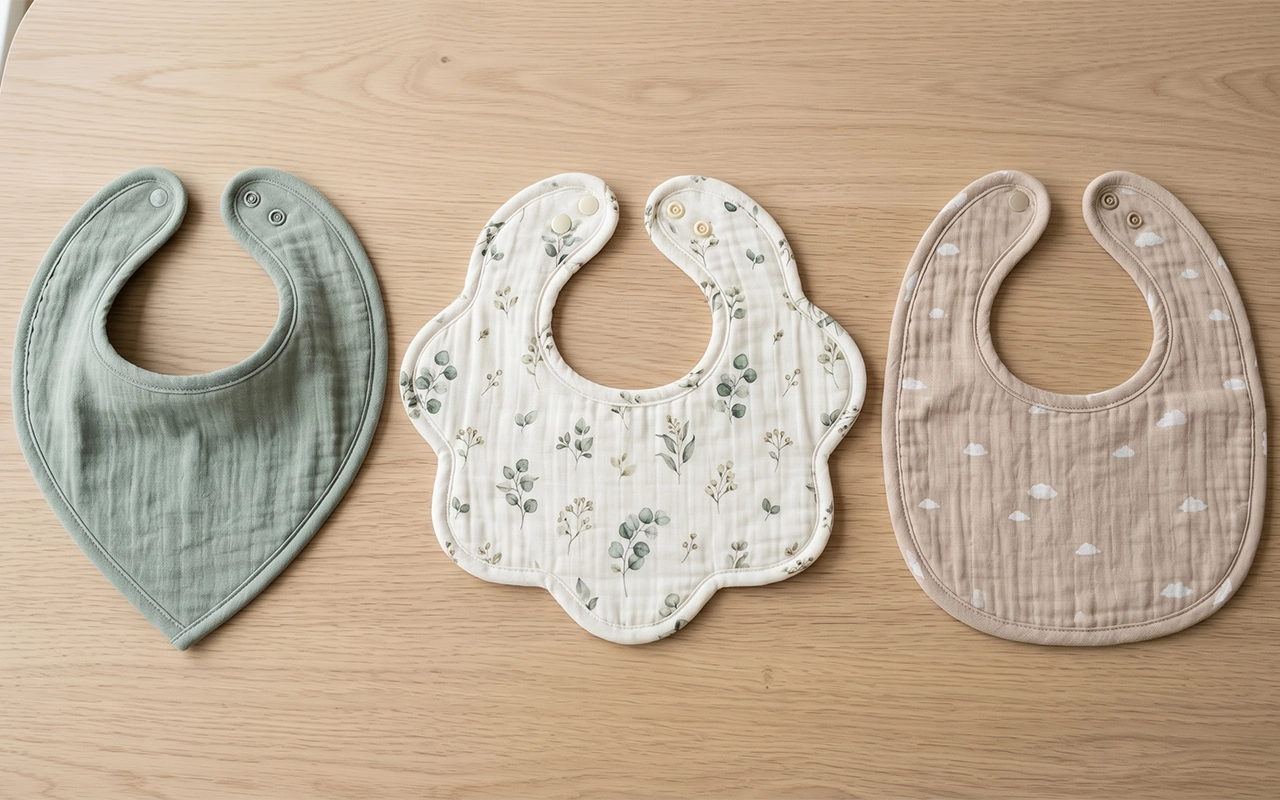
Baby bibs are a natural starting point for a feeding collection.
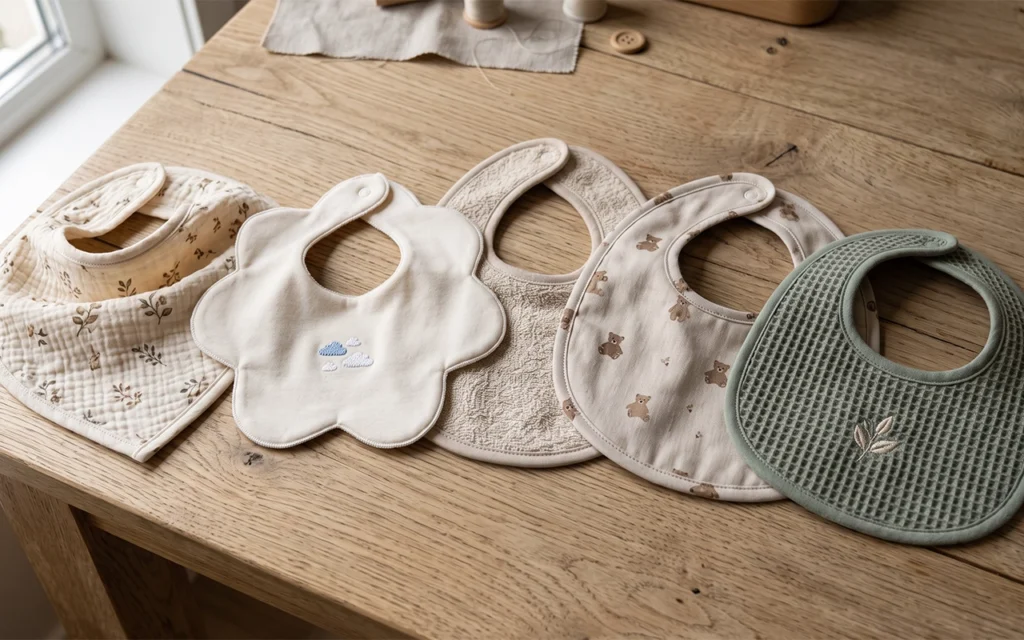
Brands can develop triangle, petal, round, or other custom shapes according to their product direction. Materials and structures can also vary. Cotton knitted fabric, muslin, terry cloth, and different absorbent layer combinations can all be considered during development.
In addition, bibs offer many customization options, such as:
• Prints and patterns
• Embroidery
• Decorative shapes
• Binding
• Merrow edges
• Custom colors
This allows one collection to include both simple everyday bibs and more decorative styles.
For example, a brand can begin with one main color palette and one design theme. Then, different bib shapes and finishing methods can create several coordinated SKUs without making every product look identical.
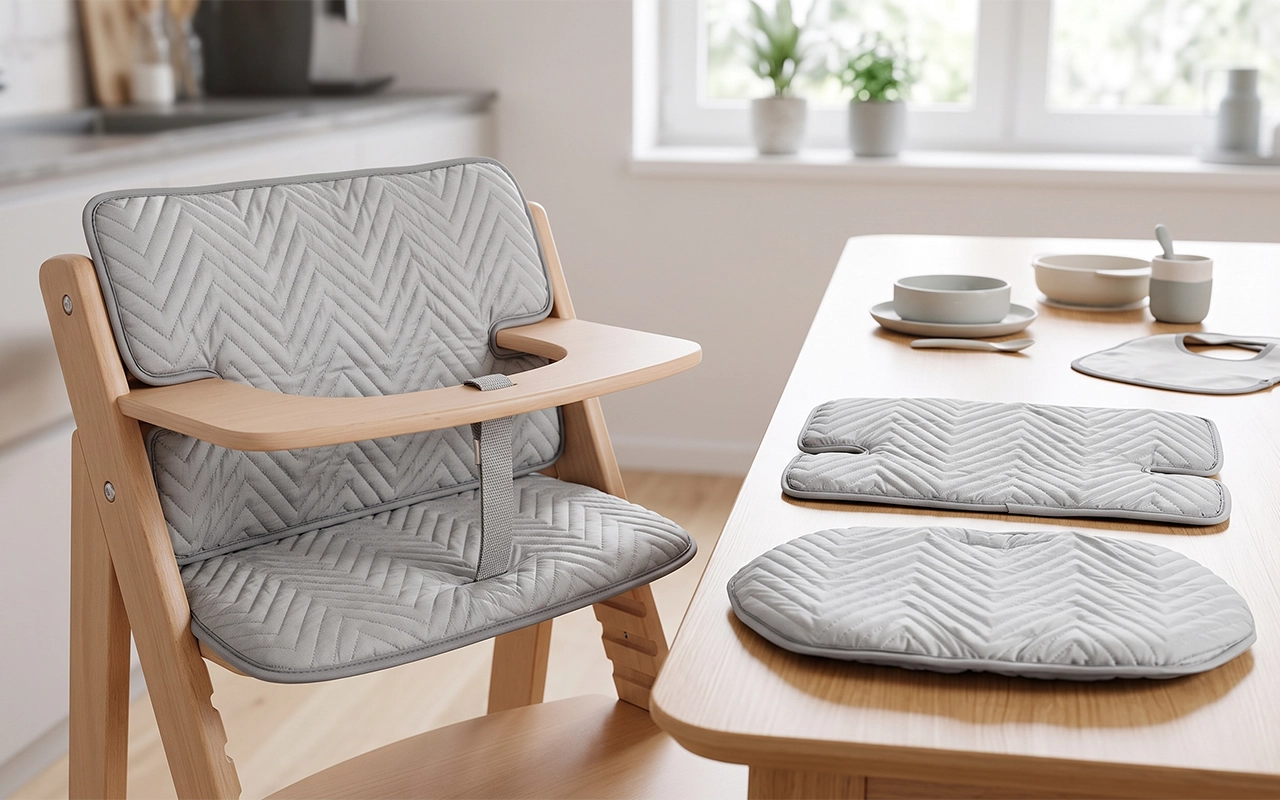
Expand the Collection with High-Chair Accessories
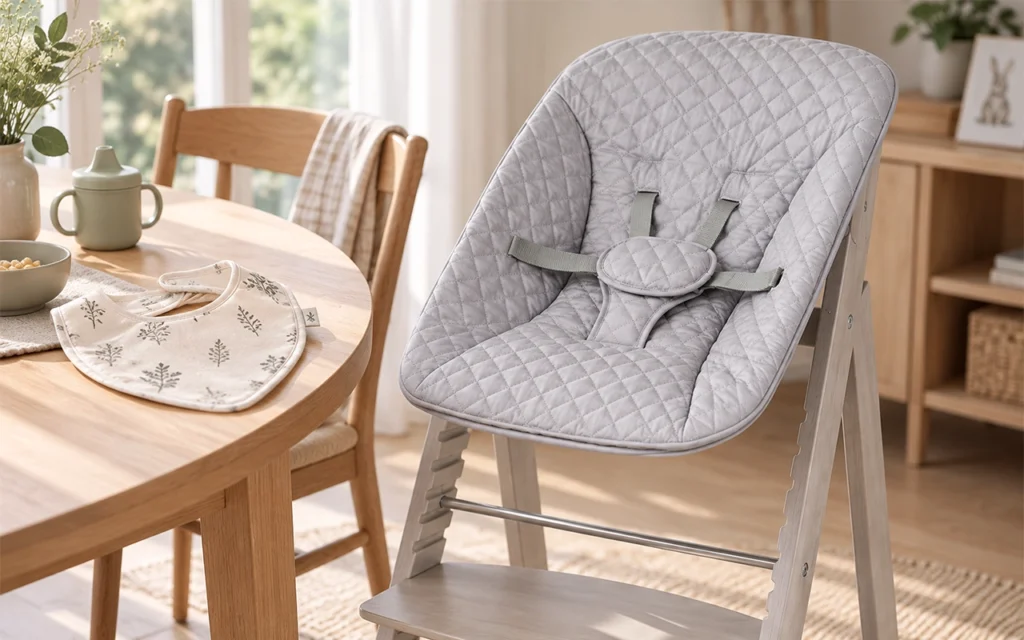
When brands want to move from wearable feeding products into a more complete feeding scene, high-chair accessories can become a natural extension.
High-chair inlays, seat cushions, and related textile accessories can coordinate well with bibs.
Depending on the project, brands can customize:
- Fabric
- Cushion structure
- Colors
- Stitching or quilting
- Harness opening positions
- Labels
Visually, high-chair accessories can share the same color family or design language as the bib collection.
For example, a bib may feature a small animal embroidery, while the high-chair cushion uses the same colors or a simplified version of the motif. This keeps the collection coordinated without repeating the exact same print on every product.
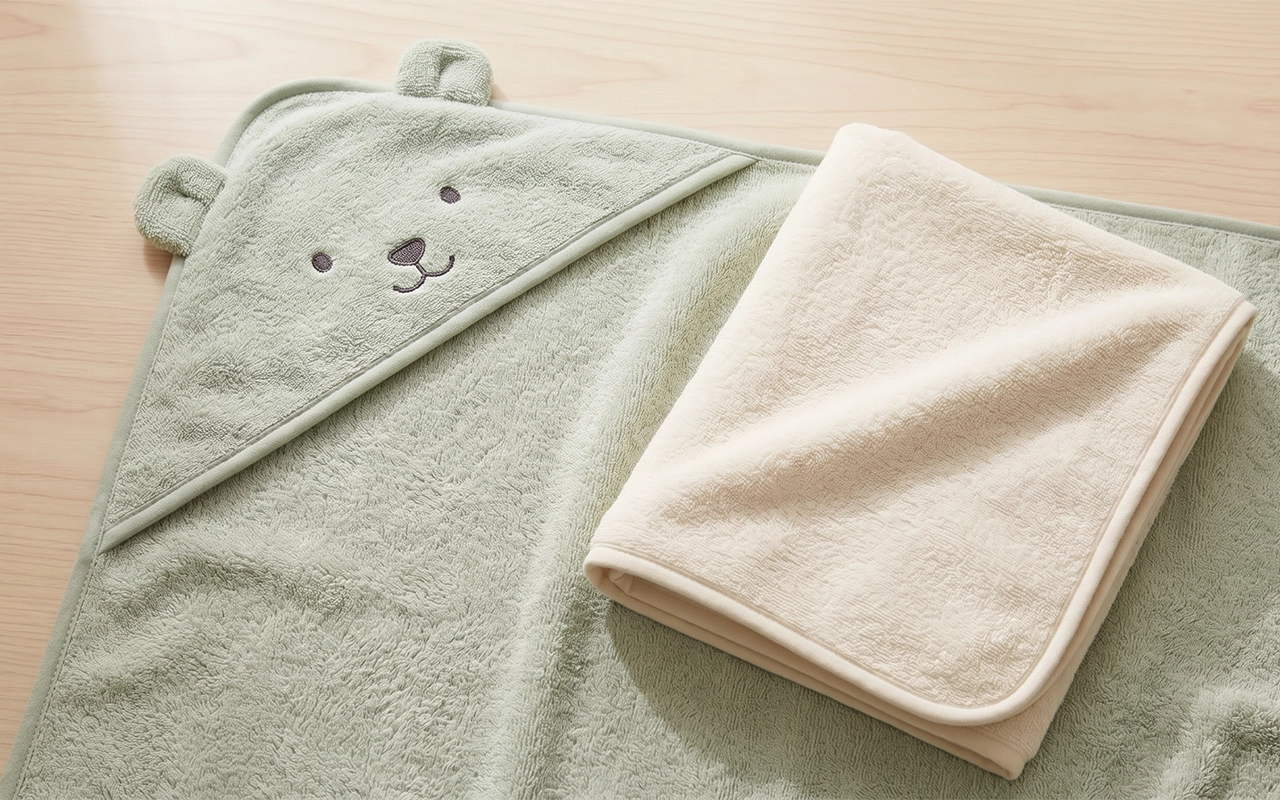
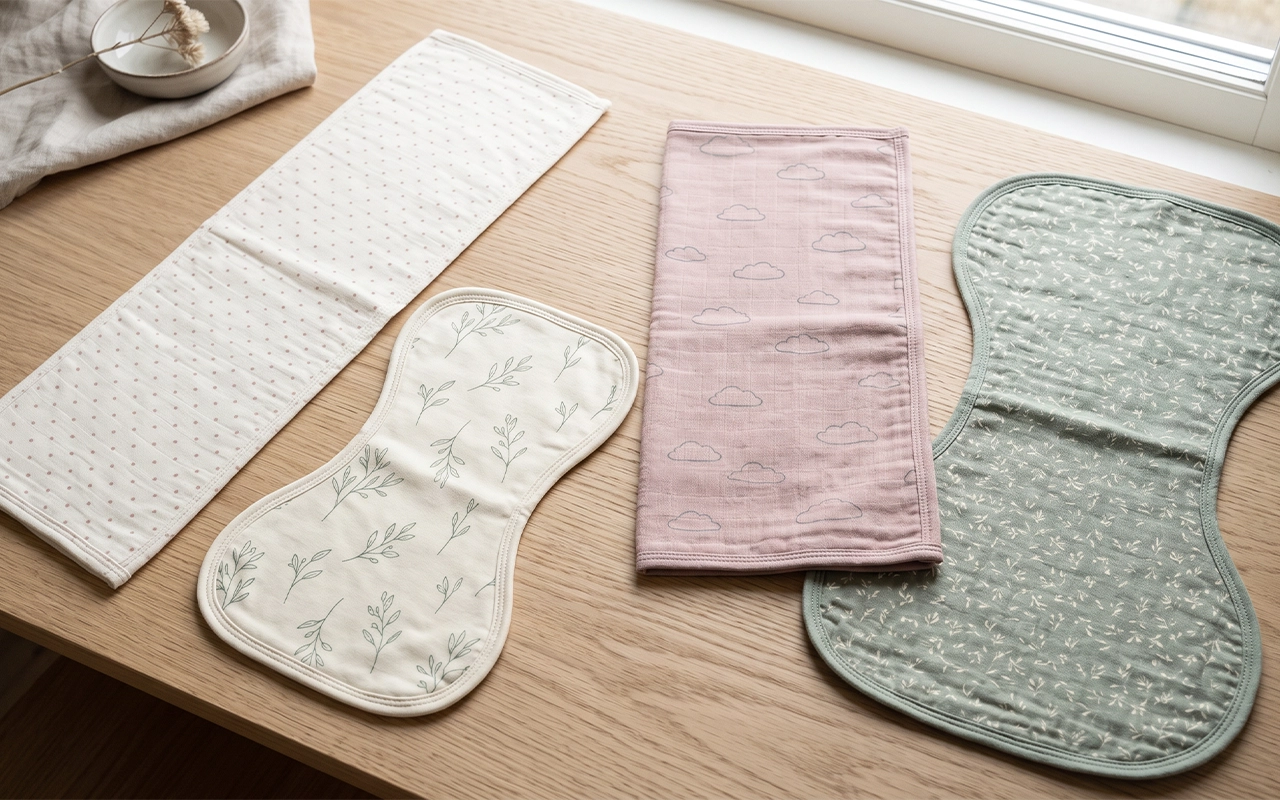
Add Washcloths for Everyday Feeding and Care
Washcloths are small products, but they can fit naturally into a feeding and daily care range.
They can coordinate with bibs and high-chair accessories, while also working well in multi-piece packs or gift sets.
Brands can customize details such as:
• Fabric type
• Size
• Edge finishing
• Color
• Prints
• Embroidery
• Pack quantity
For example, one collection may use the same botanical or animal theme across several products. The bib can feature embroidery, while the washcloth uses a small print or simple color block.
This approach keeps the collection connected while giving each product its own visual identity.
Use Pacifier Clips as a Coordinated Accessory
Pacifier clips can also work as a smaller accessory within a coordinated baby collection.
Compared with larger textile products, pacifier clips are especially suitable for small decorative details. Brands can develop different strap colors, decorative shapes, embroidery or quilting details, labels, and packaging.
If the wider collection already uses clouds, animals, plants, or other custom motifs, the same design language can also appear in the decorative element of the pacifier clip.
A feeding-related collection might therefore include:
Baby Bib + High-Chair Accessory + Washcloth + Pacifier Clip
Each product serves a different purpose, while shared colors, patterns, and decorative details connect the range visually.
For pacifier clips and similar baby accessories, brands should also confirm product structure, attachment details, labeling, and applicable target-market requirements during development.
Create a Coordinated Collection Without Making Every Product Identical
A coordinated collection does not mean every product must use the same fabric or exactly the same print.
A more flexible approach is to define several shared elements first, such as:
• Two or three main colors
• One core design theme
• A consistent embroidery style
• Coordinated labels and packaging
• Similar material direction
Then, each product can adapt those elements according to its own function.
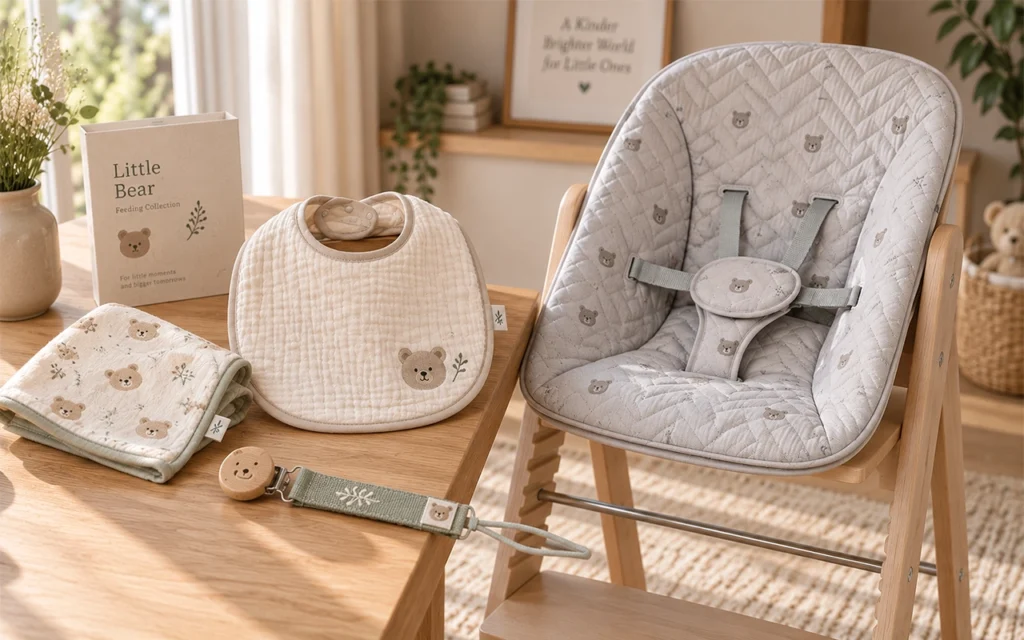
For example, one bear theme could be developed like this:
Bib → Bear embroidery
High-chair inlay → Coordinated colors + simplified motif
Washcloth → Bear print
Pacifier clip → Bear-shaped decorative detail
This creates a clear product family while allowing each SKU to remain distinct.
Inorange Baby supports OEM and ODM development for baby product collections. Existing samples can be used as references, while fabrics, sizes, structures, colors, prints, embroidery, labels, packaging, and other details can be adjusted according to each brand’s project needs.
Conclusion
A complete baby feeding collection does not need to start with a large number of products.
Brands can begin with baby bibs and gradually expand into high-chair accessories, washcloths, and pacifier clips.
More importantly, coordinated products do not need to repeat the same pattern everywhere. Shared colors, design language, decorative elements, and packaging can create a consistent collection while keeping each product visually different.
With flexible OEM and ODM development, brands can expand their feeding range while maintaining a clear and recognizable product identity.