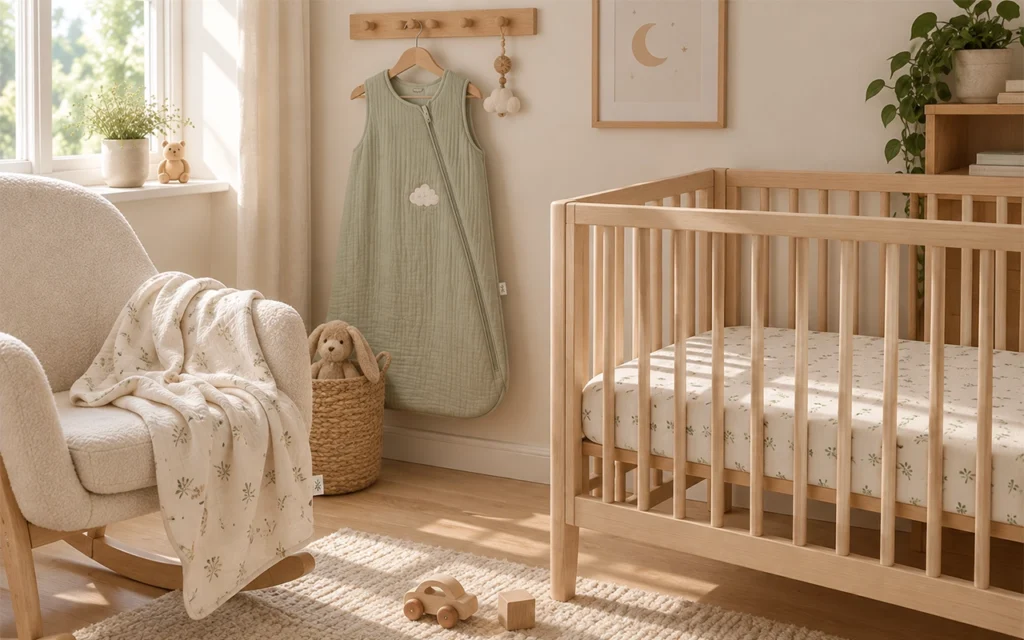
Swaddles and sleep sacks should not always be treated as two unrelated products.
They serve different stages of a baby’s development. A newborn collection may begin with swaddles. Later, as babies become more active, brands can transition the range toward non-weighted, arms-free sleep sacks.
For baby brands, this creates a natural product development path. Instead of launching several disconnected SKUs, brands can build a sleep transition range with clear product positioning.
At the same time, coordinated colors, prints, labels, and packaging can connect the products visually. This allows the collection to grow while maintaining a consistent brand identity.
Start the Range with Newborn Swaddles
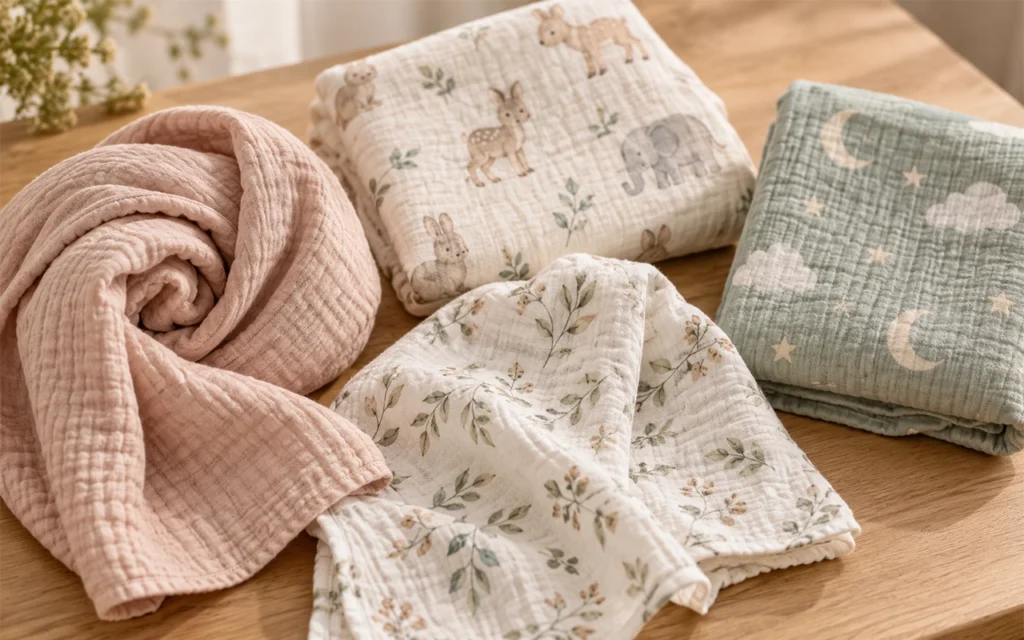
Muslin swaddles can provide a practical starting point for a newborn sleep and care collection.
Depending on the project, brands can customize:
• Fabric
• Size
• Number of layers
• Colors
• Prints and patterns
• Edge finishing
• Labels
• Packaging
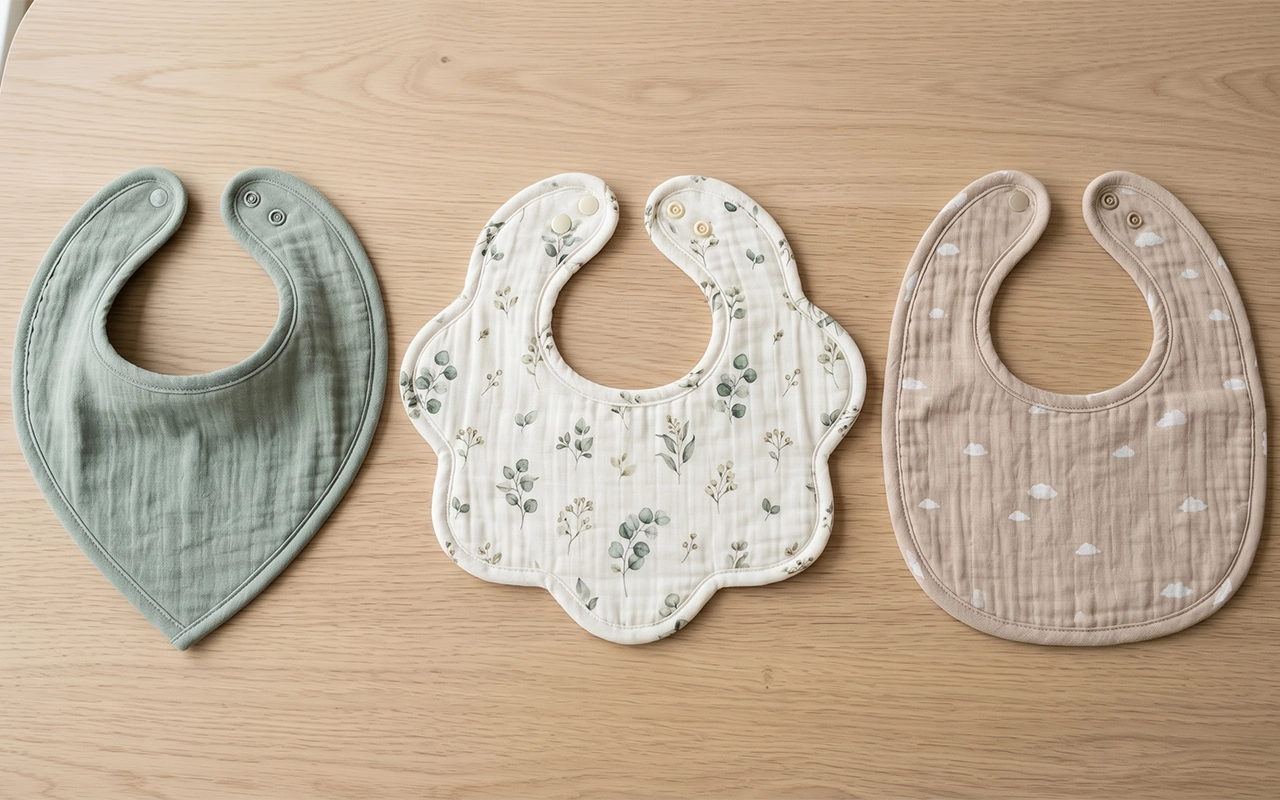
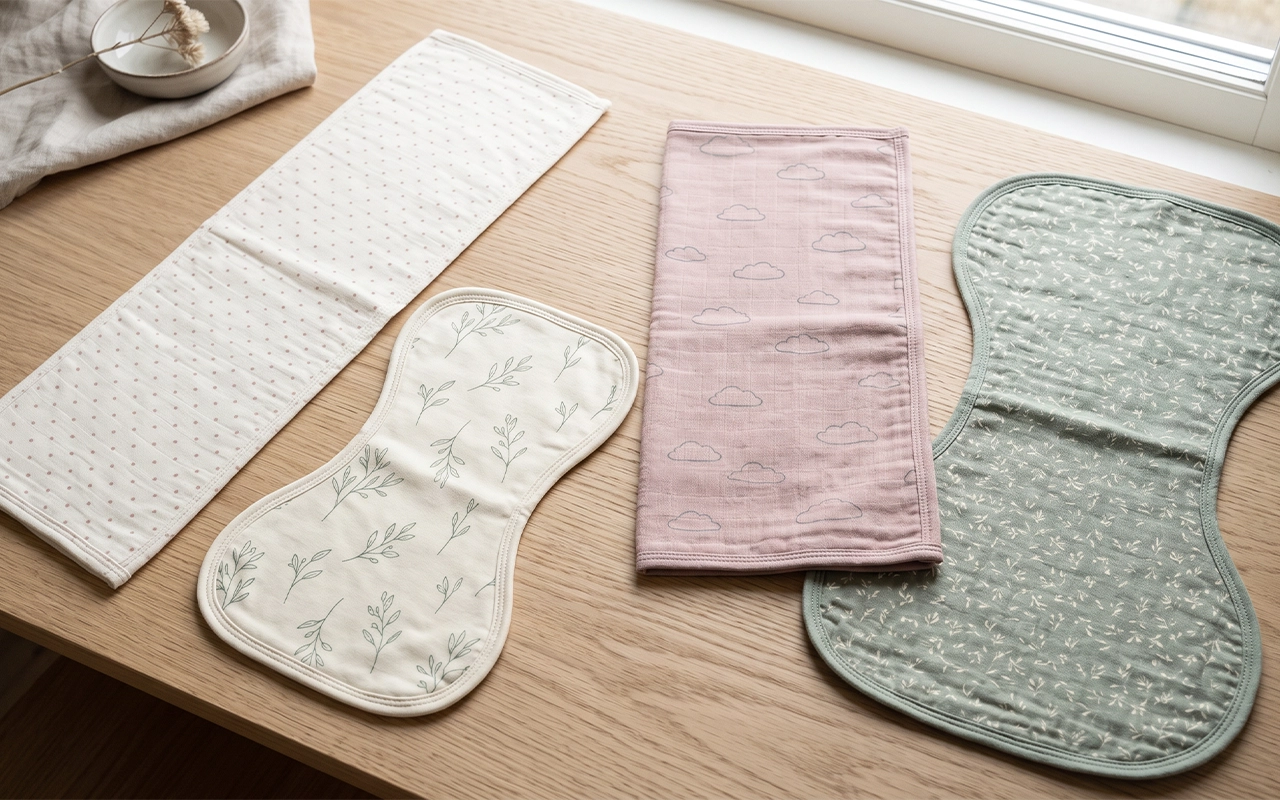
For example, one brand may prefer simple solid colors. Another may develop animal, botanical, cloud, moon, or original branded prints.
However, brands should not position swaddles only around a fixed age range. Babies develop at different speeds. Restrictive swaddling should stop once a baby begins showing signs of attempting to roll.
Therefore, product instructions should clearly explain when swaddling is no longer appropriate. This is especially important when brands sell across markets with different labeling and safe-use requirements.
From a product planning perspective, the swaddle should represent the newborn stage, not the entire sleep range.
Plan the Transition Around Development, Not Only Age
The main difference between a swaddle and a sleep sack is not simply size.
The baby’s movement changes as development progresses. Once rolling signs appear, brands need a product that does not restrict the arms or body in the same way as a traditional swaddle.
A clearer product path is:
Newborn Stage → Swaddle
Increased Movement / Rolling Signs → Transition
Growing Baby → Arms-Free Sleep Sack
This approach is more useful than relying only on labels such as “0–3 months” or “3–6 months.”
For buyers, it also creates clearer product communication. Each product has a defined role, while the whole range follows a logical development journey.
As a result, brands can reduce confusion between different sleep products and create a stronger connection between consecutive SKUs.
Develop Sleep Sacks as the Next Product Stage
Arms-free sleep sacks can become the next major category in the range.
They provide a different structure from restrictive swaddles and allow more freedom of movement. Brands can also develop sleep sacks for different seasons, product positions, and customer preferences.
Customization may include:
• Fabric selection
• TOG options
• Product sizes
• Neckline and armhole construction
• Zipper design
• Bottom shape
• Colors
• Prints
• Embroidery
• Labels and packaging
For example, a brand may develop both 0.5 TOG and 1.0 TOG options as part of the same collection. However, TOG should not be treated as the only factor in product positioning. Fabric, garment construction, layering guidance, and target-market requirements also need consideration.
In addition, brands should keep infant sleep products separate from loose bedding in their product communication. Clear positioning helps buyers build a more responsible and understandable sleep range.
Keep Swaddles and Sleep Sacks Visually Connected
A change in product structure does not mean the brand identity needs to change.
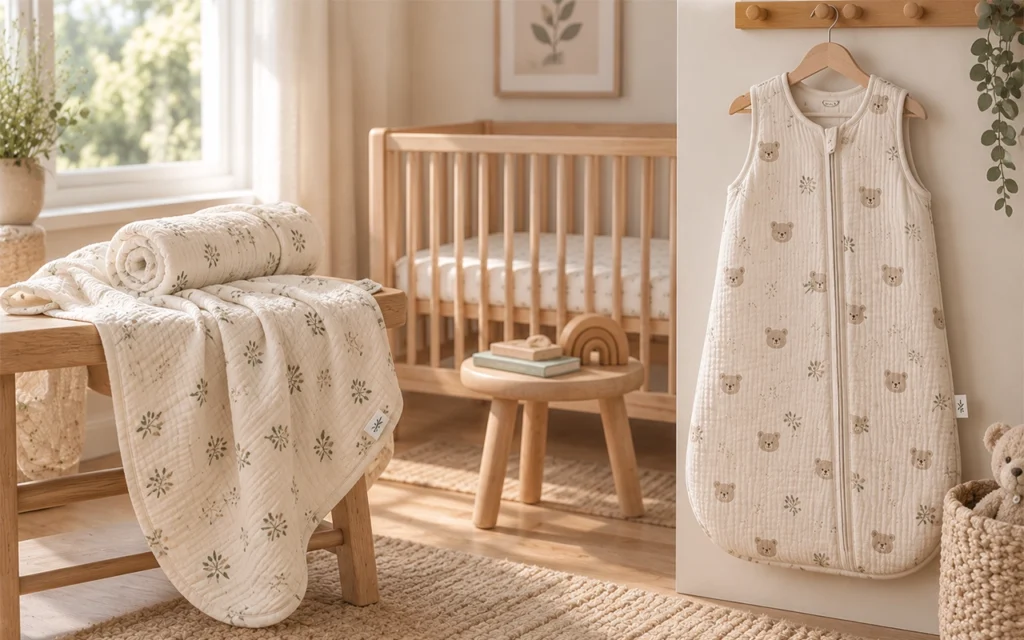
Swaddles and sleep sacks can share a common design theme while using different executions.
For example:
Muslin Swaddle → All-over cloud print
Sleep Sack → Small cloud embroidery
Packaging → Coordinated colors and graphics
Brands can also keep only the color palette consistent while using different patterns across products.
Shared elements may include:
• Core colors
• Print style
• Embroidery language
• Brand labels
• Packaging
• Product naming
Meanwhile, materials, thickness, dimensions, and construction can change according to product function.
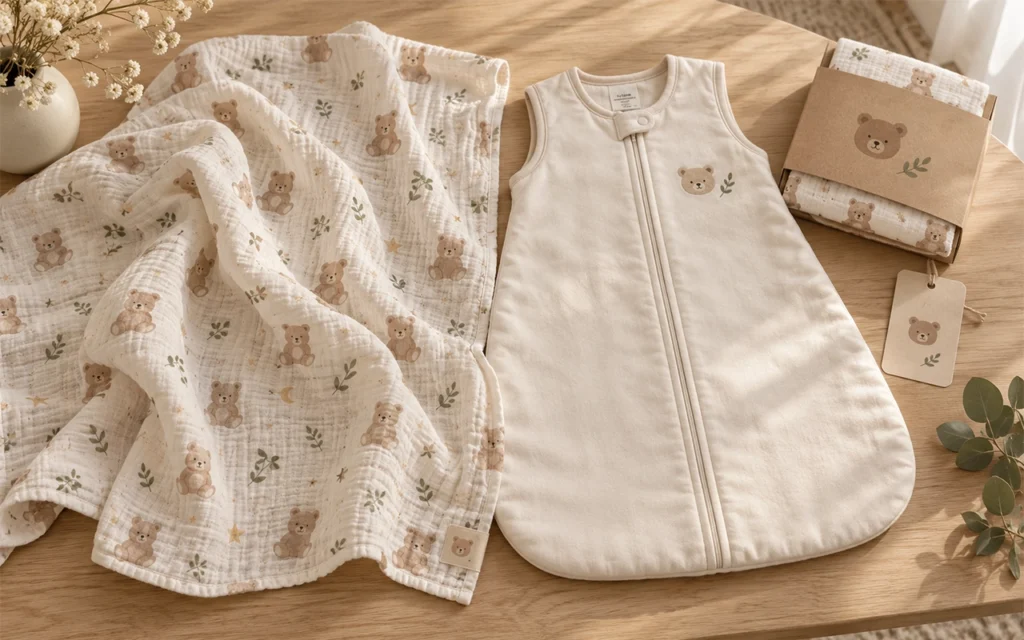
This creates a coordinated collection without making every SKU look identical.
Build a Sleep Range That Can Grow with the Baby
Brands do not need to launch a large number of sleep products at once.
A simple range can begin with:
| Stage | Product Direction |
|---|---|
| Newborn | Muslin Swaddle |
| Transition | Stop restrictive swaddling when rolling signs appear |
| Growing Baby | Arms-Free Sleep Sack |
| Seasonal Expansion | Different fabrics, TOG options, sizes, and designs |
Later, brands can expand successful products with additional colors, prints, sizes, or seasonal versions.
This approach creates a clearer product roadmap and gives buyers more flexibility when planning future SKUs.
Inorange Baby supports OEM and ODM development for baby textile collections. Existing samples can provide a starting point, while fabrics, sizes, structures, TOG options, colors, prints, embroidery, labels, and packaging can be adjusted according to each project.
Conclusion
Swaddles and sleep sacks serve different stages, but they can belong to one connected product range.
Brands can begin with swaddles for the newborn stage. Then, as babies become more active, the range can transition toward arms-free sleep sacks.
More importantly, the products do not need identical materials or prints. Shared colors, design language, labels, and packaging can create a consistent collection while each product keeps the structure it needs.
For baby brands, planning a complete swaddle-to-sleep-sack range can create clearer product positioning and leave more room for future size, TOG, pattern, and customization options.