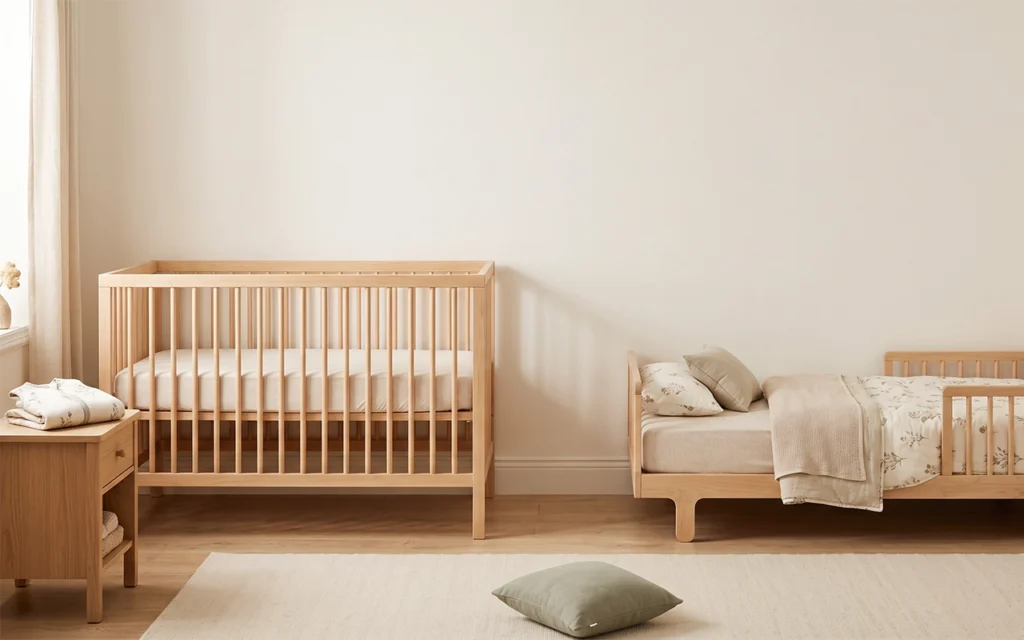
Baby sleep products do not stay the same as children grow. For brands, this creates an important product development opportunity.
An infant sleep range may focus on mattresses, swaddles, and sleep sacks. Later, the product assortment can gradually expand into blankets, pillows, quilts, and coordinated bedding sets designed for older children.
However, brands should not simply add more bedding products based on age alone. Infant sleep products and toddler bedding have different functions, structures, and usage considerations.
Therefore, the transition from infant sleep to toddler bedding should be planned as a clear product range expansion, not just a larger version of the newborn collection.
Keep Infant Sleep Products and Toddler Bedding Clearly Separated
Infant sleep ranges usually require simpler product positioning.
Brands may begin with products such as:
• Baby mattresses
• Swaddles
• Non-weighted sleep sacks
• Other appropriate infant sleep textiles
As the child grows, the assortment can expand into products with different functions. Larger blankets, pillows, quilts, and bedding sets may become relevant for older-child collections.
From a B2B perspective, this separation is important because not every bedding product should be marketed for the same sleep stage.
Instead of putting every product under one broad “baby bedding” category, brands can create clearer sub-ranges such as:
Infant Sleep Collection
and
Toddler Bedding Collection
This makes product pages, packaging, age positioning, and buyer communication easier to understand.
Introduce Pillows and Quilts as a New Product Stage
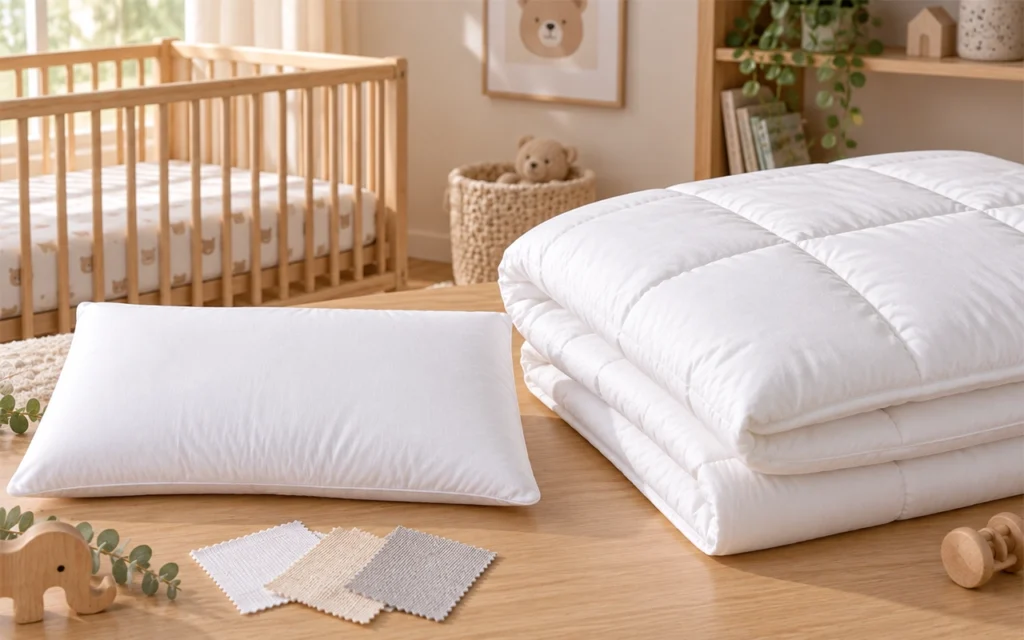
Pillows and quilts create a natural opportunity to expand beyond the infant sleep range.
However, brands should avoid using one universal age statement for every market. Product positioning should consider the target market, intended sleeping environment, dimensions, materials, and applicable guidance.
From a development perspective, pillow and quilt products also introduce new customization decisions.
Brands may need to consider:
• Outer fabric
• Filling material
• Filling weight
• Product dimensions
• Stitching construction
• Surface patterns
• Labels
• Packaging
For pillow and quilt inner products, filling can also become part of the product specification. For example, different projects may use different fiber combinations according to the required product positioning.
Therefore, adding pillows and quilts is not simply about increasing SKU count. It represents a new stage of bedding development with its own material and construction requirements.
Expand from Individual Products to Coordinated Bedding Sets
Once a brand moves into toddler or older-child bedding, it can begin planning more complete product combinations.
Instead of selling only one blanket or one pillow-related item, brands can develop coordinated bedding sets according to their target market and collection structure.
Customization may include:
• Fabric selection
• Product sizes
• Colors
• Prints
• Embroidery
• Decorative details
• Set combinations
• Labels
• Packaging
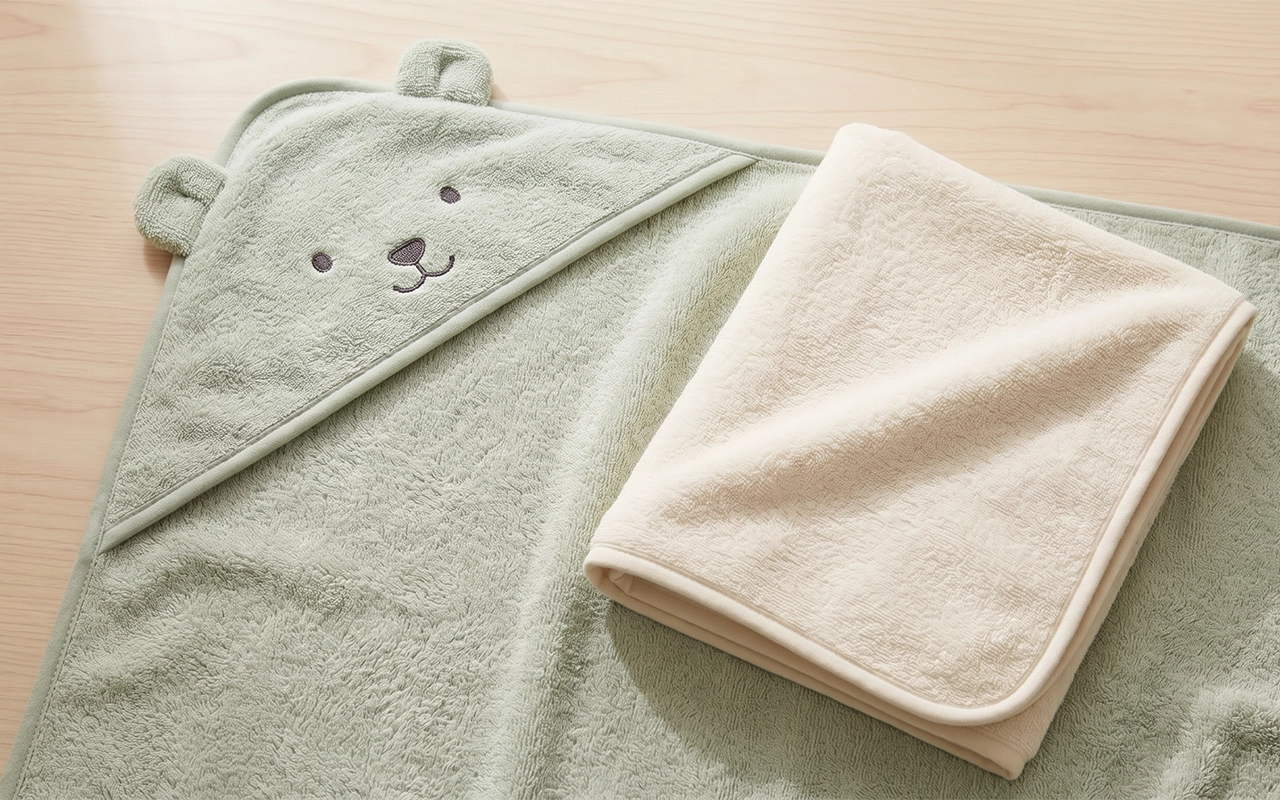
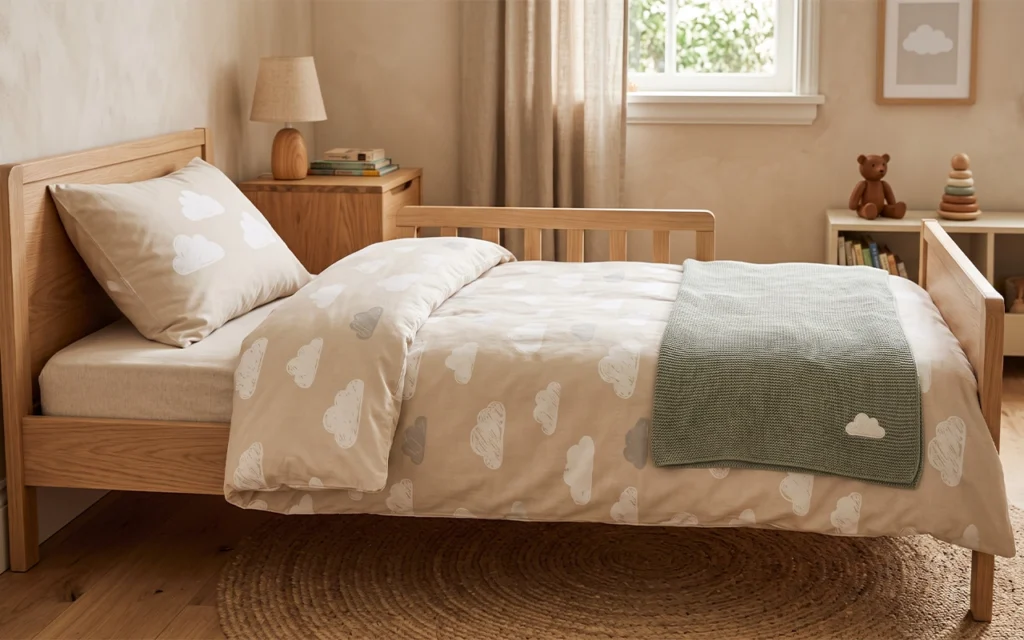
For example, a brand might first launch a blanket in a cloud theme. Later, the same visual direction can expand into a bedding set using related colors and patterns.
The products do not need to look identical. One item may use an all-over print, while another uses embroidery or a simplified motif.
This approach creates a stronger collection while allowing each product to keep its own structure and function.
Keep the Sleep Range Visually Connected as It Grows
A growing product range should still feel like one brand.
The easiest way to achieve this is not to apply the exact same print everywhere. Instead, brands can define a small number of shared visual elements.
For example:
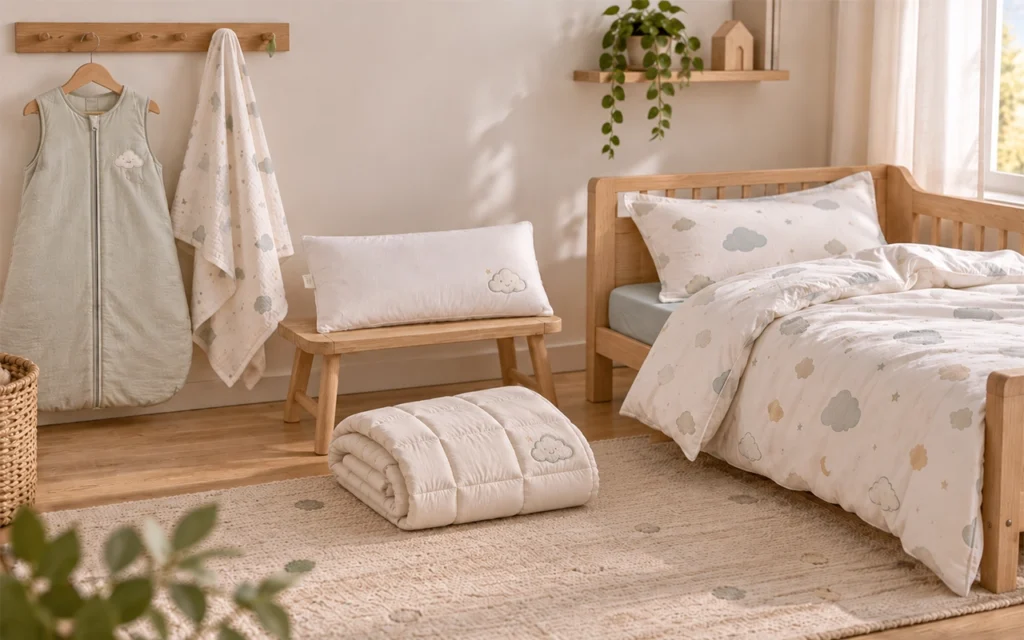
Sleep Sack → Small cloud embroidery
Baby Blanket → Cloud-inspired knitted or printed detail
Toddler Bedding → Coordinated cloud pattern
Packaging → Same color palette and graphic style
Brands can also connect products through:
• Core colors
• Pattern language
• Embroidery style
• Labels
• Packaging
• Product naming
Meanwhile, materials, dimensions, fillings, and structures can change according to the function of each product.
As a result, the collection remains recognizable without becoming repetitive.
Plan the Product Range as a Long-Term Growth Path
Brands do not need to launch every sleep and bedding product at the same time.
A simpler roadmap can look like this:
| Product Stage | Possible Product Direction |
|---|---|
| Newborn | Mattress, Swaddle |
| Growing Baby | Schlafsack |
| Daily & Outing Textiles | Babydecke |
| Toddler Transition | Larger Blankets, Pillow and Quilt Products |
| Expanded Bedding Range | Coordinated Bedding Sets |
This gives brands a clearer way to expand future SKUs.
It also creates more flexibility during OEM and ODM development. Fabrics, sizes, fillings, colors, prints, embroidery, labels, packaging, and product combinations can all be adjusted according to the project.
Inorange Baby supports customized development across different baby textile categories. Existing samples can provide a starting point, while product details can be adjusted for different brand and market requirements.
Conclusion
Moving from infant sleep products to toddler bedding is an important step in building a broader baby textile range.
Brands can begin with mattresses, swaddles, and sleep sacks. Later, they can gradually introduce blankets, pillow and quilt products, and coordinated bedding sets.
The key is to keep product stages clearly positioned while maintaining a consistent brand identity.
With a planned product roadmap and flexible OEM/ODM development, brands can expand their sleep collection gradually instead of treating every new product as an unrelated SKU.