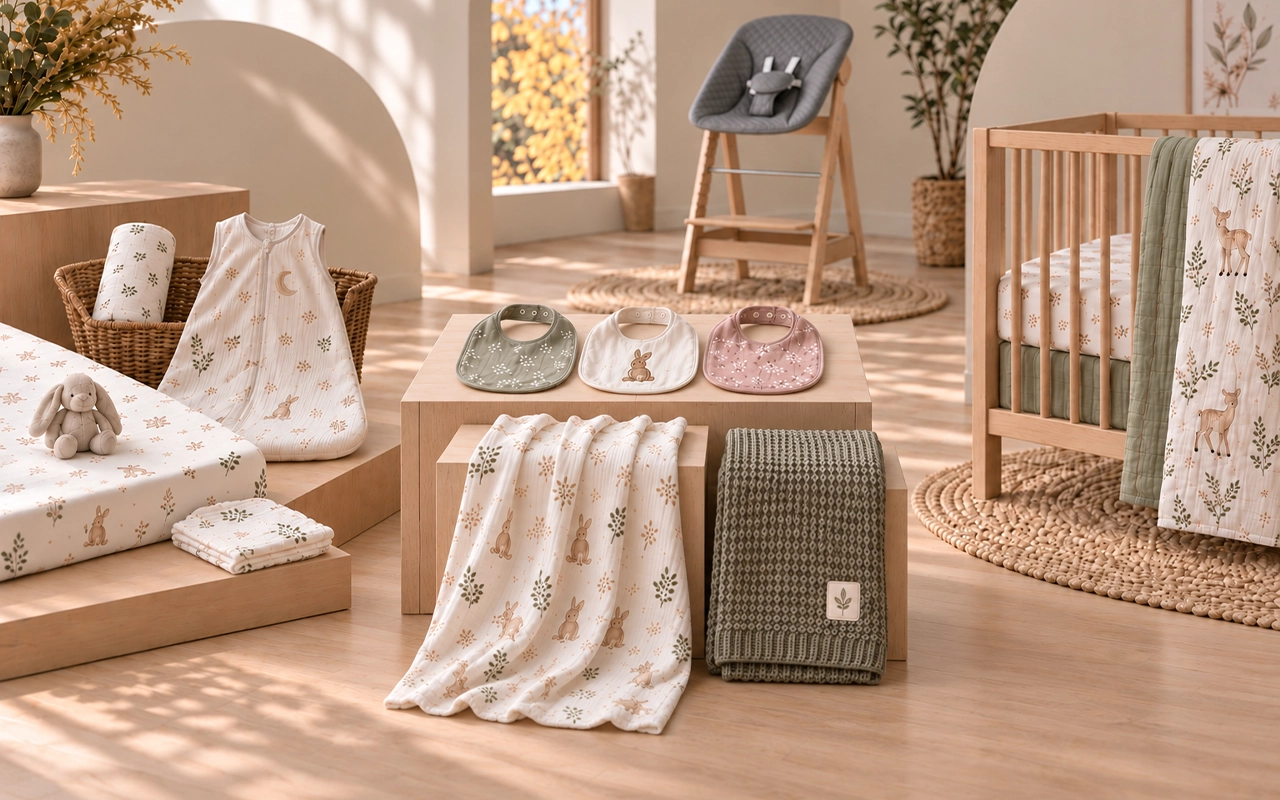
Baby needs change quickly from the newborn stage to toddlerhood. For baby brands, these changes also influence product assortment, SKU planning, and new product development.
A newborn collection may focus on swaddles, sleep sacks, mattresses, and basic care textiles. As babies grow, brands can gradually add bibs, outing blankets, feeding accessories, and selected activity products. Later, toddler bedding can extend the range even further.
Therefore, age and development stage can provide a useful framework for product planning. However, age ranges should remain a development reference rather than a universal usage rule. Actual suitability should always depend on the product design, the child’s development, usage instructions, and target-market requirements.
Newborn Stage: Build a Basic Sleep and Care Collection
For a newborn range, brands can start with essential sleep and daily care products.
A basic collection may include:
- Baby mattresses
- Muslin swaddles
- Non-weighted sleep sacks
- Washcloths
- Other lightweight care textiles
Swaddles are a natural fit for many newborn collections. Brands can customize fabric, size, prints, colors, and packaging. In addition, the same design theme can extend to sleep sacks, washcloths, or other textile products.
However, brands should avoid positioning swaddles only by a fixed age range. Once a baby begins showing signs of attempting to roll, restrictive swaddling should stop. Product instructions should reflect safe-use guidance for the intended market.
Newborn sleep collections also require careful product positioning. Mattresses, sleep sacks, and care textiles may belong to the same brand range, but not every soft product belongs inside an infant sleep space.
Therefore, the goal is not to add as many newborn SKUs as possible. Instead, brands should build a clear and well-positioned foundation for later product expansion.
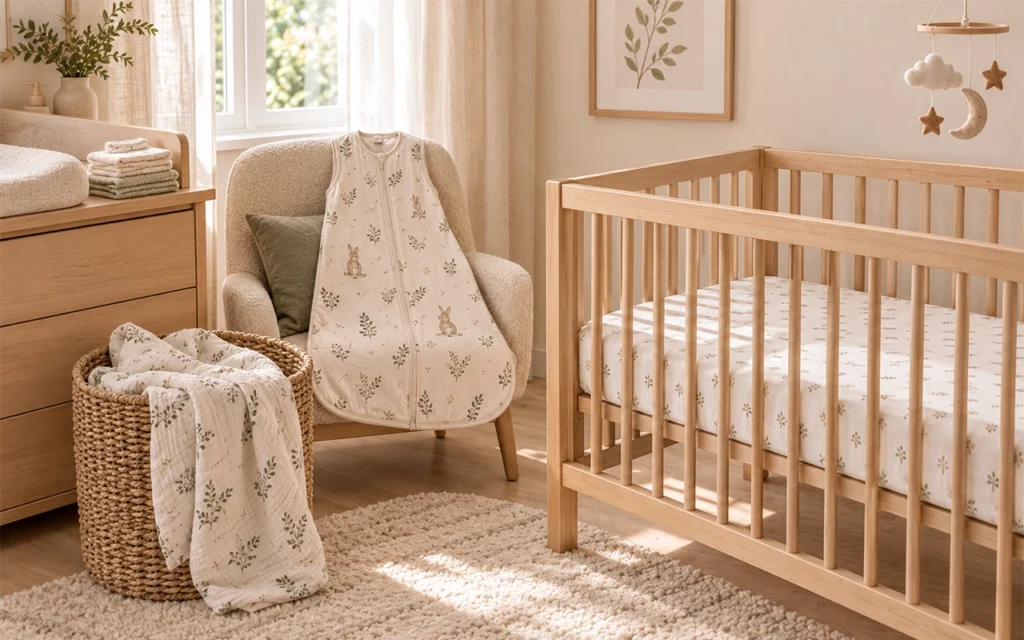
3–6 Months: Expand into Bibs and Flexible Textiles
As babies become more active, brands can begin introducing products for additional daily situations.
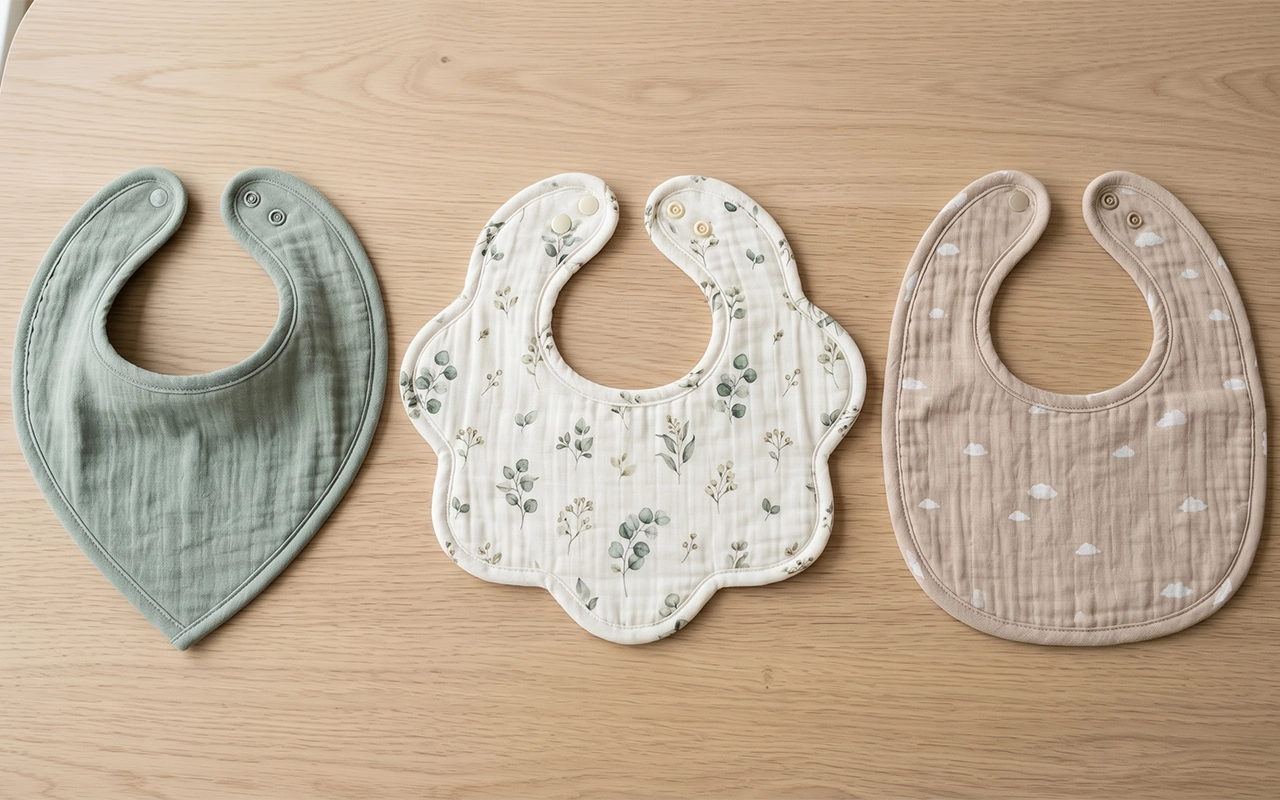
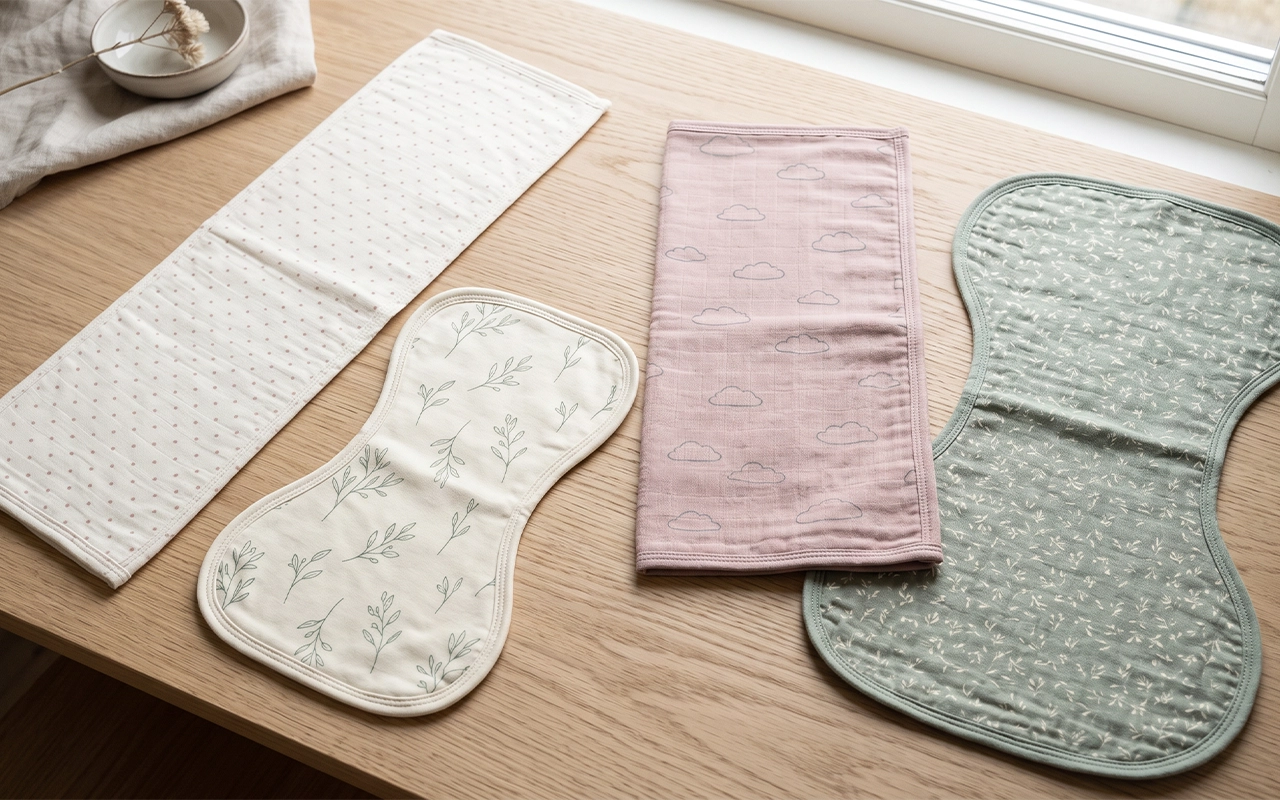
Sleep sacks can continue as part of the sleep range, especially when the design allows free movement. Meanwhile, baby bibs can become an important category for drooling, daily care, and the gradual transition toward feeding.
Brands can create variety through:
- Different bib shapes
- Fabric combinations
- Absorbent structures
- Edge finishes
- Prints and patterns
- Embroidery details
Lightweight muslin blankets can also enter the range for outings, everyday care, or other appropriate non-sleep uses.
This stage allows a brand to move beyond a basic newborn collection. Instead of selling only sleep products, the range can gradually include sleep + care + everyday textile products.
At the same time, brands should keep product functions clear. A baby blanket intended for outings should not automatically be promoted as an infant sleep product.
6–12 Months: Add Feeding, Outing, and Activity Products
As babies become more active, the product range can expand further.
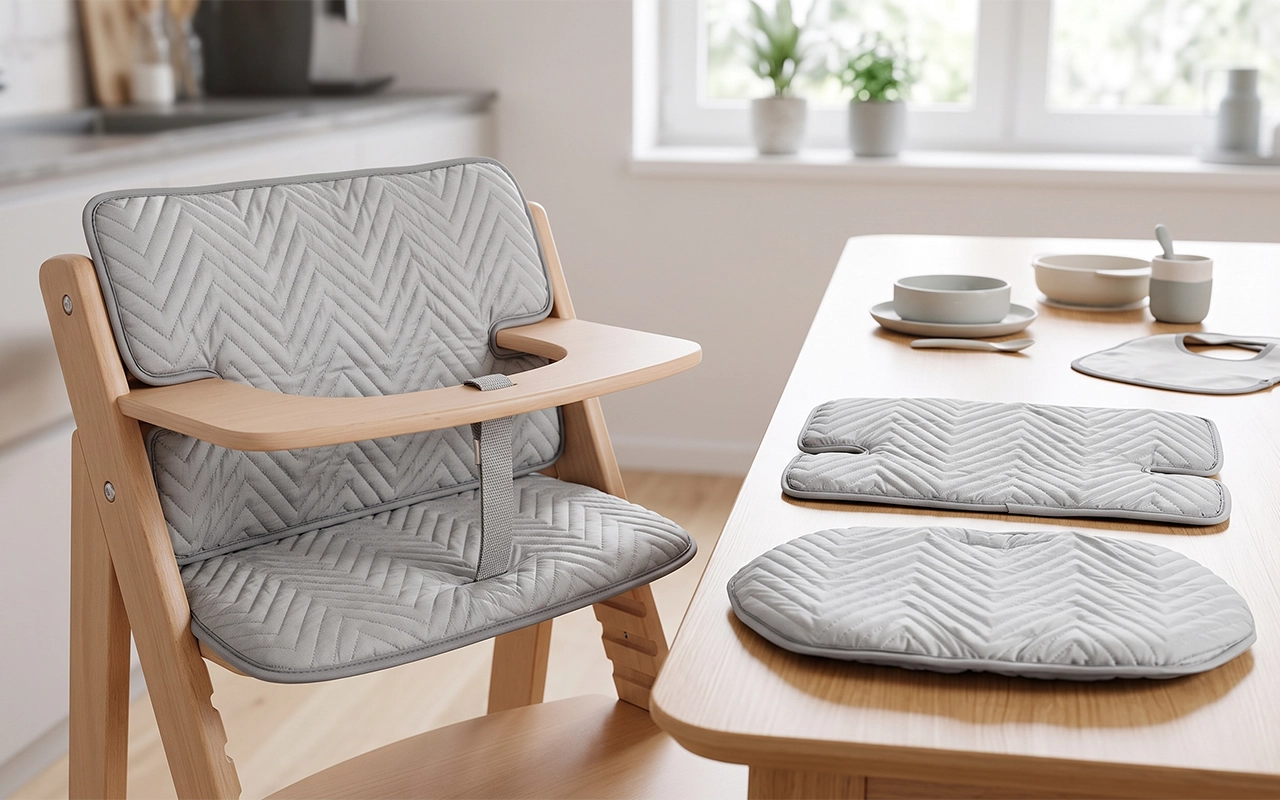
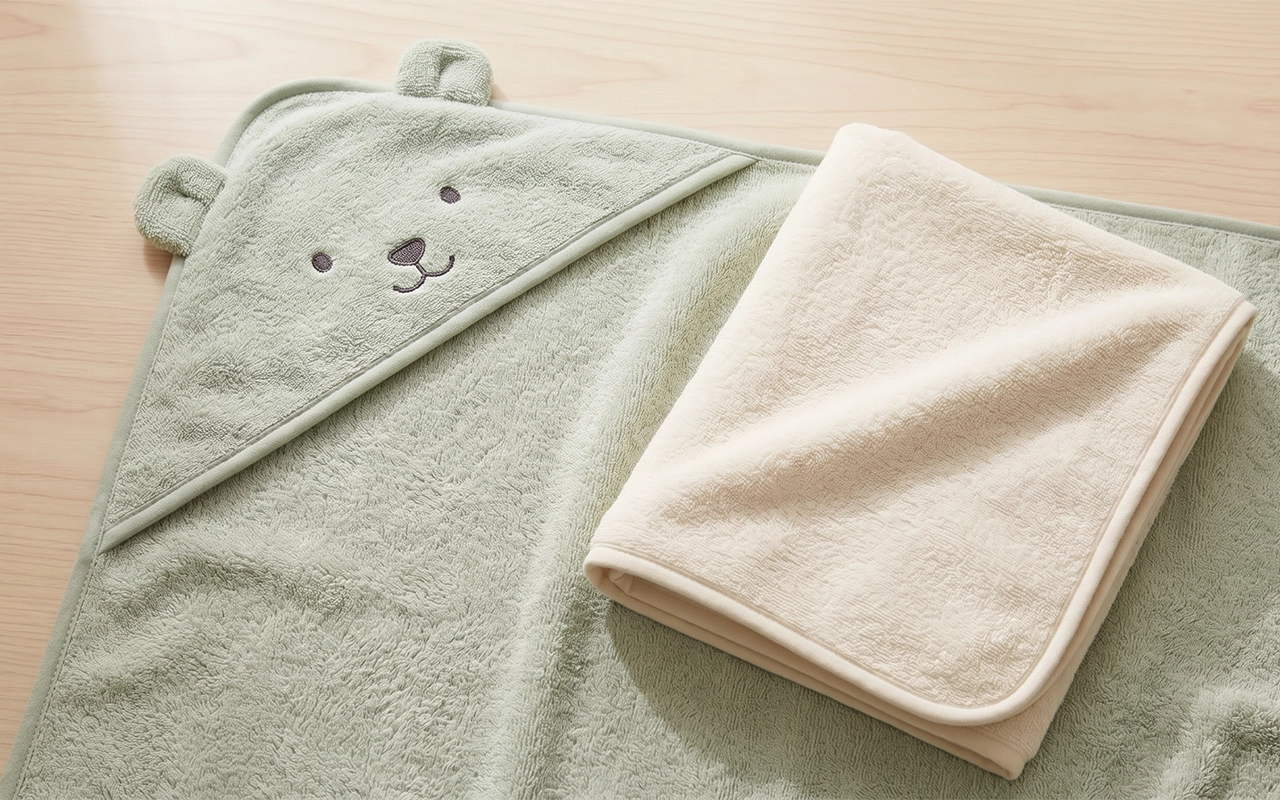
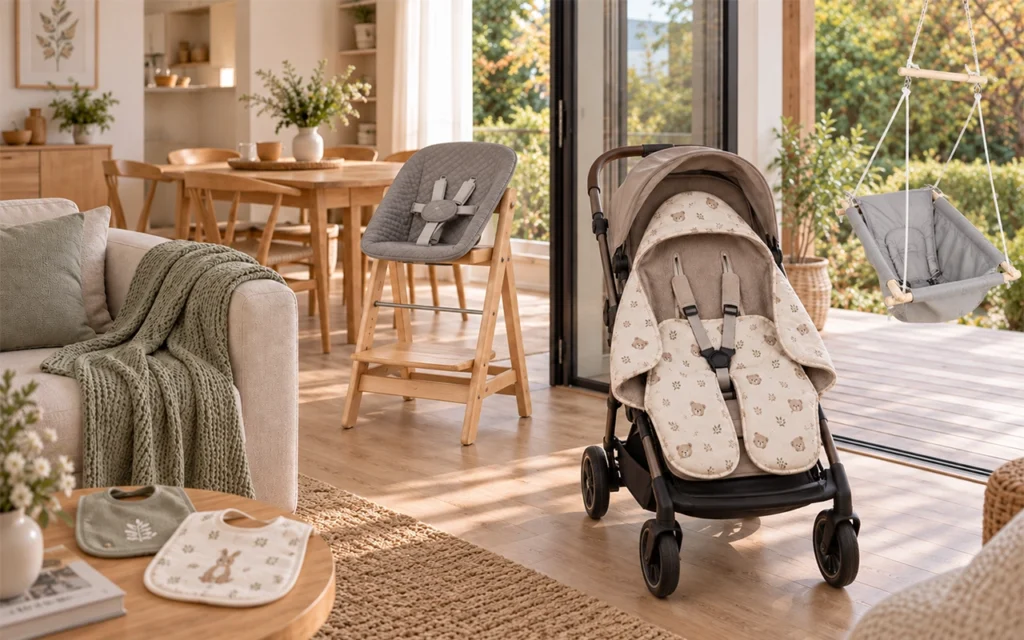
Bibs can support more feeding-related use cases. At the same time, lightweight blankets, knitted blankets, and hooded split-leg blankets can cover different outing and family-use scenarios.
Brands may also begin developing:
• Baby bibs
• Outing blankets
• Hooded split-leg blankets
• High-chair accessories
• Seat cushions
• Selected supervised activity products
Baby swings may also enter the assortment, depending on the specific product design.
However, brands should not simply label a swing as “for babies from six months.” Age range, weight limits, development requirements, restraint systems, and stop-use conditions should follow the actual product specifications and target-market requirements.
In addition, swings and similar products should be positioned as supervised activity products, not infant sleep products.
From a B2B planning perspective, this stage can therefore develop into three clear sub-ranges:
Feeding + Outing + Supervised Activity
This creates more product depth without mixing different functions together.
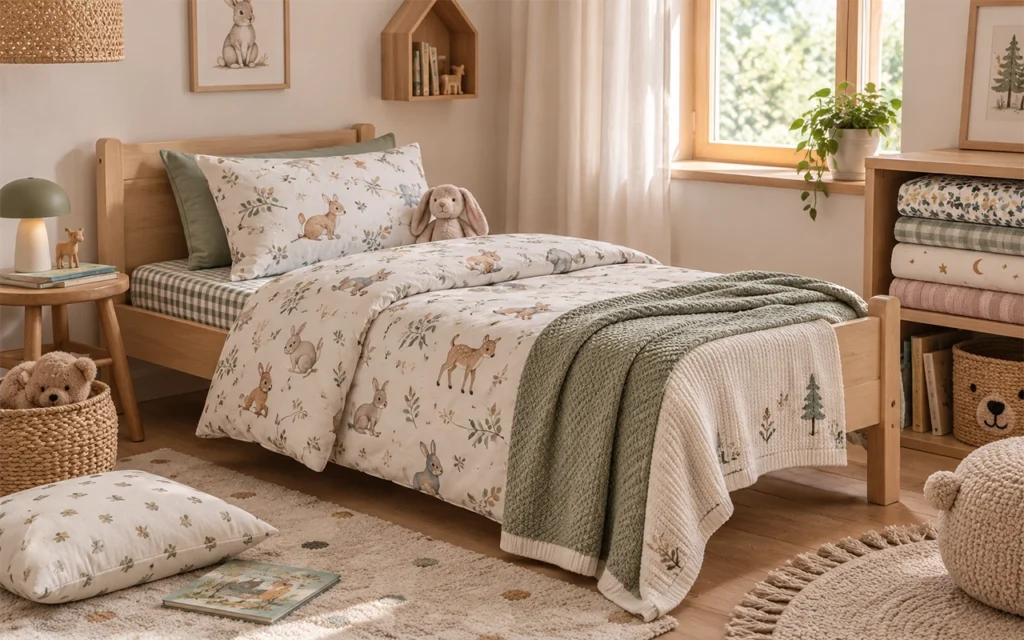
Toddler Transition: Introduce More Bedding Options
The transition from infant products to toddler products creates new opportunities for bedding development.
Brands can gradually consider products such as:
- Larger blankets
- Toddler bedding
- Pillow-related products
- Duvet-related products
- Two-piece bedding sets
- Coordinated bedroom textiles
However, this is one area where brands should avoid using a single fixed age as a universal rule.
Products such as pillows, duvets, and loose bedding need different positioning from infant sleep products. Therefore, brands should develop toddler bedding according to target-market guidance, product dimensions, intended sleeping environment, and actual product instructions.
This also gives brands a useful way to separate two different ranges:
Infant Sleep Products
and
Toddler Bedding Products
Clear positioning helps buyers build a more logical assortment and reduces confusion across product categories.
Build a Product Range That Grows with the Customer
Planning by development stage is valuable because it shows how a baby brand can expand over time.
A simple product roadmap may look like this:
| Development Stage | Product Range Ideas |
|---|---|
| Newborn | Mattress, Swaddle, Sleep Sack, Washcloth |
| Early Growth | Sleep Sack, Bib, Lightweight Blanket |
| Feeding & Outing | Bib, Knitted Blanket, Hooded Blanket, High-Chair Accessories |
| Supervised Activity | Suitable Swings, Seat Accessories, Activity Products |
| Toddler Transition | Larger Blankets, Pillow-Related Products, Two-Piece Bedding Sets |
The products do not need to use identical materials or designs.
Instead, brands can maintain a consistent visual identity while adapting each product to its function. Depending on the project, customization may include:
• Fabrics
• Sizes
• Structures
• Prints
• Embroidery
• Filling materials
• Labels
• Packaging
Inorange Baby supports OEM and ODM development across different baby product stages. Existing samples can provide a starting point, while materials, structures, patterns, colors, and other details can be adjusted according to each brand’s market and product direction.
Conclusion
Age and development stage can provide baby brands with a useful framework for product planning.
A newborn range may begin with sleep and basic care products. Later, brands can expand into bibs, blankets, feeding products, and supervised activity items. After the infant stage, the collection can continue into more complete toddler bedding.
The key is not to decide that every baby needs one specific product at a certain month.
Instead, brands should consider:
Development Stage + Product Function + Target Market Requirements
This approach helps create a more connected product journey from newborn to toddler while leaving room for future SKU expansion and customized OEM/ODM development.