Why Baby Bibs Still Matter in Autumn
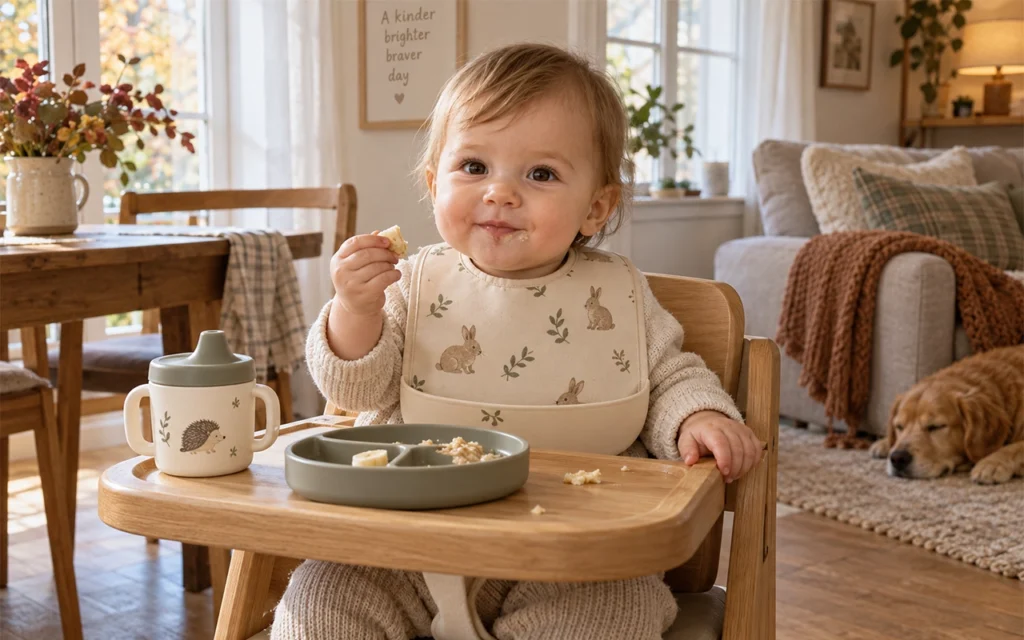
Autumn changes daily routines for many families. Days become cooler, and babies often wear more layers. However, feeding, drooling, and teething do not stop when the season changes.
Because of this, baby bibs remain an important product category in autumn. Parents still need practical items that help keep clothing cleaner and more comfortable throughout the day. When a baby wears layered outfits, wet fabric can feel even more uncomfortable. Therefore, absorbent and easy-to-change bibs continue to have clear value.
For baby brands, this creates a useful seasonal opportunity. Autumn bib collections can combine everyday function with a warmer and more refined design direction. As a result, bibs can become more than simple basics. They can also become part of a coordinated seasonal collection.
What Brands Should Consider for Autumn Bib Collections
Autumn baby bib development involves more than changing colors. A stronger collection usually combines practical structure with a clear seasonal design direction.
First, absorbency still matters. Parents want bibs that perform well during feeding and drooling. Therefore, brands should consider fabric combinations and inner absorbent layers during development. Comfort also matters, especially when bibs touch the baby’s skin for long periods.
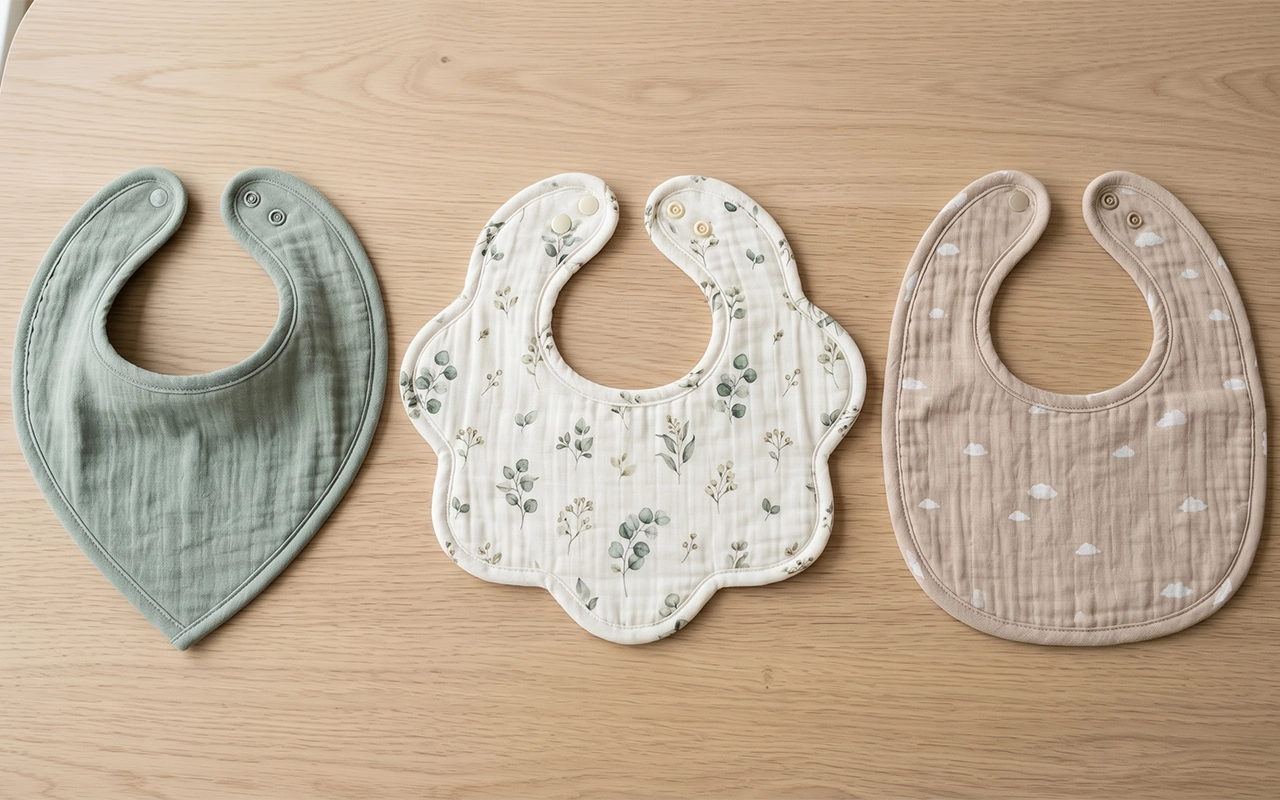
In addition, autumn products often look better with softer and warmer visual tones. Compared with bright summer styles, autumn collections usually work well with muted and gentle colors. Brands may also consider details that make the products feel more seasonal, such as embroidery, shaped edges, or subtle decorative finishes.
These small choices can help a product look more thoughtful. Meanwhile, they also make the collection easier to position for autumn sales and seasonal marketing.
Materials and Structure Can Be Customized
Buyers do not need to limit autumn bib development to one fixed structure. Existing samples can provide a reference, but custom projects should stay flexible.
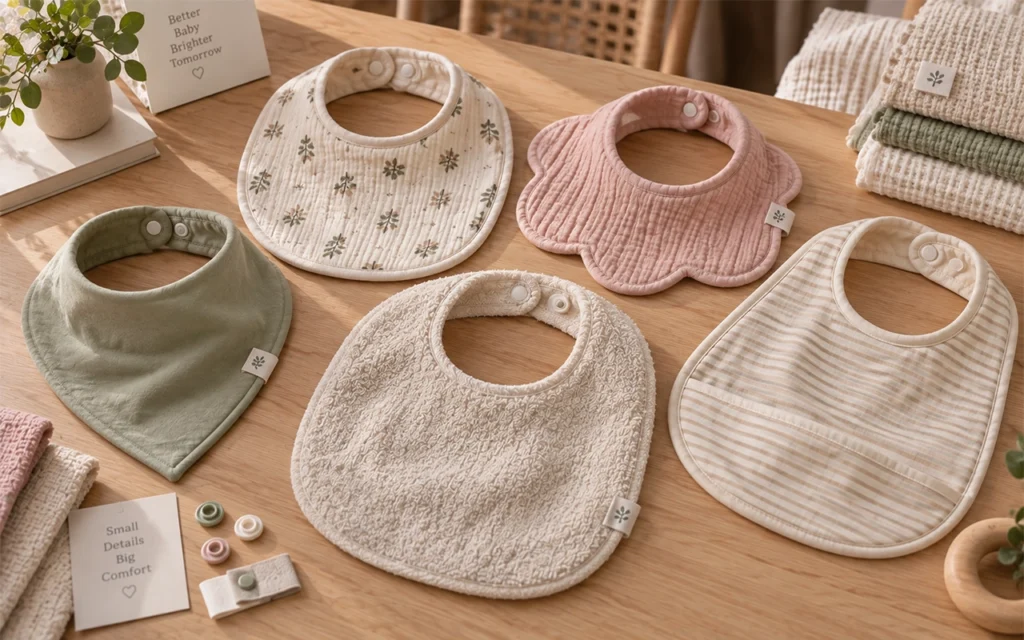
For example, brands can choose from different fabric options according to their goals. Suitable materials may include:
• Cotton knitted fabric
• Muslin fabric
• Terry cloth
• Other soft baby-friendly textiles
Likewise, absorbent layers can also change according to product needs. Some brands may prefer a lighter and softer bib. Others may want stronger absorbency or a more structured product feel. Therefore, the final material choice should depend on product positioning, target market, and price expectations.
Moreover, autumn collections do not need to follow one exact sample construction. The surface fabric, backing, inner layer, and overall thickness can all be adjusted. This gives brands more room to balance comfort, function, appearance, and cost.
Patterns, Prints, and Decorative Details Can Also Change
A custom baby bib collection should not stop at material changes. Visual details are just as important, especially for seasonal product development.
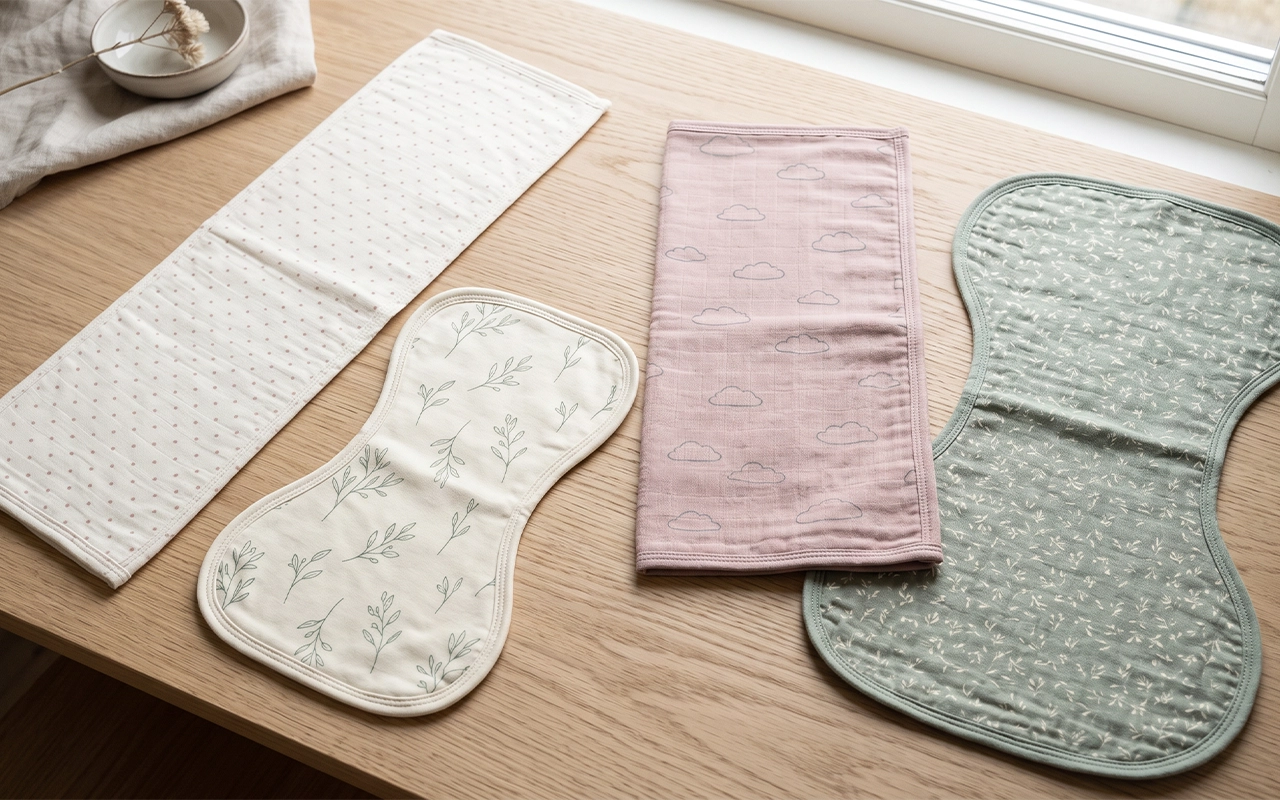
Autumn bibs often work well with warm and calm color palettes. For example, brands may choose cream, oatmeal, caramel, light brown, sage green, or other soft seasonal tones. These colors can help products feel more suitable for cooler days.
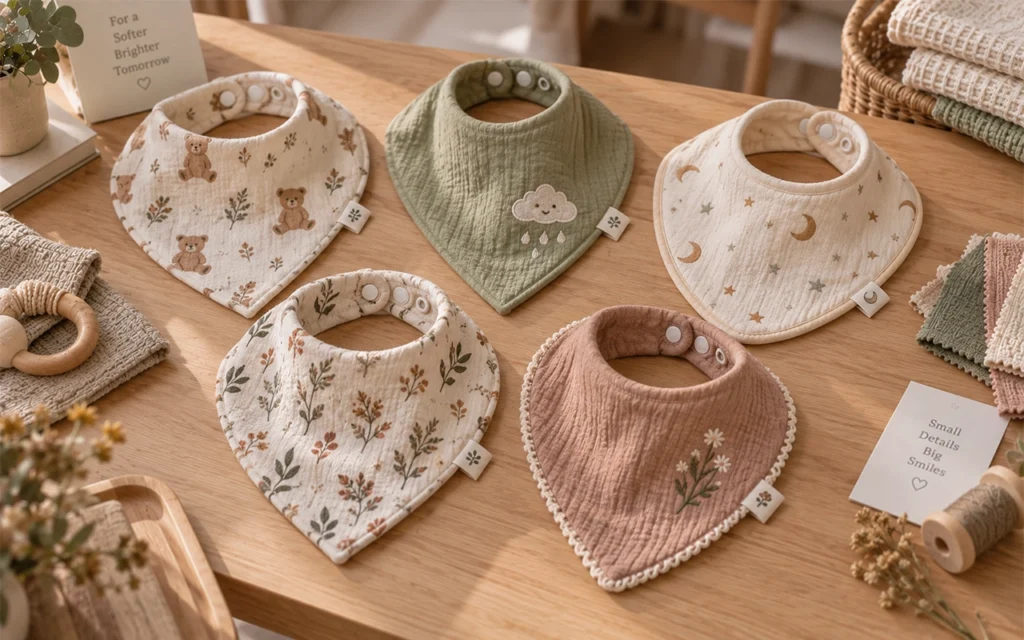
At the same time, patterns and decorative elements can also be customized. Buyers can develop different styles based on their own brand direction. Possible options may include:
• Animal motifs
• Leaves or floral elements
• Stars, moons, or clouds
• Brand-specific embroidery
• Printed patterns
• Decorative edge finishes
In addition, brands can choose different finishing methods to match the final style. Standard binding, merrow edges, embroidery, and other details can all change the overall look of the bib. Therefore, a simple product can still show strong brand identity through design customization.
How Custom Bibs Fit into an Autumn Product Collection
An autumn baby bib does not have to stand alone. In many cases, it works better as part of a wider seasonal collection.
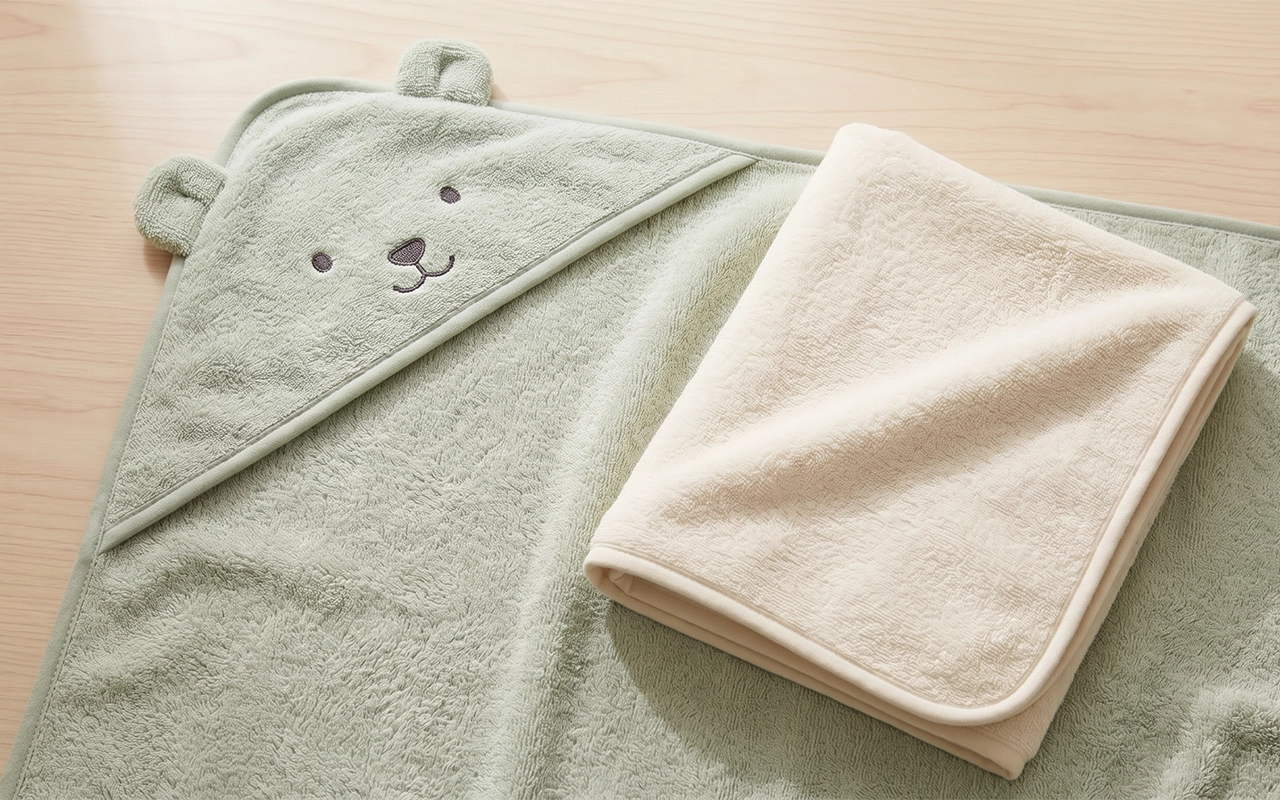
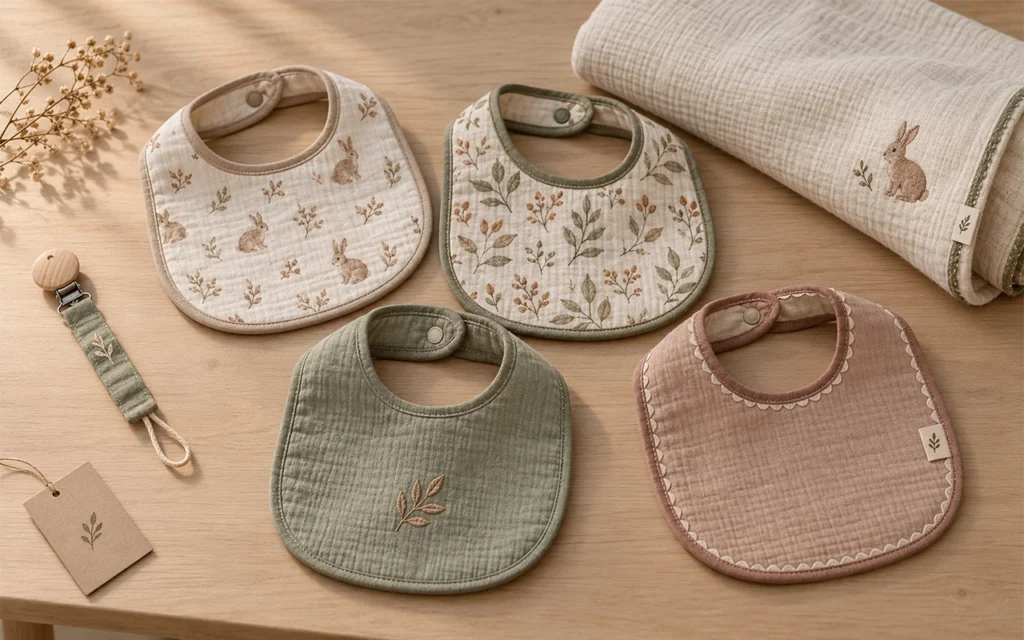
For example, one autumn theme can extend across several products, such as baby bibs, pacifier clips, blankets, sleep sacks, or other nursery textiles. When products share similar colors, patterns, or decorative details, the whole collection looks more coordinated.
This approach helps brands create a clearer visual identity. It can also give buyers more product options within one theme. As a result, one bib design concept can support a broader private-label collection.
During OEM and ODM development, brands can discuss many custom details, including:
• Bib shape
• Fabric selection
• Absorbent layer structure
• Prints and patterns
• Embroidery designs
• Edge finishing
• Labels
• Packaging
Inorange Baby supports custom baby bib development for international brands. We can work with buyers on samples, adjustments, and coordinated seasonal product ideas.
Conclusion
Autumn baby bibs still have strong value in daily baby care. Babies continue to need bibs for feeding and drooling, and parents continue to look for comfortable and practical products.
For brands, autumn bib development offers more than basic function. It also creates room for seasonal colors, custom materials, pattern development, and coordinated collection planning.
More importantly, buyers do not need to stay with one fixed sample. Fabrics, absorbent layers, shapes, prints, embroidery, and finishing details can all be customized according to market needs.
With OEM and ODM support, autumn baby bibs can become both useful everyday products and an important part of a seasonal baby textile collection.