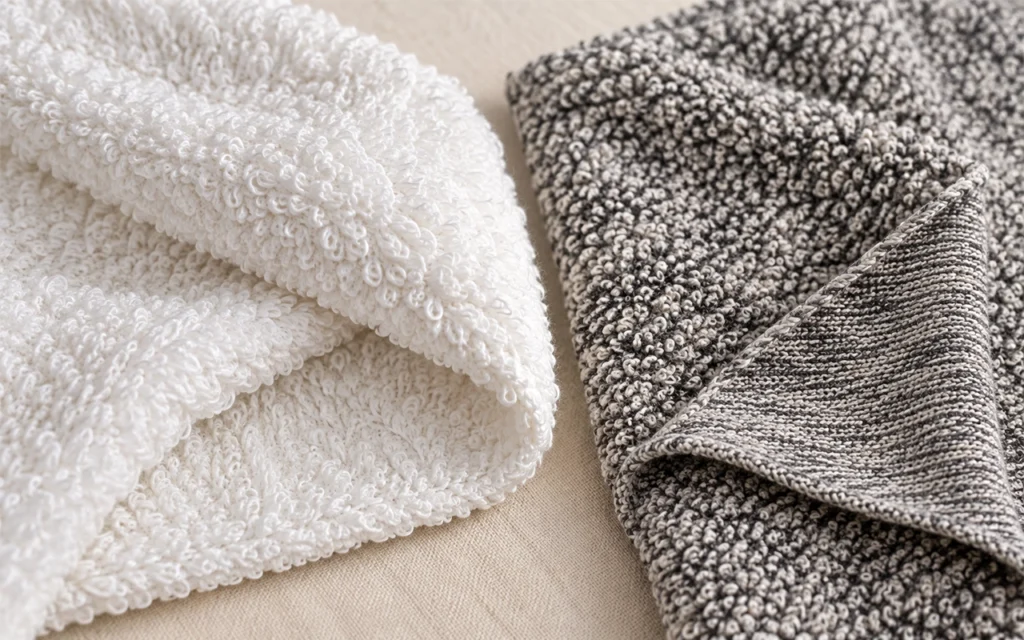
Terry cloth is widely used in baby textile products, but it is not a single fixed fabric construction.
Even when both fabrics use 100% cotton, knitted terry and woven terry can differ in surface structure, hand feel, stability, and product application.
For buyers developing towels, bibs, burp cloths, or other absorbent baby textiles, it is therefore not enough to write only “terry cloth” in a specification.
A better starting point is:
What type of terry construction does the product need, and what role will that fabric play?
What Is Terry Cloth?
Terry cloth is generally recognized by the looped surface that creates its characteristic texture.
These loops increase the fabric surface area and give terry cloth a softer, more absorbent feel than many plain woven or knitted fabrics.
In baby textile products, terry cloth can be used for:
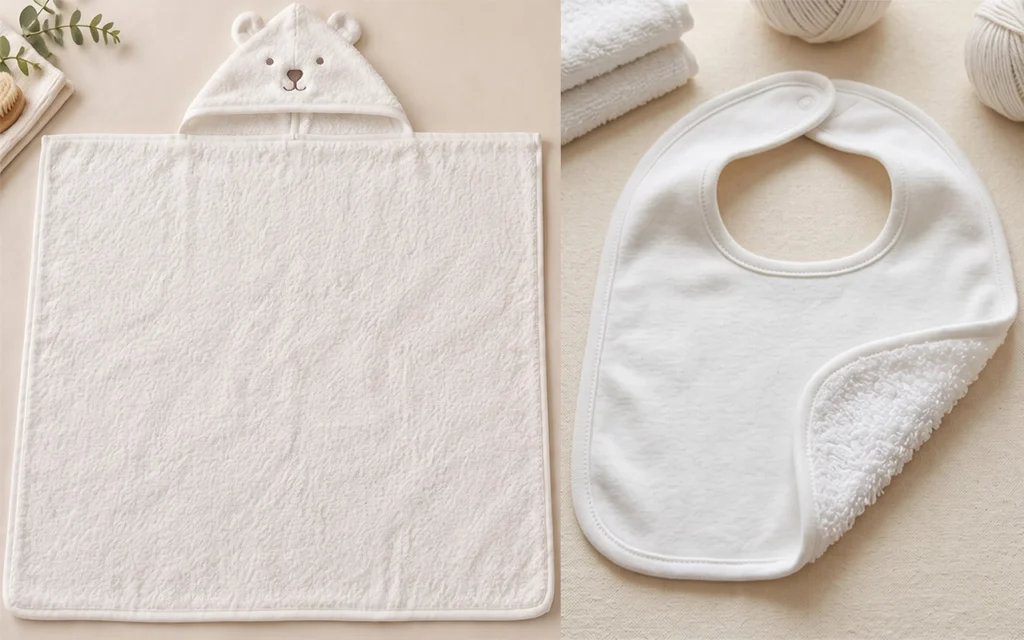
- Baby bath towels
- Hooded towels
- Bibs
- Burp cloths
- Washcloths
- Multi-layer absorbent textile products
However, different terry constructions do not behave in exactly the same way.
Two useful examples are knitted cotton terry and woven double-sided cotton terry.
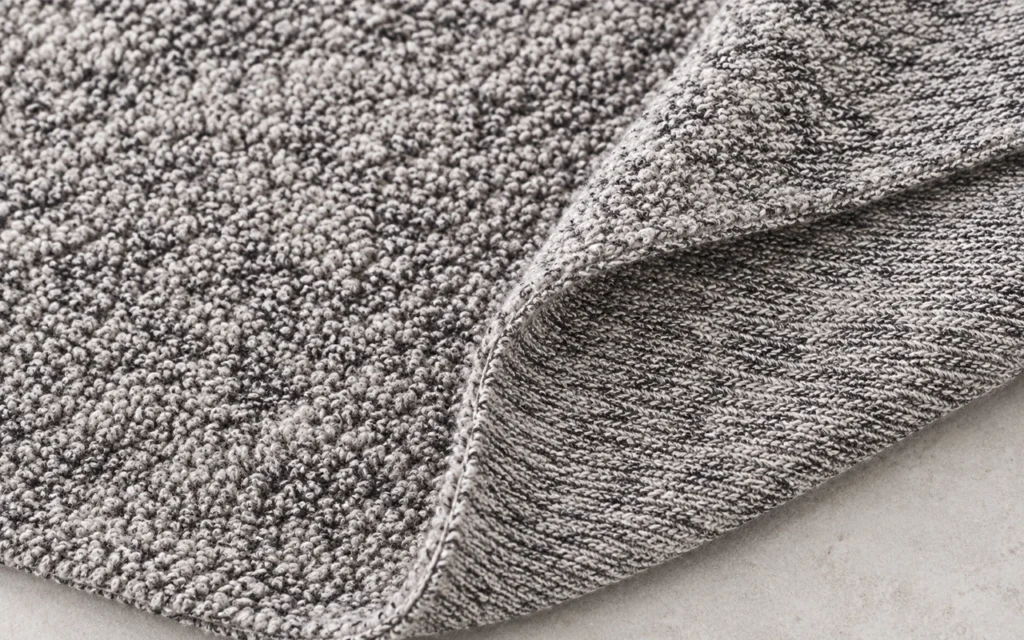
Knitted Cotton Terry: Different Structures on the Two Sides
Knitted cotton terry uses a knitted construction.
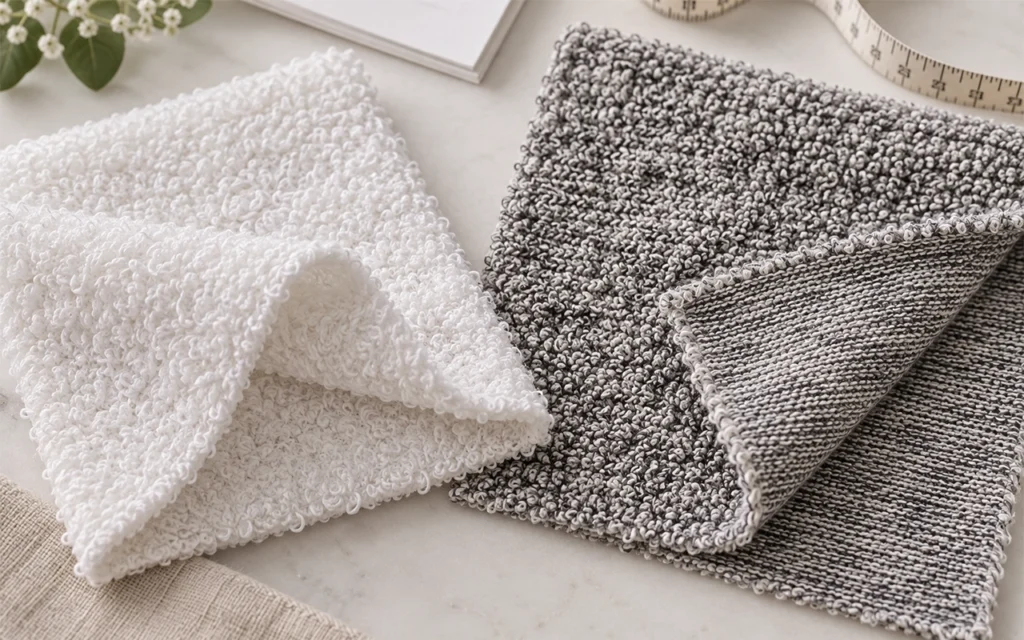
Its two sides can show noticeably different surface structures. One side may appear flatter and show a clearer knitted texture, while the other side has a more visible terry loop surface.
This difference between the two sides creates more flexibility during product development.
Brands can decide:
- Which side should face outward
- Which side should sit against another layer
- Whether the fabric should be combined with another material
- Whether it should be used as a backing in a multi-layer product
Because it uses a knitted construction, the fabric can also have a softer and more flexible character than a more stable woven structure.
This makes it suitable not only for towel-type products, but also for bibs, burp cloths, and other products that combine several materials.
Woven Double-Sided Cotton Terry: Loops on Both Sides
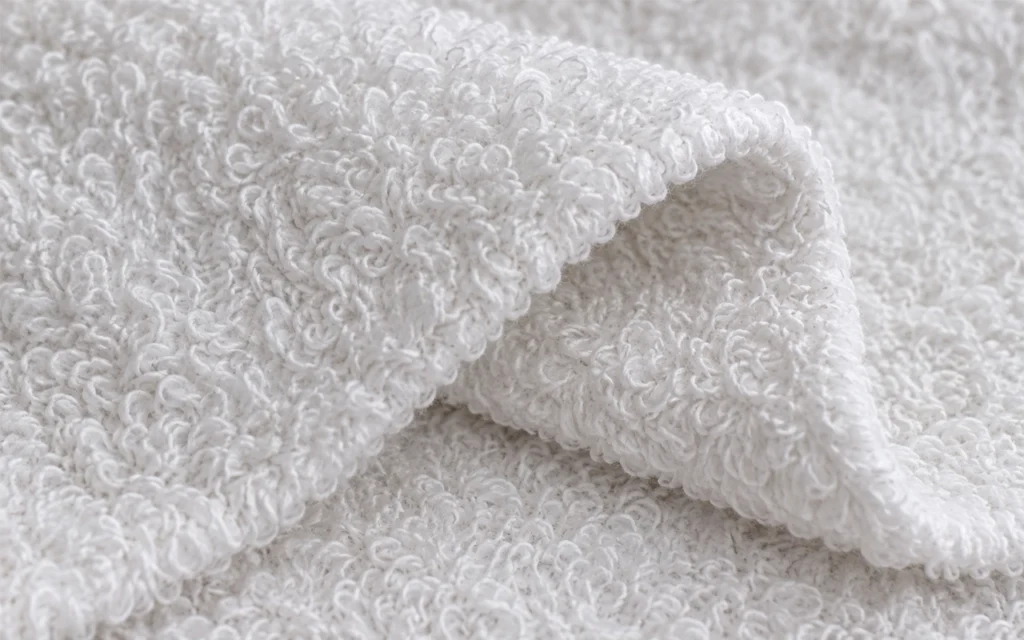
Woven double-sided cotton terry follows a different construction.
Its main feature is clear:
Both sides of the fabric have visible terry loops.
This gives the material a more traditional towel-like appearance.
Compared with knitted terry, where one side may look flatter, woven double-sided terry keeps a more consistent looped surface on both sides.
This structure is especially suitable for products where the terry surface itself is a main feature, such as:
- Baby bath towels
- Hooded bath towels
- Small towels
- Bath textile sets
For these products, both sides may remain visible during use, so a consistent double-sided terry structure can support a more uniform appearance and hand feel.
What Are the Main Differences?
Although both fabrics may use 100% cotton, they should not be treated as the same material.
Several differences matter during development.
- Fabric Construction
Knitted terry uses a knitted construction.
Woven double-sided terry uses a woven construction.
This difference can influence fabric stability, flexibility, surface behavior, and the final hand feel.
- Front and Back Surface
Knitted terry can create:
A flatter side + a more obvious terry-loop side
Woven double-sided terry creates:
Terry loops on the front + terry loops on the back
As a result, each structure supports different product design directions.
- Product Application
Knitted terry works well when a product needs different front and back surfaces or when the terry fabric will be combined with other materials.
Woven double-sided terry is more suitable when the terry surface itself is intended to remain visible on both sides.
The final choice should still be reviewed together with GSM, thickness, dimensions, and the full product structure.
Why Use Terry Cloth in Bibs and Burp Cloths?
Terry cloth does not always need to become the entire product.
In multi-layer baby textiles, it can also serve as one functional layer.
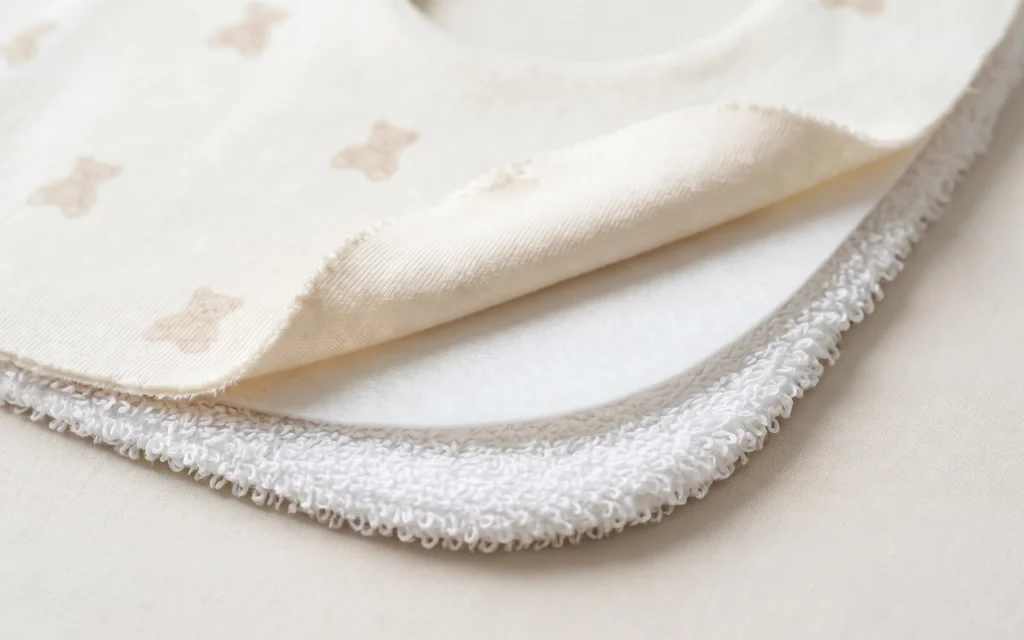
For example, a multi-layer bib may use:
Knitted Outer Fabric
- Absorbent Middle Layer
- Terry Backing
In this structure, the outer layer provides the main visual effect. The middle layer adds absorbent structure, while the terry fabric forms the backing.
Burp cloths can use a similar development logic.
Brands may combine printed fabric, muslin, knitted fabric, or other outer materials with terry cloth instead of using one fabric throughout the whole product.
This is why fabric combination is often more important than evaluating one material alone.
GSM Alone Does Not Determine Whether a Terry Fabric Is Suitable
Buyers often compare terry fabrics by GSM first.
GSM is useful because it affects fabric weight and finished product volume. However, it should not be the only specification.
Two terry fabrics with the same GSM may still feel and perform differently if their constructions are different.
A more complete fabric review can include:
- Fiber composition
- Knitted or woven construction
- Single-sided or double-sided terry
- GSM
- Surface texture
- Thickness
- Finished product application
- Washing performance
This gives buyers a more accurate basis for deciding whether a fabric fits the intended product.
The Terry Loop Surface Should Also Be Checked
Beyond fiber content and GSM, the loop surface itself is worth reviewing.
During sampling, buyers can check:
- Whether the loops look even
- Whether there are noticeably sparse areas
- Whether the two sides match the intended structure
- Whether the surface changes significantly after washing
- Whether different production batches remain visually consistent
For double-sided terry, both surfaces matter because both can remain visible.
For knitted terry, buyers should also confirm which side will be used as the main product surface and which side will serve a functional role.
Different Products Need Different Terry Structures
The right terry cloth should be selected according to the final product.
If a brand is developing a traditional baby bath towel, a double-sided terry structure may fit the product direction better.
If the project is a multi-layer bib, knitted terry may work as one layer together with a knitted outer fabric and an absorbent middle layer.
If the product is a burp cloth, buyers may also need to confirm:
- Total number of layers
- Material used in each layer
- GSM
- Finished thickness
- Product dimensions
In other words, “using terry cloth” is only the beginning of the specification.
What Should Buyers Confirm for OEM/ODM Development?
For custom development, a specification should ideally include more than:
100% Cotton Terry
A more complete description can include:
100% Cotton
- Knitted or Woven
- Single-Sided or Double-Sided Terry
- Target GSM
- Product Application
If the terry fabric will be combined with other materials, the layer structure should also be confirmed.
For example:
Outer Fabric + Middle Layer + Terry Backing
This reduces ambiguity around the term “terry cloth” and gives both buyer and manufacturer a clearer basis for sampling.
Inorange Baby can discuss knitted terry, woven double-sided terry, and fabric combinations for different baby textile projects. Fabric structure, dimensions, colors, layer combinations, and other custom details can be adjusted according to the intended product direction.
Conclusion
Terry cloth is not limited to one construction.
Even when both fabrics use cotton, knitted cotton terry and woven double-sided cotton terry can show different front-and-back structures and support different product applications.
Knitted terry can combine a flatter surface with a looped terry side, making it useful for multi-layer product development.
Woven double-sided cotton terry has visible loops on both sides, making it more suitable for towel-type products where the terry surface itself is a key feature.
For buyers, a better selection process considers:
Fiber Content + Fabric Construction + Terry Structure + GSM + Product Application
rather than relying only on the label “100% Cotton Terry.”