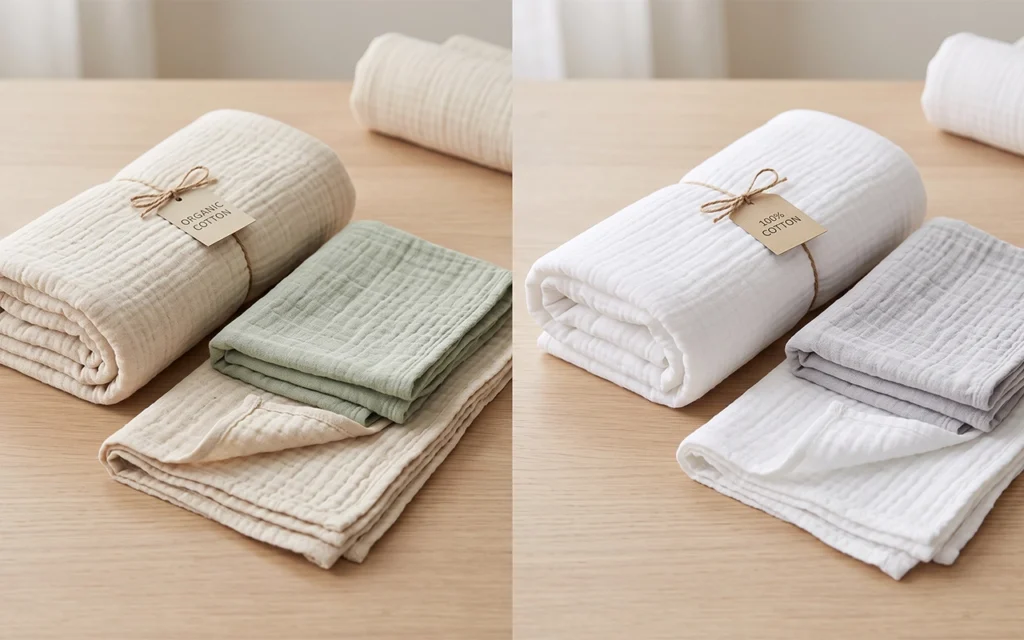
Muslin is widely used in baby textile products because it can feel light, soft, and flexible.
However, buyers often see two similar descriptions during sourcing:
100% cotton muslin
and
organic cotton muslin
These terms do not describe exactly the same thing.
One refers mainly to fiber composition. The other also relates to how the cotton is sourced and managed.
Therefore, brands should understand the difference before selecting fabric for a new baby textile collection.
What Does 100% Cotton Muslin Mean?
100% cotton muslin means that cotton makes up the fabric fiber content.
In other words, the fabric does not rely on polyester or another fiber blend for its main composition.
This specification tells buyers what the fabric contains. However, it does not automatically explain how the cotton was grown or sourced.
A 100% cotton muslin can still vary in:
- Yarn count
- Fabric density
- GSM
- Number of layers
- Surface texture
- Softness
- Color
- Shrinkage
Therefore, two fabrics can both carry a “100% cotton” description and still feel very different.
For baby product development, buyers should always review the actual fabric structure as well.
What Does Organic Cotton Muslin Mean?
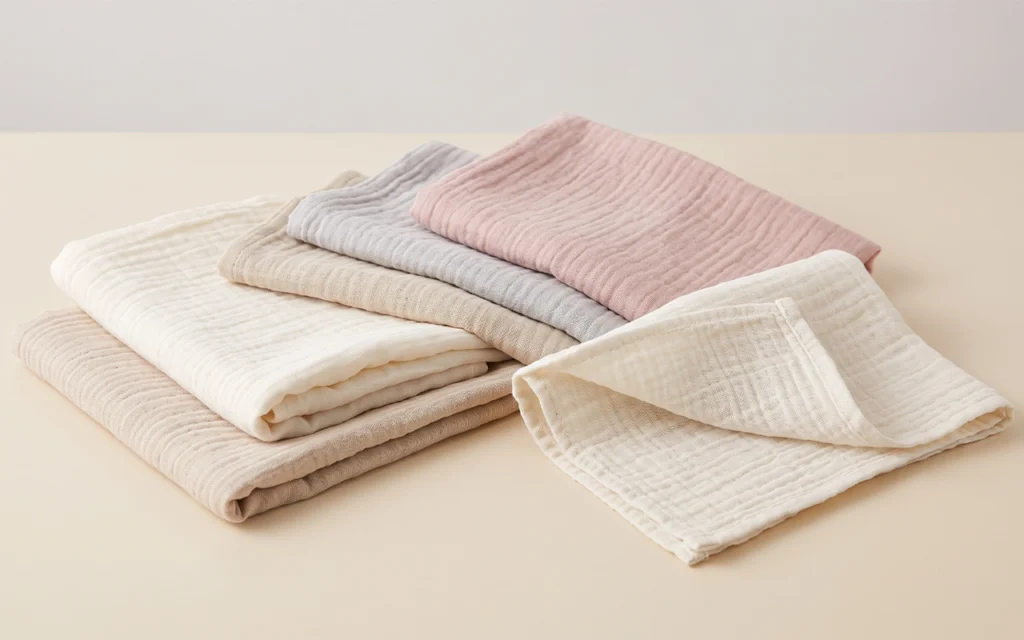
Organic cotton muslin uses cotton that follows an organic production and supply-chain standard.
Therefore, the term does not simply describe the fiber percentage.
An organic cotton muslin may also be 100% organic cotton. In that case, the fabric is both fully cotton and organic.
However, brands should not rely only on the word “organic” in a product description.
They should also confirm:
- Which organic standard applies
- What part of the supply chain the certification covers
- Whether the fabric supplier can provide supporting documents
- Whether the final product can carry an organic claim
- Whether the target market requires specific labeling
This is especially important for private-label baby products.
A raw material claim should not automatically become a finished-product certification claim.
100% Cotton and Organic Cotton Are Not Opposites
This point often causes confusion.
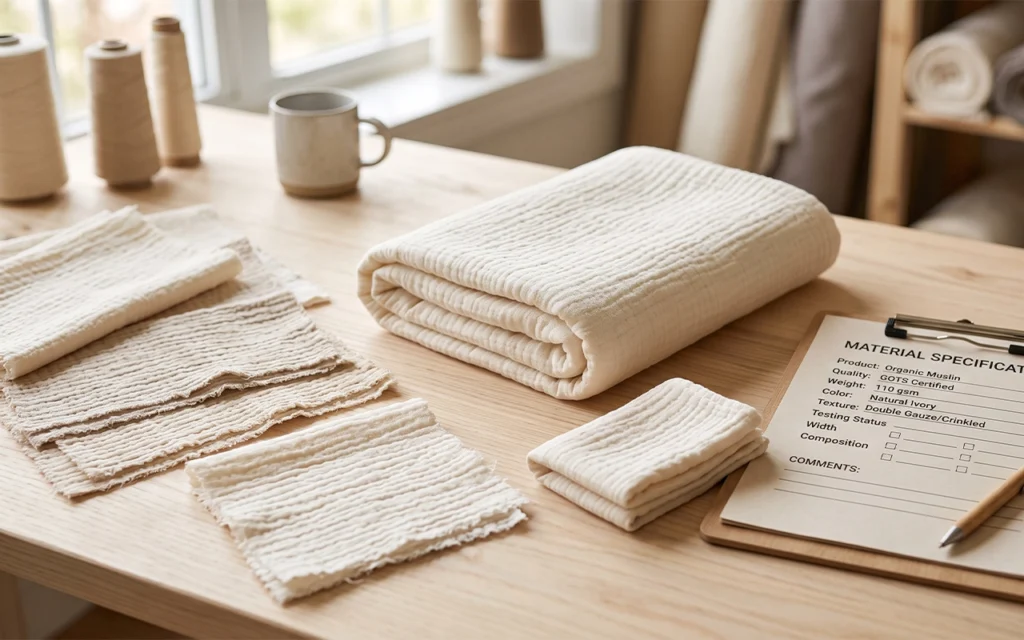
“100% cotton” describes the fiber composition.
“Organic cotton” describes the cotton source and the relevant production requirements.
Therefore, a fabric can be both:
100% Cotton
and
Organic Cotton
At the same time.
For example, a buyer may request:
100% organic cotton muslin
This specification combines both ideas.
By contrast, a standard 100% cotton muslin can use conventional cotton while still containing only cotton fiber.
Therefore, buyers should separate the questions:
What is the fiber composition?
and
Does the cotton need organic certification?
This makes sourcing discussions much clearer.
Do They Always Feel Different?
Not necessarily.
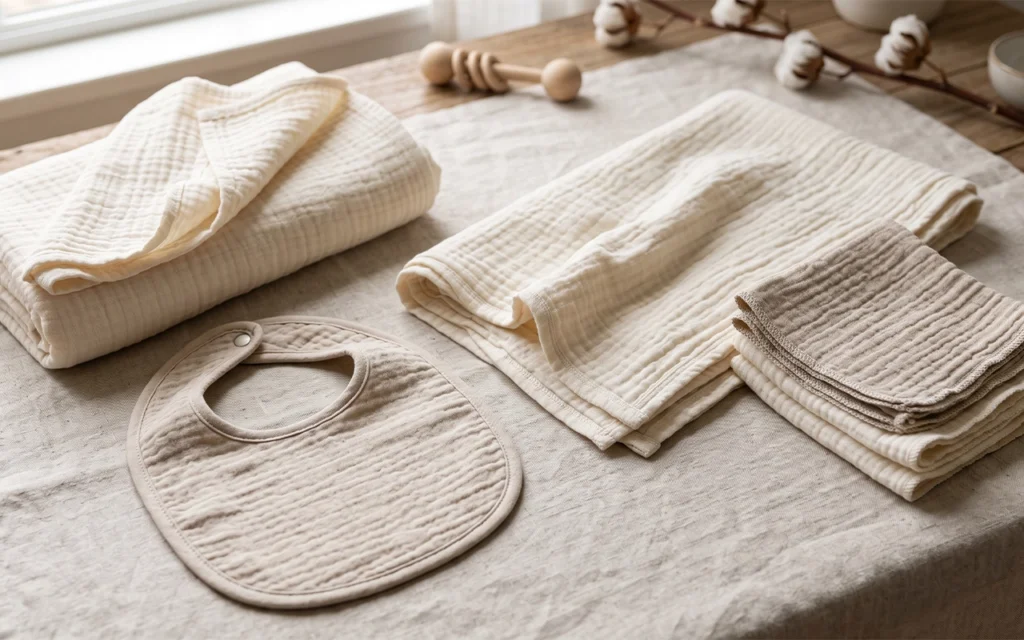
Organic cotton muslin does not automatically feel softer than every conventional cotton muslin.
Several other factors affect the finished hand feel.
For example:
- Yarn quality
- Weave density
- Fabric finishing
- Layer count
- GSM
- Washing
- Surface treatment
A high-quality conventional cotton muslin may feel very soft.
Meanwhile, an organic cotton fabric can feel different if its structure or finishing changes.
Therefore, buyers should not choose fabric only from a marketing label.
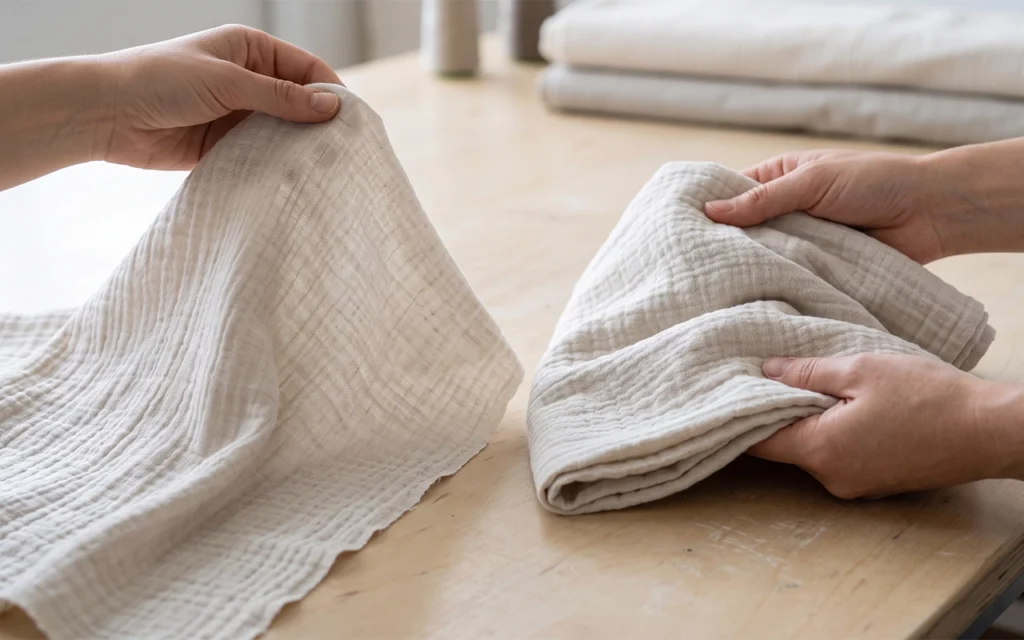
Instead, they should compare real swatches and finished samples.
That comparison gives a better understanding of softness, thickness, drape, and overall appearance.
Both Fabrics Can Work Across Baby Products
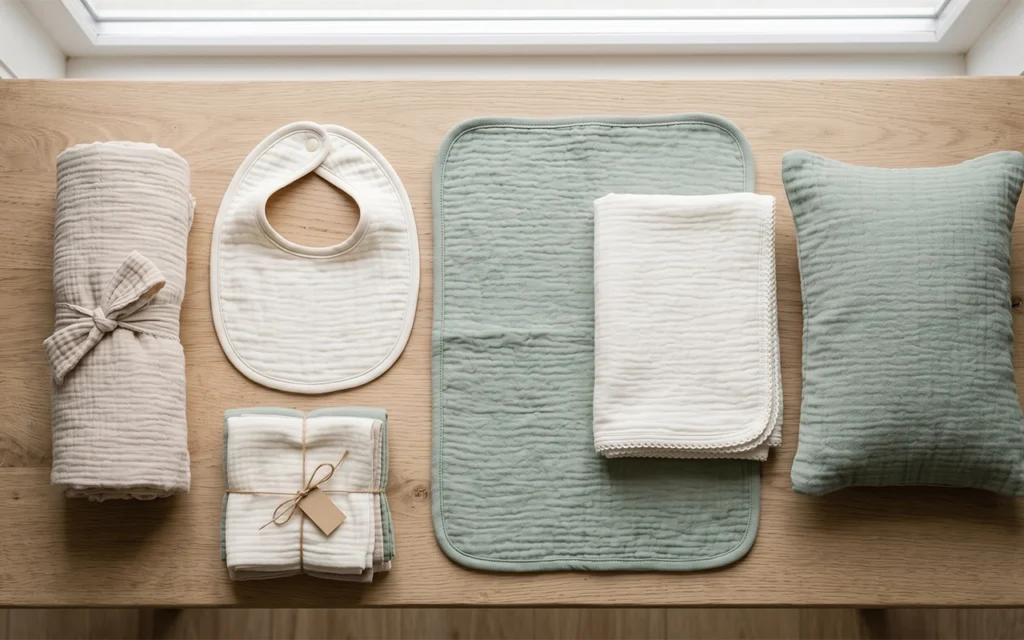
Both standard cotton muslin and organic cotton muslin can support many baby textile categories.
Common applications include:
- Swaddles
- Baby blankets
- Bibs
- Burp cloths
- Bath textiles
- Bedding
- Lightweight accessories
However, the same muslin specification may not suit every product.
For example, a lightweight swaddle may need a softer and lighter construction.
A bib may require more layers or an additional absorbent layer.
Meanwhile, a blanket may need more volume or a different GSM.
Therefore, the final product should guide the fabric specification.
Fiber composition alone cannot define the entire product.
When Might a Brand Choose Organic Cotton?
Organic cotton may suit brands that want stronger material traceability or a specific sustainability position.
It may also support collections that already use organic materials across several products.
For example, one brand may develop:
- Organic cotton swaddles
- Organic muslin bibs
- Organic baby blankets
- Coordinated organic bedding
This can create a consistent material story across the range.
However, organic fabric often requires more documentation and supply-chain control.
Therefore, brands should confirm those requirements early.
This helps avoid confusion later in sampling, labeling, packaging, and product-page claims.
When Can Standard 100% Cotton Be a Good Choice?
Standard 100% cotton muslin can work well for many baby textile projects.
It offers flexibility in color, print, structure, and product application.
It may also provide more sourcing options depending on the project.
For brands that do not require an organic claim, conventional cotton can support:
- Basic product ranges
- Printed collections
- Seasonal color updates
- Multi-layer textile products
- Price-sensitive projects
However, fabric quality still matters.
Buyers should review the real material instead of assuming that all 100% cotton muslin performs the same way.
For this reason, sampling remains important before mass production.
Certification Scope Needs Careful Review
Organic claims require clear documentation.
A fabric supplier may hold a certificate for a raw material, process, or specific supply-chain stage.
However, that does not always mean the final baby product can automatically carry the same claim.
Therefore, buyers should confirm the actual certification scope.
They may need to check:
- Certified material
- Certified supplier
- Transaction documents
- Finished-product scope
- Labeling rules
- Target-market requirements
This step helps brands avoid overstating what the certification covers.
In addition, it makes communication between the buyer and manufacturer more precise.
Compare the Full Fabric Specification
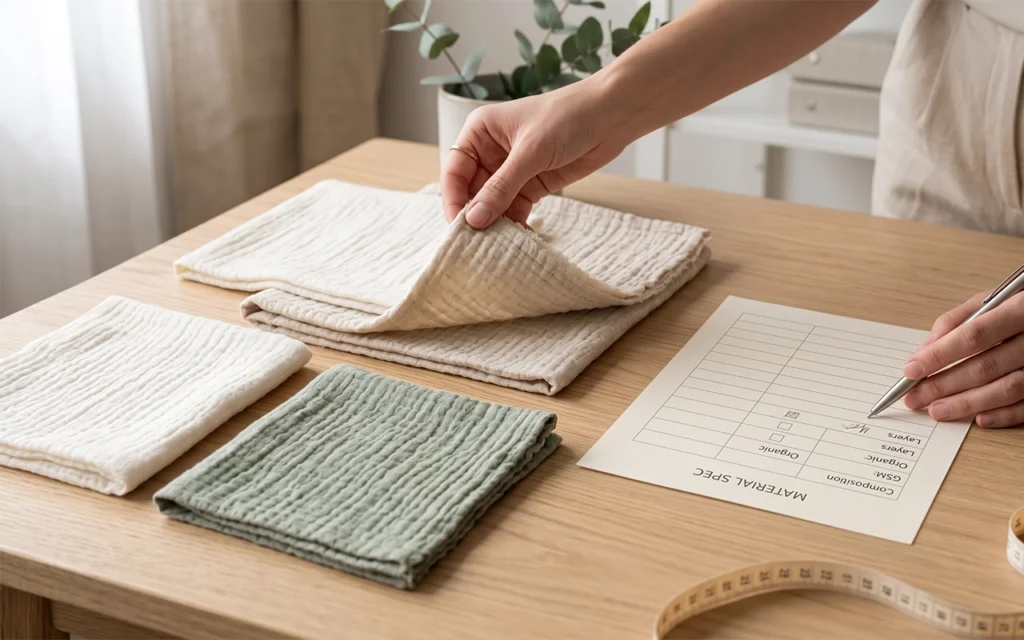
Cotton type is only one part of the fabric decision.
Before sampling, buyers should also confirm:
- Cotton type
- Organic requirement
- Fabric construction
- GSM
- Layer count
- Flat or crinkle surface
- Color
- Shrinkage
- Finished product use
For example, two organic cotton muslins may use different GSM values.
As a result, they can produce very different finished products.
Likewise, a standard cotton muslin can change significantly when the layer count increases.
Therefore, brands should evaluate the complete specification rather than one material label.
Use Samples Before Final Selection
Fabric swatches provide a useful first comparison.
However, finished samples reveal more.
A buyer can then review:
- Hand feel
- Draping
- Thickness
- Finished weight
- Surface appearance
- Print result
- Shrinkage
- Product structure
Moreover, the same fabric may behave differently across two products.
A swaddle and a multi-layer bib do not place the same demands on the material.
Therefore, brands should test fabric in the intended product whenever possible.
This makes the final decision more reliable.
OEM/ODM Development Starts with Clear Material Requirements
A useful sourcing brief should avoid vague requests such as:
“We need cotton muslin.”
Instead, buyers can provide a more complete direction:
100% Cotton or 100% Organic Cotton
- Target GSM
- Layer Count
- Surface Type
- Color or Print
- Product Application
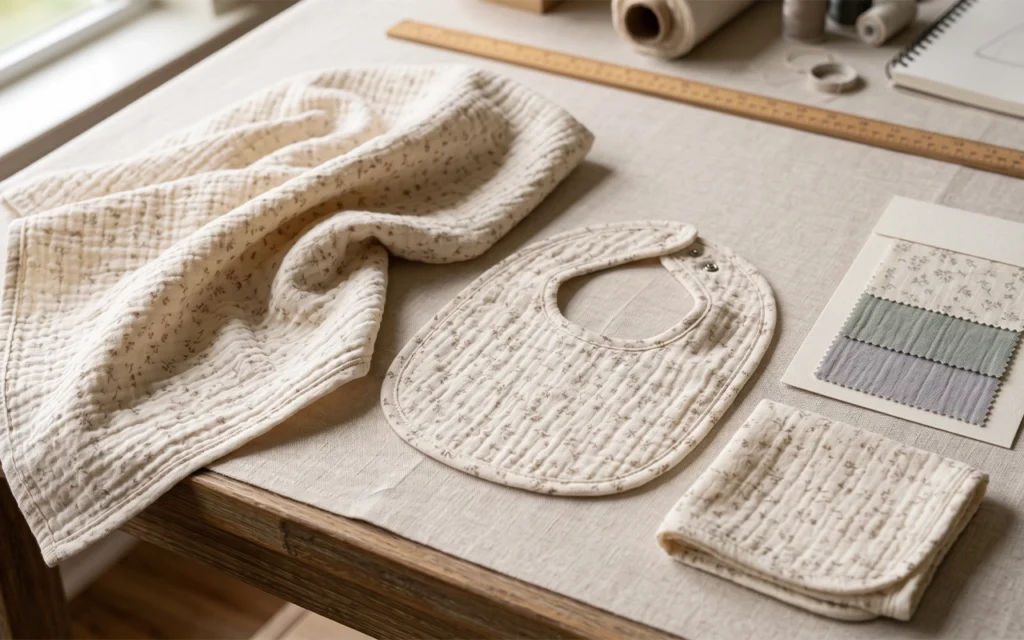
Inorange Baby can support muslin fabric development for different baby textile projects.
Brands can discuss cotton type, structure, GSM, layers, colors, prints, labels, and product applications during sampling.
Clear specifications make development easier and reduce unnecessary revisions.
Conclusion
Organic cotton muslin and standard 100% cotton muslin are not two opposite materials.
The key difference lies in what each term describes.
100% cotton explains fiber composition.
Organic cotton adds requirements around cotton sourcing and relevant certification systems.
Therefore, buyers should consider:
Fiber Composition + Organic Requirement + Fabric Structure + GSM + Layers + Product Application
as one complete sourcing decision.
This approach helps brands choose a muslin fabric that matches both product needs and market positioning.