Why Fabric Selection Matters for Baby Products
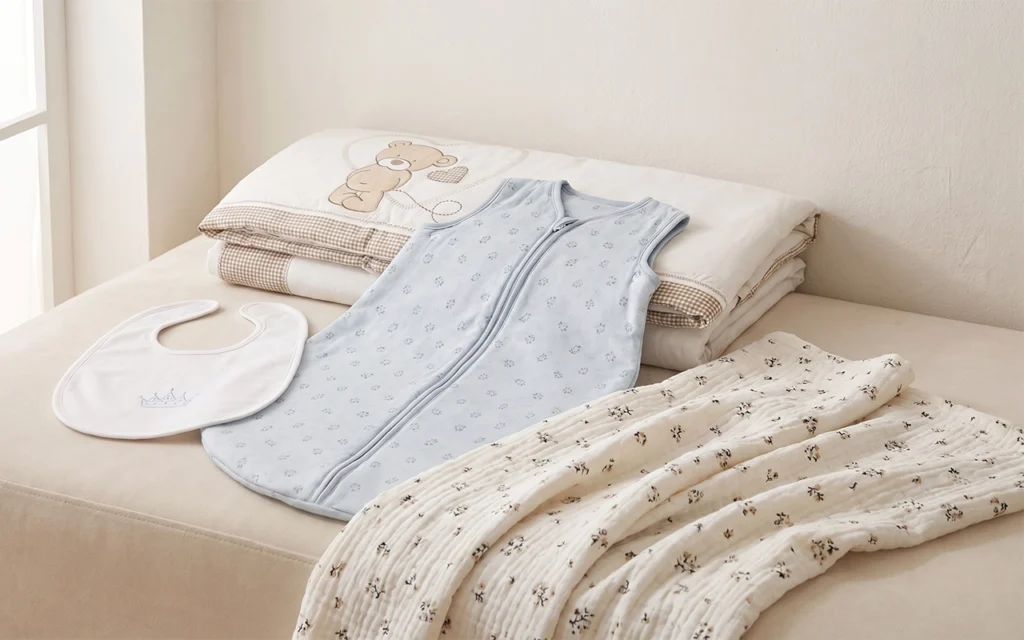
Choosing the right fabric is one of the most important steps when developing baby products.
Fabric affects more than product appearance. It influences comfort, durability, breathability, and the overall user experience.
For baby products, material selection requires extra attention. Babies have sensitive skin, and many products stay in direct contact with them for long periods.
Therefore, brands should consider several factors before selecting fabrics:
- Softness
- Breathability
- Absorbency
- Durability
- Skin-friendly performance
A suitable fabric choice helps create products that meet both market expectations and customer needs.
However, different baby products have different functions. A fabric that works well for a bib may not be the best choice for a sleep sack or bedding product.
For this reason, brands should evaluate fabric performance based on the product purpose.
A professional manufacturer can help brands understand different fabric characteristics and select suitable solutions during product development.
Choosing Fabrics for Baby Feeding Products
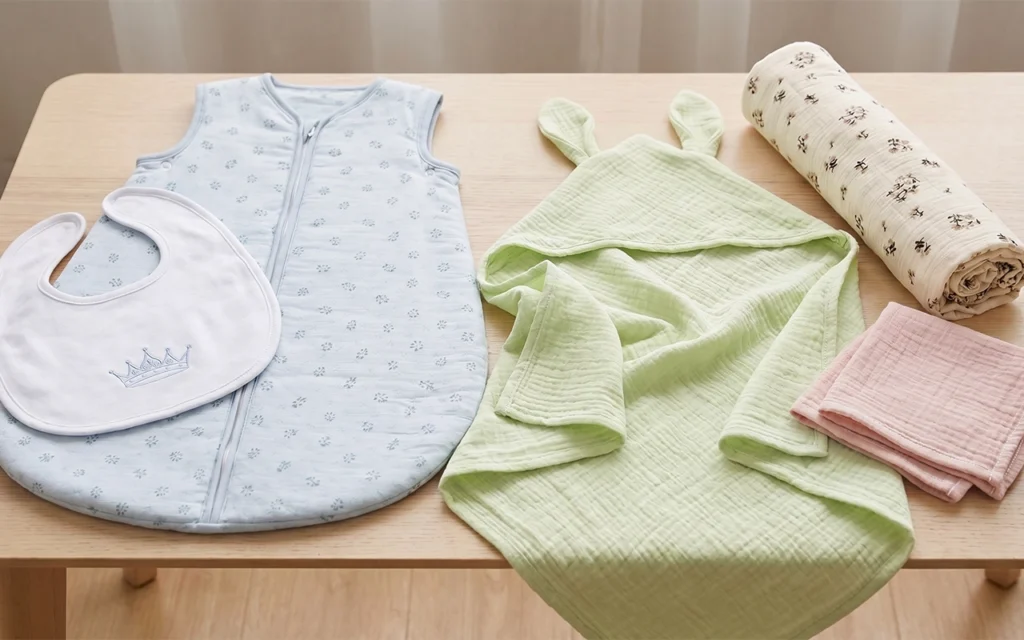
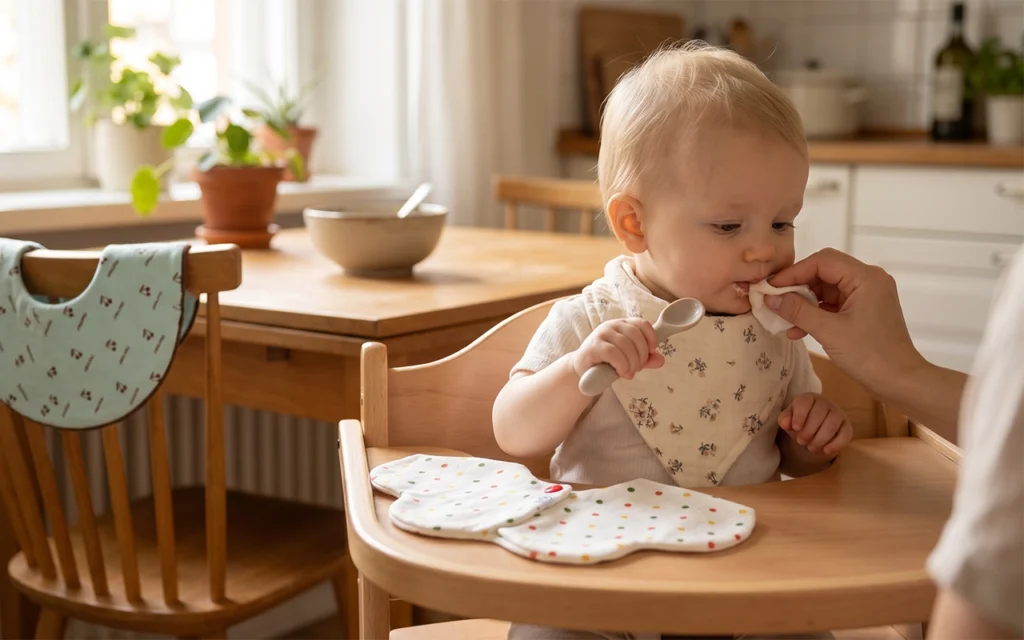
Baby bibs are among the most frequently used feeding products.
Because bibs directly contact babies’ skin, brands should focus on comfort and practicality when selecting fabrics.
Common fabric choices include:
- Cotton fabric
- Muslin fabric
Cotton Fabric for Baby Bibs
Cotton is a popular option for baby products.
It provides:
- Soft touch
- Comfortable wearing experience
- Good durability
- Easy daily care
Cotton bibs are suitable for brands that focus on classic and practical baby products.
The fabric provides a comfortable feeling while supporting regular washing and repeated use.
Muslin Fabric for Baby Bibs
Muslin fabric is another common choice for baby bibs.
Its lightweight structure provides:
- Breathability
- Soft texture
- Comfortable touch
Muslin bibs are suitable for brands that prefer a lightweight and natural product style.
Moreover, different bib designs may require different fabric considerations.
For example, triangle bibs, petal bibs, and rounded bibs may have different requirements for structure and appearance.
Therefore, brands should choose fabrics based on both design and product function.
Selecting Comfortable Fabrics for Baby Sleep Sacks
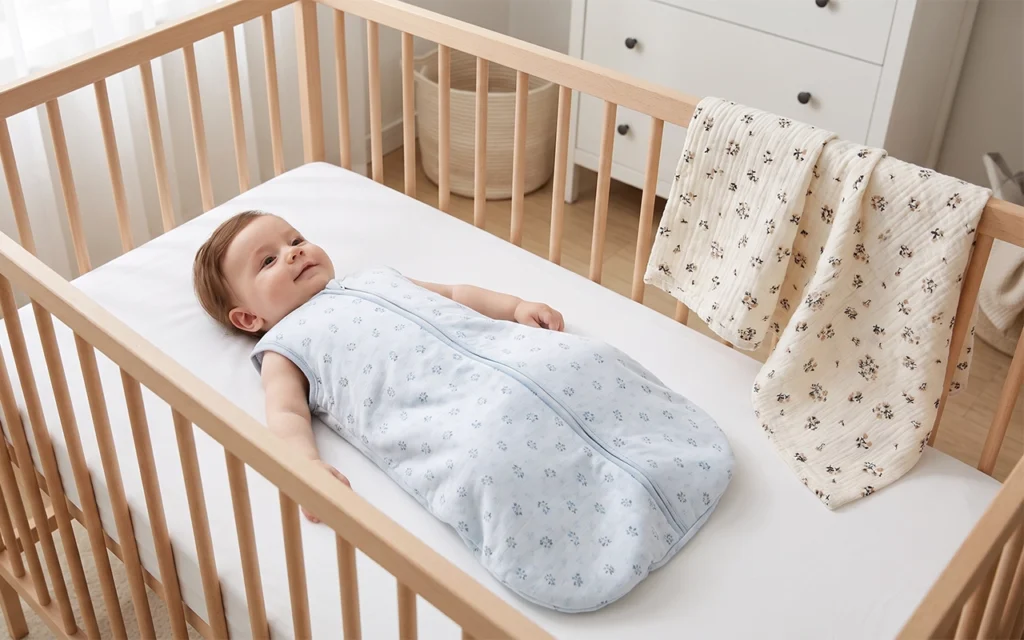
Sleep sacks create a comfortable sleeping environment for babies.
Since babies wear sleep sacks for extended periods, fabric comfort becomes especially important.
Cotton fabric is commonly used for baby sleep sacks because it provides:
- Softness
- Breathability
- Comfortable skin contact
A suitable sleep sack fabric should help babies feel comfortable during sleep.
Brands should also consider:
- Fabric thickness
- Seasonal requirements
- Product design
For example, different markets may prefer different fabric weights depending on climate and customer expectations.
Therefore, choosing the right cotton fabric helps brands develop sleep products that balance comfort and practicality.
Understanding Fabric Choices for Baby Bedding Products
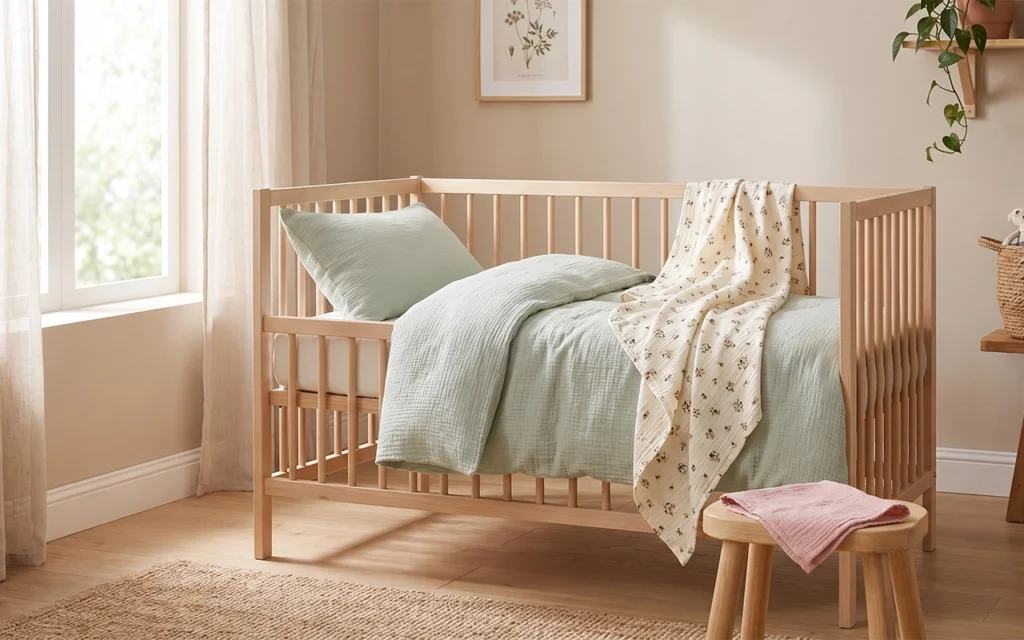
Baby bedding products include many different categories.
Each product has specific fabric requirements.
Common bedding products include:
- Bedding sets
- Blankets
- Mattresses
- Pillows
- Quilts
Muslin Fabric for Baby Bedding
Muslin fabric is widely used in baby bedding products.
It is known for:
- Lightweight structure
- Breathability
- Soft touch
Muslin fabric is suitable for:
- 2-piece bedding sets
- Baby blankets
For example, muslin bedding sets provide a comfortable sleeping environment with a lightweight feel.
Baby blankets made from muslin fabric are also suitable for daily use because they are breathable and easy to use in different situations.
Cotton Fabric for Baby Blankets
Cotton fabric is another common choice for baby blankets.
Compared with lightweight muslin, cotton blankets can provide a different comfort experience.
Important features include:
- Soft texture
- Comfortable touch
- Reliable daily performance
Brands can select between muslin and cotton fabrics based on:
- Product positioning
- Target market
- Seasonal use

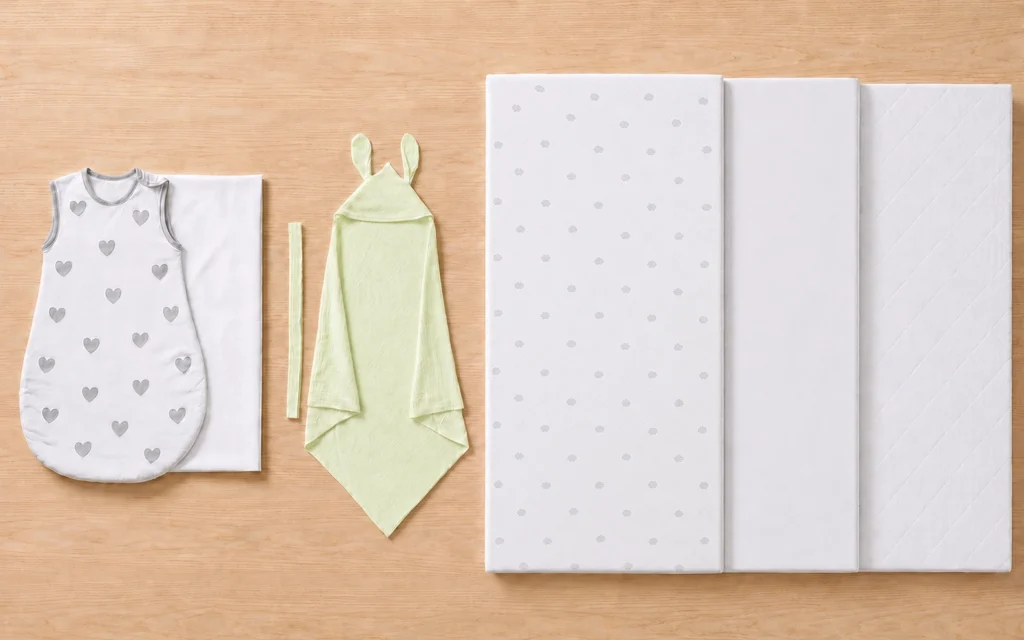
Choosing the Right Mattress Cover Fabric
Baby mattresses require different fabric considerations compared with other textile products.
The cover needs to provide:
- Comfort
- Durability
- Good appearance
- Practical performance
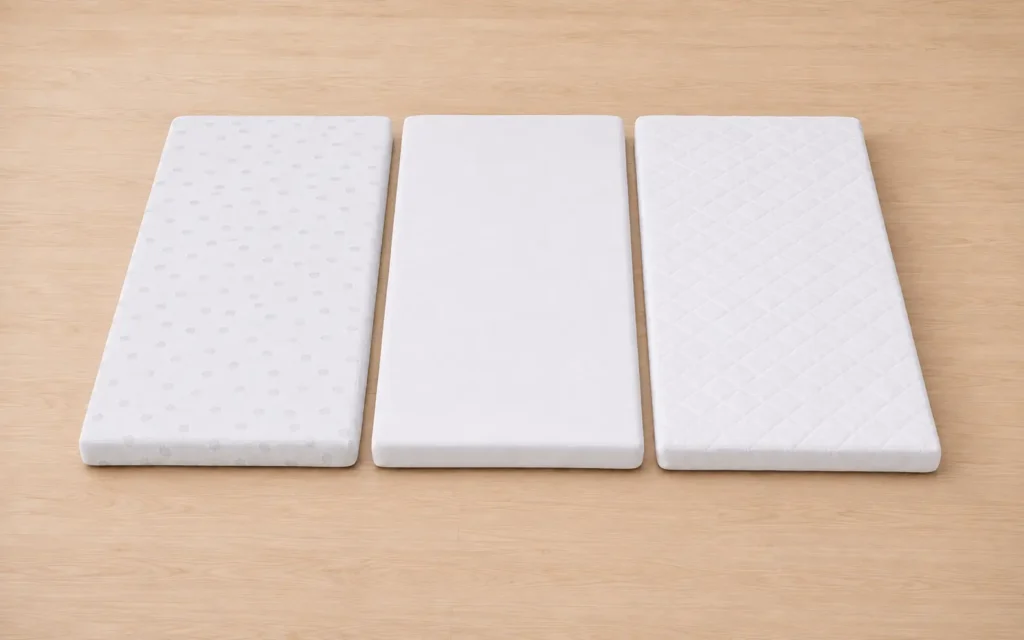
Common mattress cover options include:
Jacquard Fabric
Jacquard fabric creates a textured surface design.
It helps products achieve:
- Premium appearance
- Unique visual style
- Differentiated design
TC Fabric
TC fabric provides practical performance.
It is suitable for brands looking for:
- Durability
- Stable fabric performance
- Cost-effective solutions
Ultrasonic Quilted Fabric
Ultrasonic quilted fabric creates a modern surface effect.
It provides:
- Clean appearance
- Decorative texture
- Improved product design
Therefore, brands should select mattress cover fabrics according to product positioning and market requirements.
Selecting Fabrics for Baby Bath Products
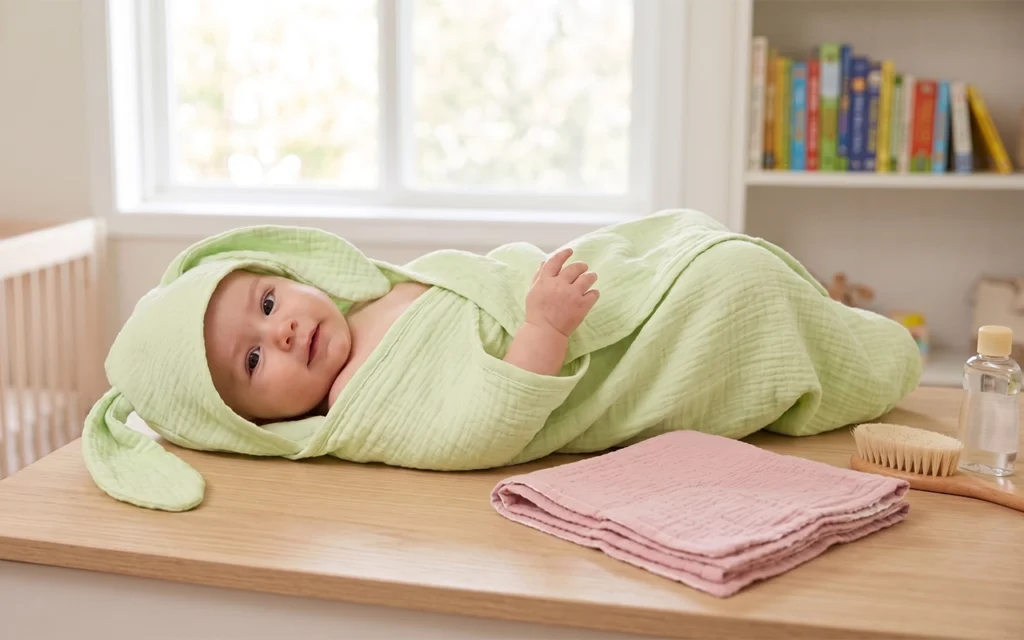
Baby bath products require fabrics that provide comfort and absorbency.
Common products include:
- Hooded baby towels
- Baby towels
- Washcloths
Muslin fabric is a popular option for baby bath products.
It provides:
- Soft touch
- Lightweight feel
- Good absorbency
- Comfortable skin contact
Because towels and washcloths are used after bathing, fabric softness is especially important.
A suitable fabric helps create a more comfortable daily care experience for babies.
How Brands Should Evaluate Fabric Suppliers
Selecting the right fabric is only one part of product development.
Brands should also work with manufacturers that understand materials and production requirements.
A reliable supplier should provide:
- Different fabric options
- Material information
- Sample support
- Product development suggestions
For example, brands may need to compare different fabrics before confirming final production.
A professional manufacturer can provide fabric samples and help evaluate:
- Hand feel
- Appearance
- Product suitability
- Manufacturing performance
Furthermore, experienced suppliers understand how fabrics perform during production.
This knowledge helps brands avoid material selection problems and improve product consistency.
Conclusion: Choose Fabrics Based on Product Needs
The best fabric choice depends on the product function.
There is no single fabric that works for every baby product.
Cotton, muslin, jacquard, TC, and other materials each provide different benefits.
Brands should consider:
Product usage
Target market
Comfort requirements
Manufacturing performance
Choosing the right fabric helps brands create better baby products and improve customer experience.
An experienced baby product manufacturer can support brands throughout this process, from material selection and sample development to final production.
With more than 40 years of experience in baby product manufacturing, Inorange Baby helps global brands develop customized baby products with suitable materials and reliable production support.