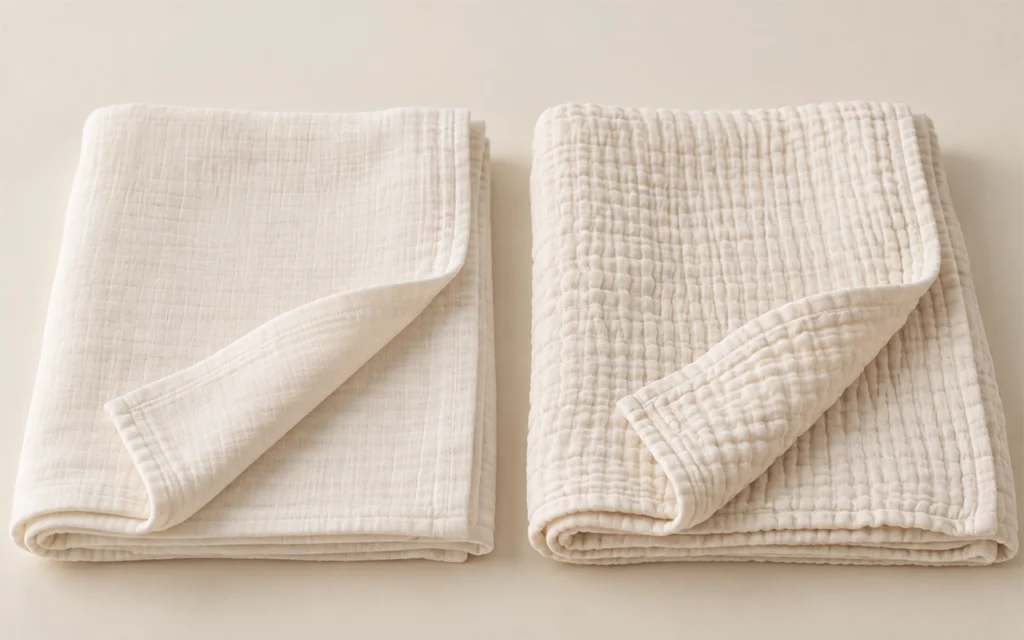
Muslin fabric can look very different even when the fiber content is the same.
Two fabrics may both use 100% cotton. However, one can have a smooth and flat surface, while the other shows a natural crinkle texture.
That surface difference affects more than appearance.
It can also change the hand feel, print result, drape, product style, and how the finished item looks after washing.
For buyers, the key question is not simply:
“Do we want muslin?”
A better question is:
“Do we need flat muslin or crinkle muslin for this product?”
What Is Flat Muslin?
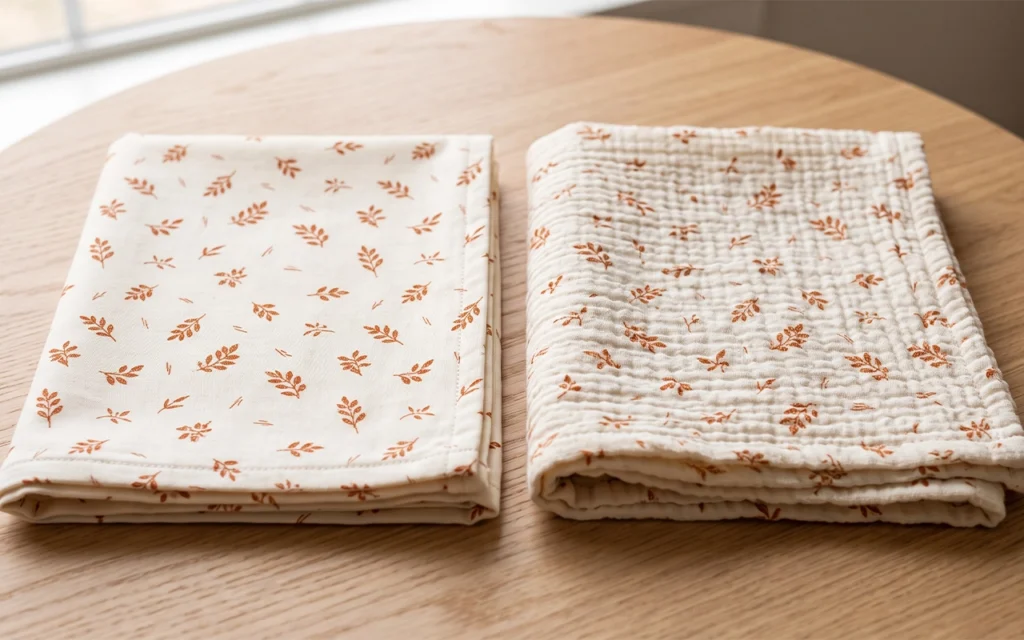
Flat muslin has a smoother and more even surface.
The fabric still keeps the light character of muslin. However, the surface looks more regular and controlled.
This can make flat muslin suitable for products where the visual design needs to stay clear.
For example, buyers may choose it for:
• Printed swaddles
• Baby bedding
• Bibs
• Burp cloths
• Coordinated textile sets
A smoother surface can also make small motifs easier to read.
In addition, embroidery placement may look more precise on a flatter base.
However, flat muslin does not mean the fabric is stiff.
The actual hand feel still depends on yarn, GSM, layer count, finishing, and washing.
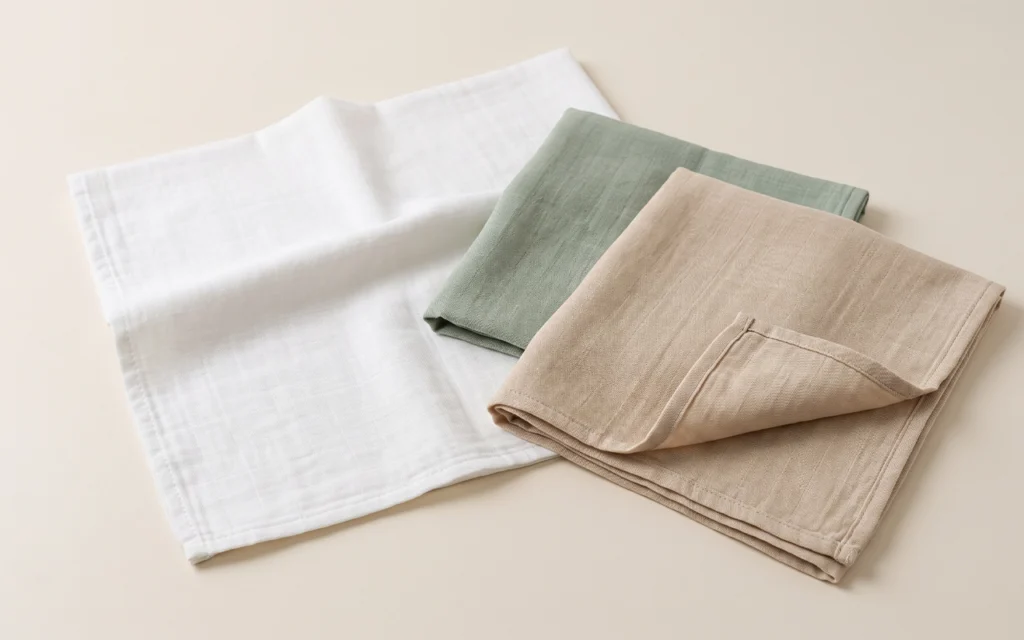
What Is Crinkle Muslin?
Crinkle muslin has a naturally textured surface.
The fabric shows soft wrinkles or puckered areas across the surface.
This texture gives the material a more relaxed and casual appearance.
Crinkle muslin is often selected for:
• Swaddles
• Blankets
• Bath textiles
• Lightweight accessories
• Soft nursery products
The crinkle effect also gives the fabric more visual depth.
As a result, solid colors can still look interesting without printed decoration.
However, the texture should remain controlled.
An uneven or overly distorted surface can make the product look inconsistent.
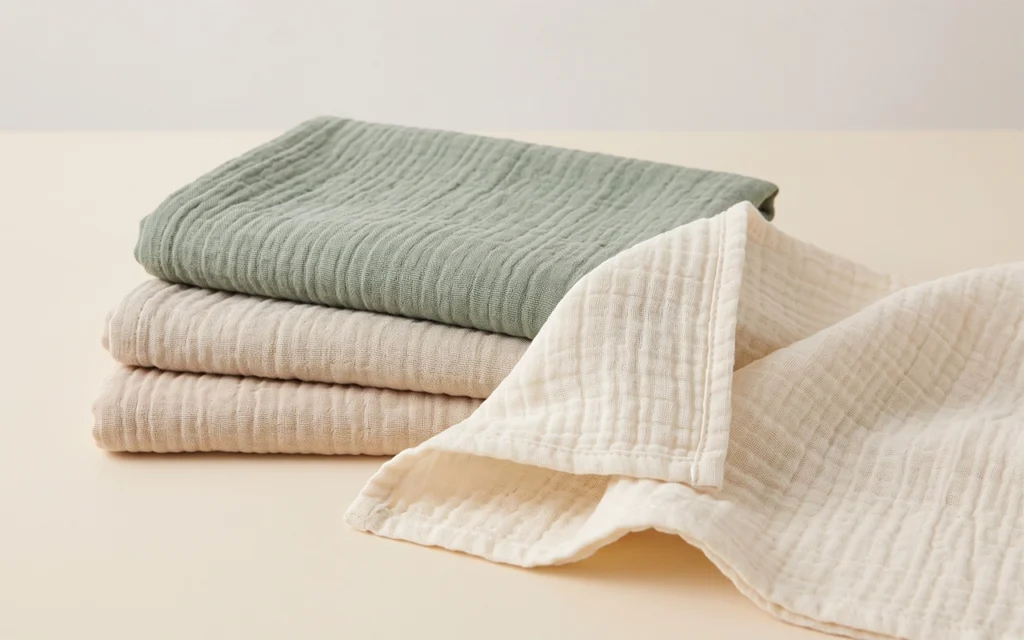
Surface Texture Changes the Visual Style
Flat and crinkle muslin can create very different product moods.
Flat muslin usually looks cleaner and more structured.
Crinkle muslin feels softer and more relaxed.
Therefore, the surface can support different brand directions.
For example, a minimal bedding collection may use flat muslin with small prints.
Meanwhile, a soft lifestyle collection may use crinkle muslin in solid or muted colors.
The surface itself becomes part of the product design.
This means brands should not choose texture only after the color and print are finished.
Instead, surface style should be confirmed early.
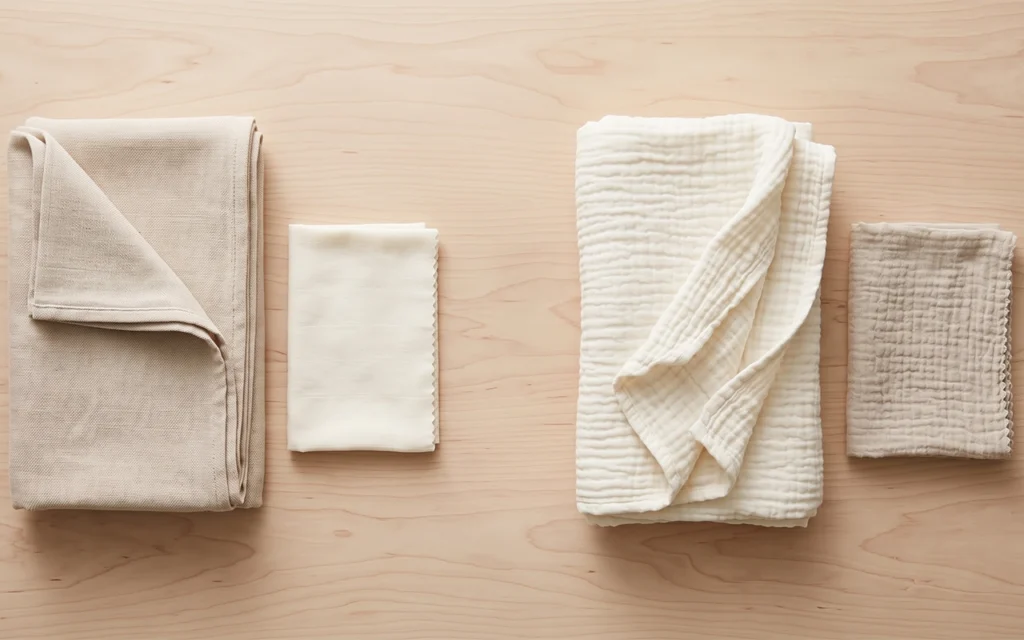
Prints Look Different on Flat and Crinkle Surfaces
Print performance is another important difference.
A flat surface gives the artwork a more even base.
Therefore, small motifs, fine lines, and repeated patterns can look clearer.
Crinkle muslin behaves differently.
The textured surface can slightly change the way the print appears.
For larger or softer patterns, this may work well.
However, very detailed artwork may look less sharp across a heavily textured surface.
Buyers should therefore review:
• Motif size
• Line detail
• Repeat scale
• Color contrast
• Surface texture
• Final product use
A print should be tested on the actual fabric structure whenever possible.
Embroidery Also Responds to Surface Texture
Embroidery can work on both fabric types.
However, the finished result may differ.
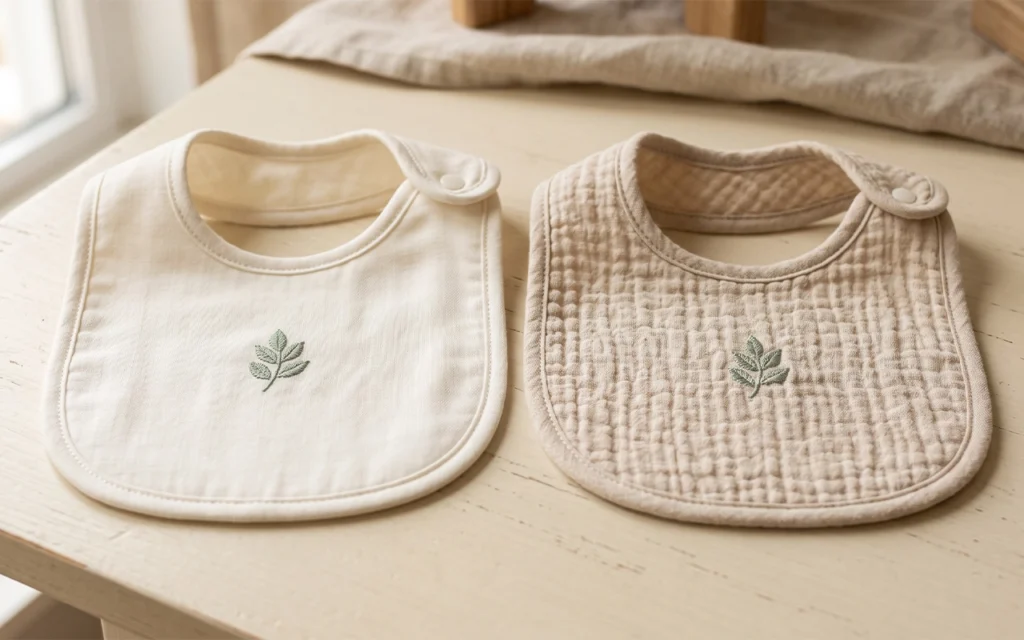
Flat muslin provides a more stable visual background.
As a result, small embroidery can appear cleaner and more defined.
Crinkle muslin may create a softer appearance around the stitched area.
Therefore, brands should check whether the embroidery sits naturally on the texture.
They should also confirm:
• Motif size
• Stitch density
• Placement
• Fabric support
• Surface distortion
The goal is to keep the embroidery balanced without flattening the surrounding texture too much.
Hand Feel Depends on More Than the Surface
Crinkle muslin may look softer, but surface appearance alone does not decide hand feel.
Several factors still matter:
• Fiber quality
• Yarn structure
• GSM
• Layer count
• Finishing
• Washing
• Fabric density
Likewise, flat muslin can still feel very soft.
Therefore, buyers should not assume that crinkle always means softer.
A real swatch comparison is more useful.
In addition, finished samples can show how the fabric behaves after sewing and washing.
Washing Can Change the Final Appearance
Muslin often changes slightly after washing.
This makes wash testing important for both flat and crinkle fabrics.
Flat muslin may develop a softer and less rigid surface after washing.
Crinkle muslin may show its texture more clearly.
Therefore, buyers should review:
• Surface after washing
• Shrinkage
• Shape stability
• Wrinkle pattern
• Hand feel
• Finished dimensions
The goal is not to remove all natural movement.
Instead, the fabric should keep a consistent and intentional appearance.
Different Products May Need Different Surface Types
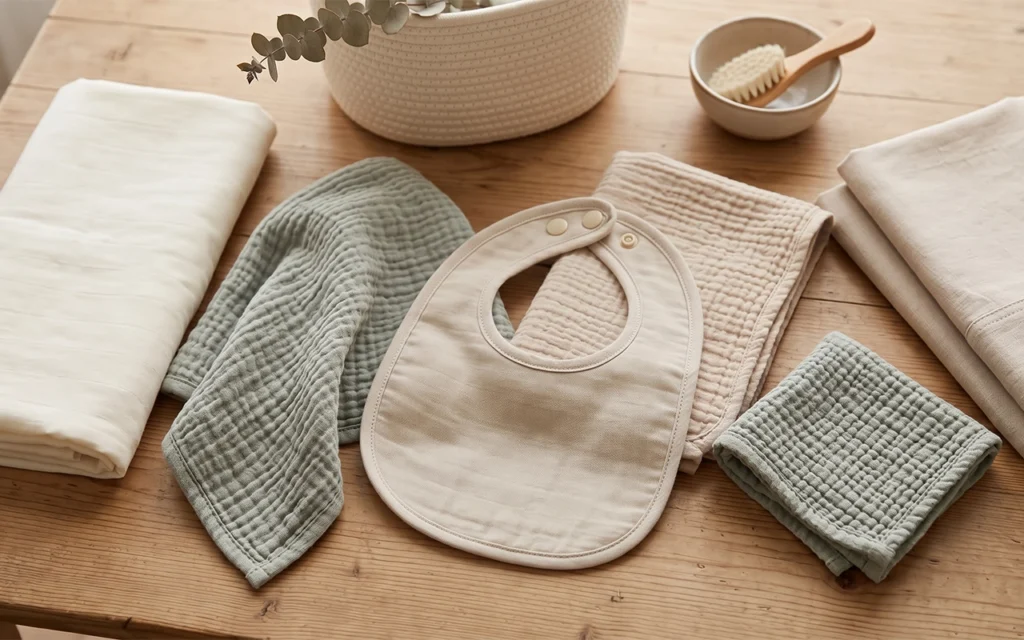
The right surface depends on the product.
For example:
Swaddles
Both flat and crinkle muslin can work. The choice depends on print, hand feel, and visual style.
Baby Blankets
Crinkle muslin can create a softer visual effect. Flat muslin can support cleaner prints.
Bibs and Burp Cloths
Flat surfaces may help with print placement and layered construction. Crinkle surfaces can create a more casual look.
Bath Textiles
Crinkle muslin can add texture, especially in soft and lightweight designs.
Bedding
Flat muslin may suit more structured patterns, while crinkle muslin can support a relaxed nursery style.
Therefore, one surface type does not fit every product automatically.
GSM and Layer Count Still Matter
Surface type is only one part of the specification.
A flat muslin can be light or relatively full.
Crinkle muslin can also use different weights and layer structures.
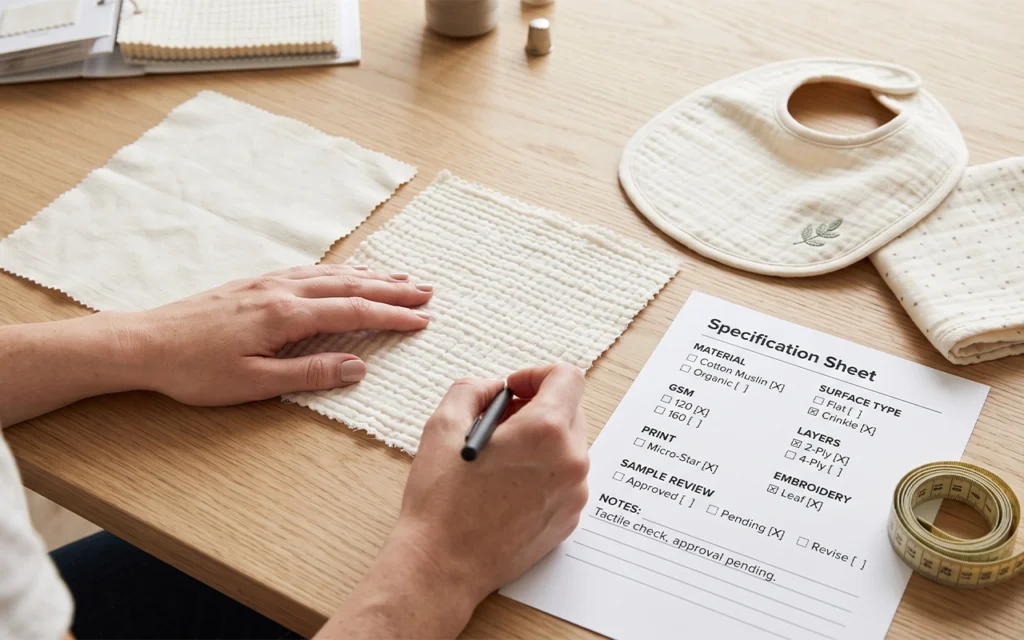
Therefore, buyers should confirm:
• Flat or crinkle surface
• GSM
• Layer count
• Fiber composition
• Color
• Print
• Finished product use
For example, a lightweight single-layer crinkle muslin will feel very different from a multi-layer version.
Likewise, a flat muslin with higher GSM can create a more substantial product.
The complete specification matters more than the surface name alone.
What Should Buyers Confirm Before Sampling?
A clear sourcing brief helps avoid confusion.
Instead of writing only:
“100% Cotton Muslin”
buyers can provide:
100% Cotton
• Flat or Crinkle Surface
• Target GSM
• Layer Count
• Color or Print
• Product Application
This makes the development direction more precise.
In addition, brands can compare both surface types during sampling.
The final decision can then consider:
• Appearance
• Hand feel
• Print result
• Embroidery result
• Shrinkage
• Finished product balance
Inorange Baby can support muslin development with different surface textures, GSM, layers, colors, prints, embroidery, sizes, labels, and packaging.
Conclusion
Flat muslin and crinkle muslin can use the same cotton fiber but create very different finished products.
Flat muslin gives a smoother and more controlled surface.
Crinkle muslin creates more texture and a relaxed visual effect.
Therefore, buyers should compare:
Surface Texture + GSM + Layers + Print + Embroidery + Product Application
as one complete development decision.
This helps brands choose a muslin surface that fits both the product structure and the intended visual direction.