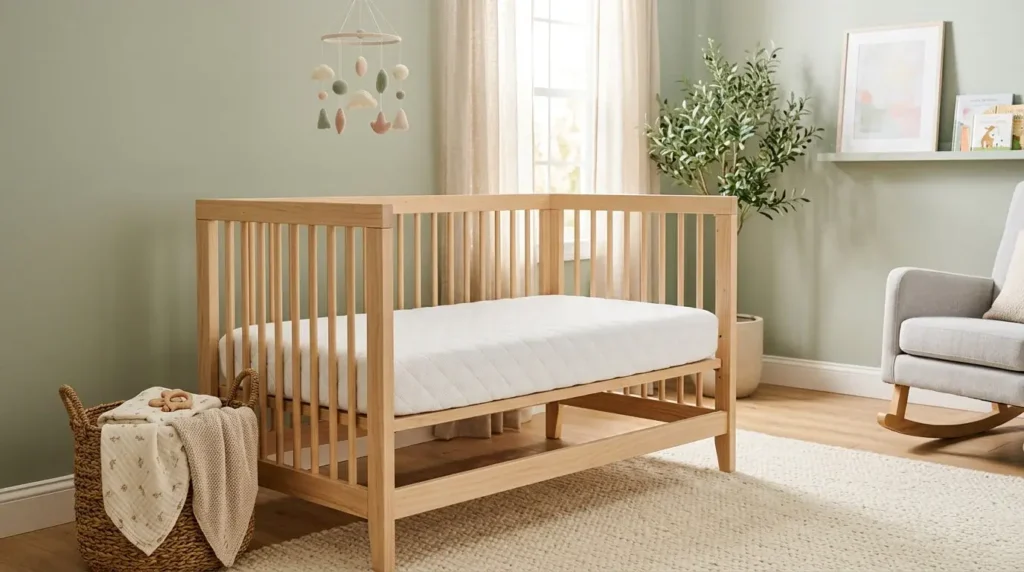
The New Paradigm of Infant Mattress Engineering
In the 2026 global mother and baby market, the competitive landscape for infant mattresses is undergoing a profound transformation. In the past, procurement decisions were often limited to fabric touch and aesthetics; today, the supply chain’s focus has shifted toward “preventative safety performance.” For brand owners looking to achieve sustainable market expansion, understanding the physiological logic behind product materials is the essential first step in building a competitive advantage.
Research indicates that an infant’s high metabolic rate and immature thermoregulation system impose rigorous demands on sleep surface thermal management. This physiological uniqueness requires mattresses to evolve from simple support tools into efficient “environmental regulation media.” This design logic, driven by physiological needs, has directly catalyzed the birth of a new generation of high-performance mattresses. In the current global climate, any mattress solution seeking international competitiveness must go beyond basic breathability to master gas exchange efficiency and material stability.
Technical Considerations: CO2 Dissipation and Thermal Sanitization
In the R&D and manufacturing of infant mattresses, performance evaluation typically involves several engineering parameters. Among these, CO2 dissipation capacity and material stability during the cleaning process are two core indicators.
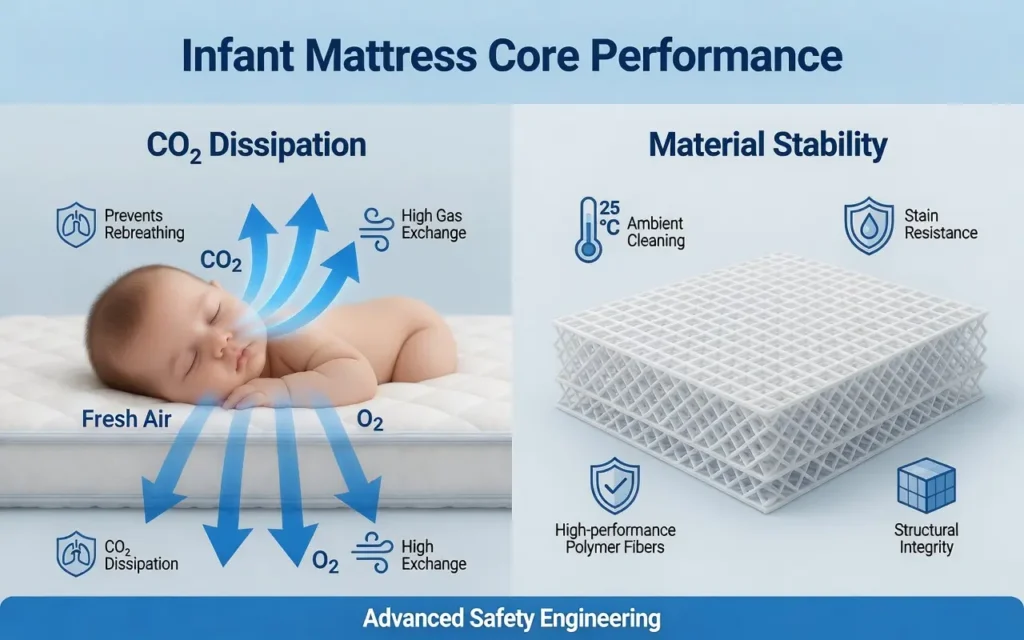
First, we must focus on the air quality within the respiratory microenvironment. A physical structure with high gas exchange efficiency is key to preventing CO2 Rebreathing. When an infant’s face is close to the surface during sleep, the mattress must possess the physical diversion capability to assist in exhaled air dissipation while allowing fresh air to circulate. This precision design, focused on gas pathways, is a vital physical indicator for assessing product safety, directly impacting the infant’s respiratory comfort during sleep.
Secondly, the hygiene maintenance capability of the material determines product durability. In modern textile engineering, the selection of high-end polymer materials is critical. Unlike traditional materials that rely on high-temperature sanitization, new high-performance fibers emphasize stain resistance and structural integrity at ambient temperatures. For brands, ensuring deep cleaning without thermal degradation is the technical cornerstone for meeting dual market demands for durability and hygiene.
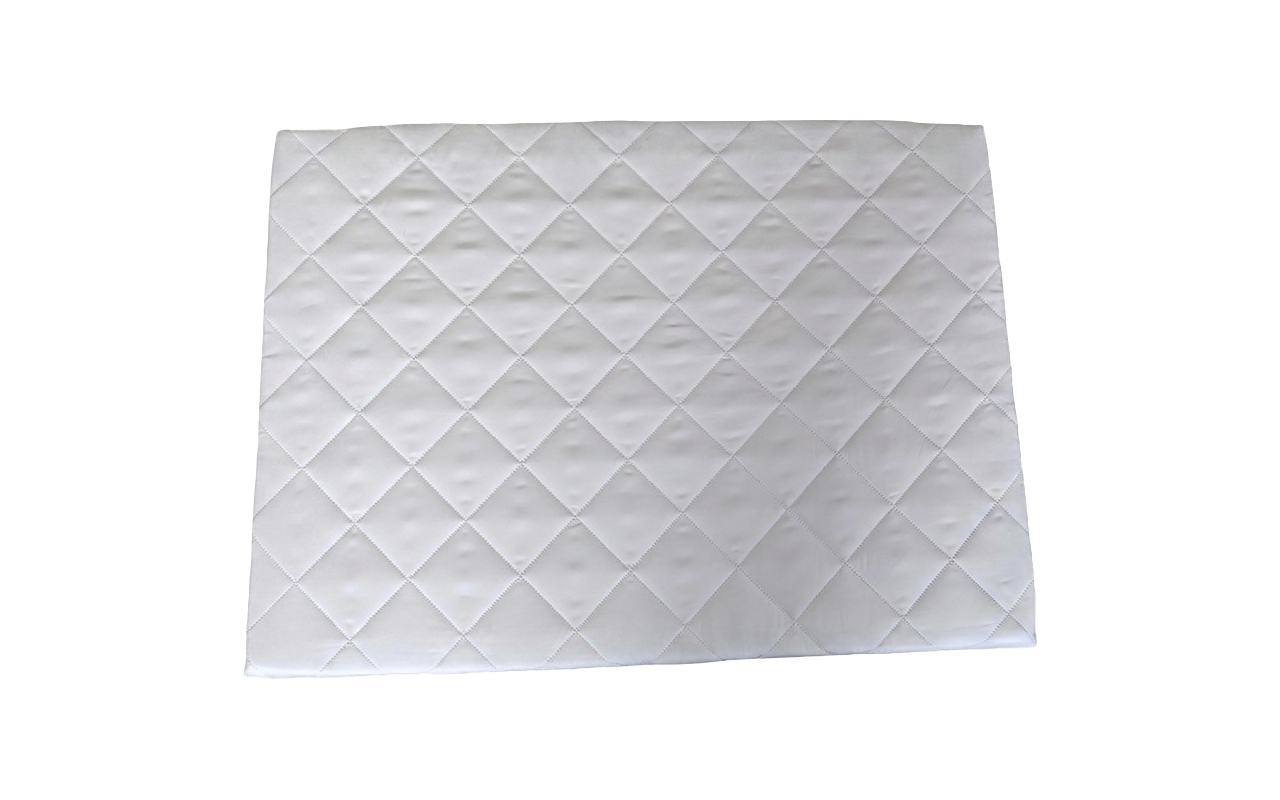
Product Integration: Technical Specifications of Our Mattress
To balance air exchange with material durability, our infant mattress utilizes Micro-cell Technology. This application not only addresses the physiological needs of infants but also translates abstract safety standards into measurable performance through physical structural optimization.
This micro-cell architecture creates continuous air convection channels between the mattress core and the fabric layers. The design ensures that air velocity remains within a stable range even under pressure, achieving efficient CO2 Dissipation. This feature, rooted in physical engineering, effectively prevents the buildup of exhaust gases in the respiratory microenvironment, providing brands with a scientifically backed safety endorsement.
Furthermore, considering high-frequency washing scenarios in international markets, the mattress is constructed from stable polymer materials specifically optimized for a 30°C gentle wash. This means that during routine care, washing will not cause physical shrinkage, deformation, or the collapse of breathable micro-pores. This exceptional material resistance ensures the product retains its core breathability and support metrics over long-term use, achieving a true balance between hygiene standards and product lifespan.
Partnering for Advanced Safety Standards
As a factory deeply rooted in the baby textile industry, we do more than manufacture products; we provide sleep solutions based on physiological science. The physical architecture of this mattress is a direct reflection of our R&D and manufacturing capabilities.
For samples or a complete Product Catalog, please feel free to contact us. We look forward to assisting your brand in securing a competitive edge in the 2026 market.
[1]https://www.healthychildren.org/English/agesstages/baby/sleep/Pages/a-parents-guide-to-safe-sleep.aspx