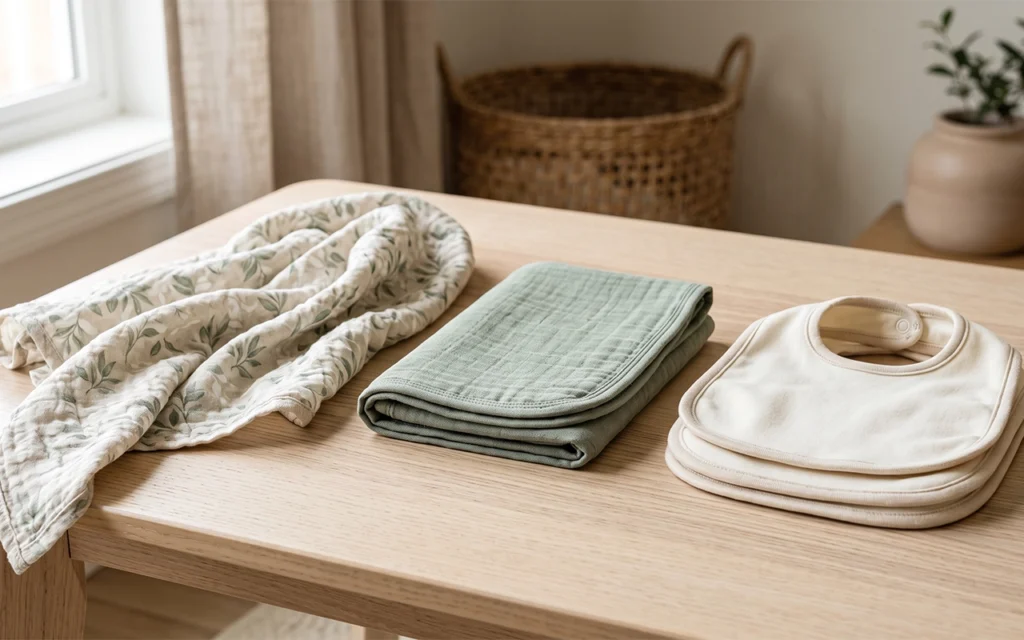
A baby textile product may look simple from the outside, but its internal structure can completely change the final result.
A lightweight swaddle may only need a simple construction. A bib may require several layers, with each one serving a different purpose. A washcloth or blanket may use yet another structure depending on thickness, absorbency, and product positioning.
For product development, the key question is not simply “How many layers should we use?”
A better question is:
“What should each layer do?”
Start with the Product Function
Layer structure should follow the intended use of the product.
Some baby textiles need to remain light and flexible. Others require more absorbency, thickness, or support. Therefore, two products made from similar fabrics may still need completely different constructions.
Before deciding on the number of layers, buyers can first consider:
• Intended product use
• Desired thickness
• Absorbency requirements
• Hand feel
• Fabric combination
• Target price level
• Finished product appearance
For example, a muslin swaddle may focus on softness and a lightweight feel. A baby bib, however, may need a more functional layered structure.
This is why layer count should be planned together with the complete product specification.
Single-Layer Structures for Lightweight Products
Single-layer construction can work well when the main goal is to keep the product light, soft, and easy to fold.
Possible applications may include:
• Muslin swaddles
• Lightweight care textiles
• Selected baby accessories
• Some simple textile products
Even with one layer, brands still have many customization options.
They can adjust:
• Fabric composition
• Fabric weight
• Product size
• Color
• Prints
• Edge finishing
• Labels
A lightweight muslin product, for example, can use a solid color for a minimal collection or an all-over print for a more decorative range.
However, a single-layer structure may not be suitable when the product needs stronger absorbency or a thicker hand feel.
Double-Layer Structures for More Flexibility
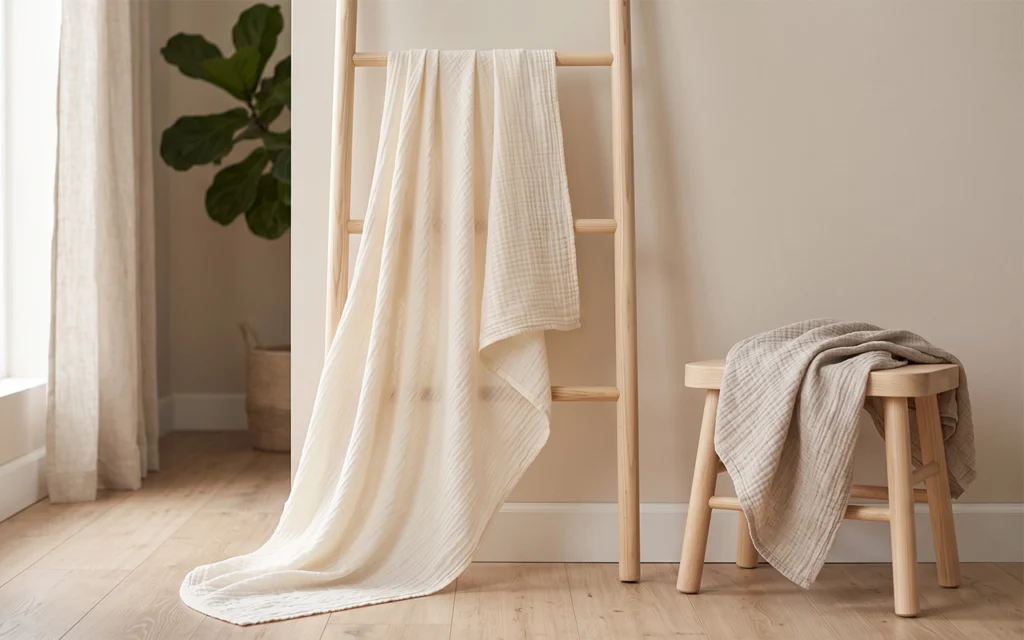
Double-layer products create more room for combining appearance and function.
The two layers can use the same fabric, or they can use different materials.
For example:
Muslin + Muslin
can create a different thickness and hand feel from a single-layer muslin product.
Another option may be:
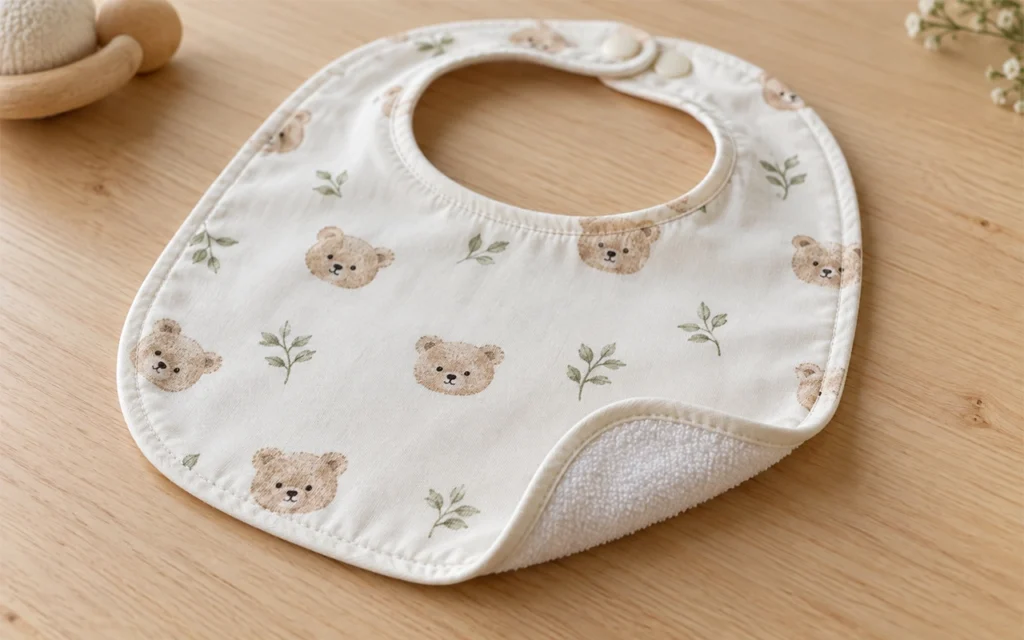
Knitted Fabric + Terry Cloth
Here, the knitted surface can provide the desired visual appearance, while the terry side creates a different functional surface.
During sampling, buyers should also check how the two fabrics work together.
Important points include:
• Shrinkage differences
• Seam construction
• Edge finishing
• Finished thickness
• Fabric movement
• Overall flatness after sewing
Two attractive fabrics do not automatically create a good double-layer product. Their behavior as one finished structure also matters.
Multi-Layer Structures for More Functional Products
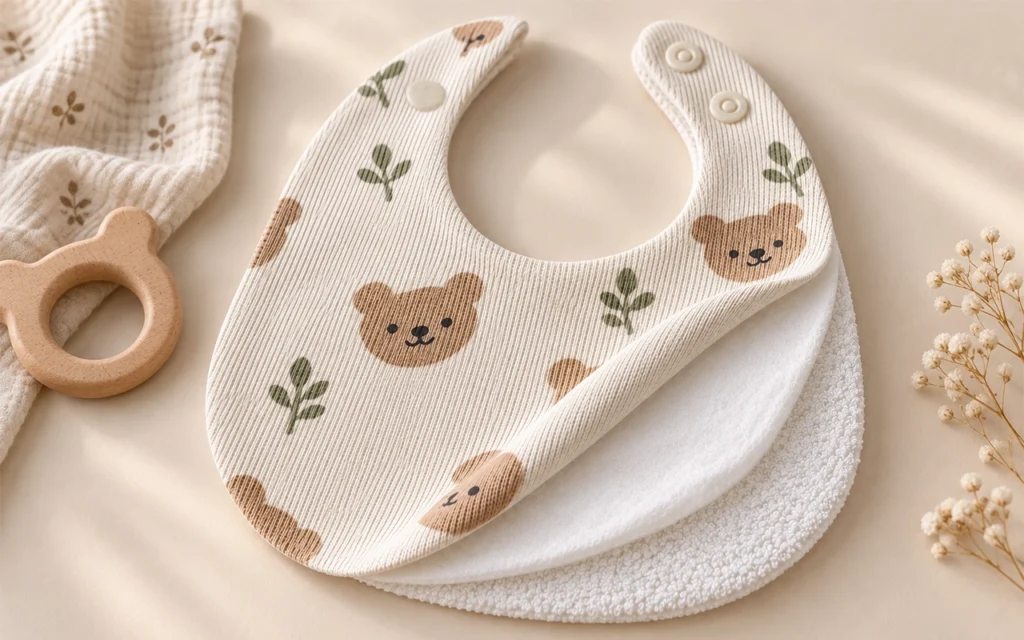
Multi-layer construction becomes useful when different materials need to perform different roles.
Baby bibs are a clear example.
One possible structure is:
Knitted outer fabric + absorbent middle layer + terry cloth backing
The outer layer can support the design and surface feel. The middle layer can provide absorbent structure. The backing can add another texture or functional property.
However, this is only one possible construction.
A custom bib project may change:
• Outer fabric
• Middle absorbent layer
• Backing material
• Overall thickness
• Bib shape
• Edge finishing
The same principle can also apply to other baby textile products.
Therefore, “three layers” should not be treated as one fixed specification. The material used in each layer matters just as much as the number itself.
More Layers Do Not Always Mean a Better Product
It is easy to assume that more layers mean better quality.
In reality, extra layers can also increase:
• Product weight
• Bulk
• Material consumption
• Drying time
• Production cost
They may also change how the product folds, drapes, or feels in the hand.
For this reason, brands should avoid adding layers unless they support a clear product requirement.
A lighter product may perform better with a simpler construction. Meanwhile, an absorbent bib or care textile may benefit from a more complex layered structure.
The best solution depends on the intended product position.
Use Layer Structure to Create Different Product Versions
Changing the internal structure can also help brands create several versions within one product category.
For example, one bib collection might include:
Lightweight Bib
A simpler construction with a softer and lighter feel.
Everyday Absorbent Bib
A layered structure with an additional absorbent component.
Premium Decorative Bib
A functional layered structure combined with embroidery, appliqué, decorative edges, or other custom details.
This gives brands more flexibility without changing the basic product category.
Inorange Baby can support OEM and ODM development for different baby textile structures. Fabrics, layer combinations, absorbent materials, product shapes, prints, embroidery, edge finishing, labels, and packaging can all be adjusted according to project requirements.
Conclusion
The right layer structure depends on the product, not on a fixed number.
Single-layer products can support lightweight designs. Double-layer structures can combine different materials. Multi-layer products can separate appearance, absorbency, and backing functions.
For buyers, the most useful approach is to define the role of each layer before selecting the final construction.
This helps create a product that matches its intended function, hand feel, appearance, and market position.