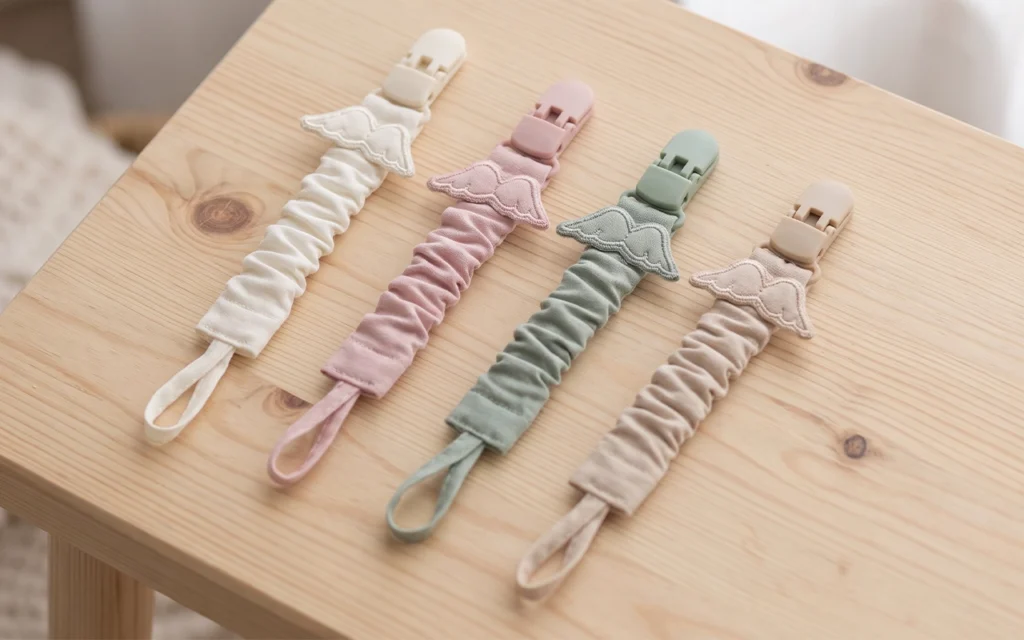
A pacifier clip is a small product, but its final quality depends on several parts working together.
The strap length, clip structure, attachment loop, decorative details, and fabric choice all affect the finished result. A product can look visually attractive but still feel unbalanced if one part is too large, too stiff, or poorly positioned.
For buyers developing a custom pacifier clip, the better approach is to treat it as a complete construction rather than a collection of separate accessories.
The Strap Defines the Main Product Structure
The fabric strap is the central part of the pacifier clip.
Its width, length, softness, and construction affect how the product hangs and how balanced it looks when attached to clothing.
Brands may choose:
• Straight fabric straps
• Gathered fabric-covered straps
• Soft knitted fabric straps
• Solid-color designs
• Printed fabric designs
A gathered strap creates more texture and volume, while a flatter strap creates a simpler appearance.
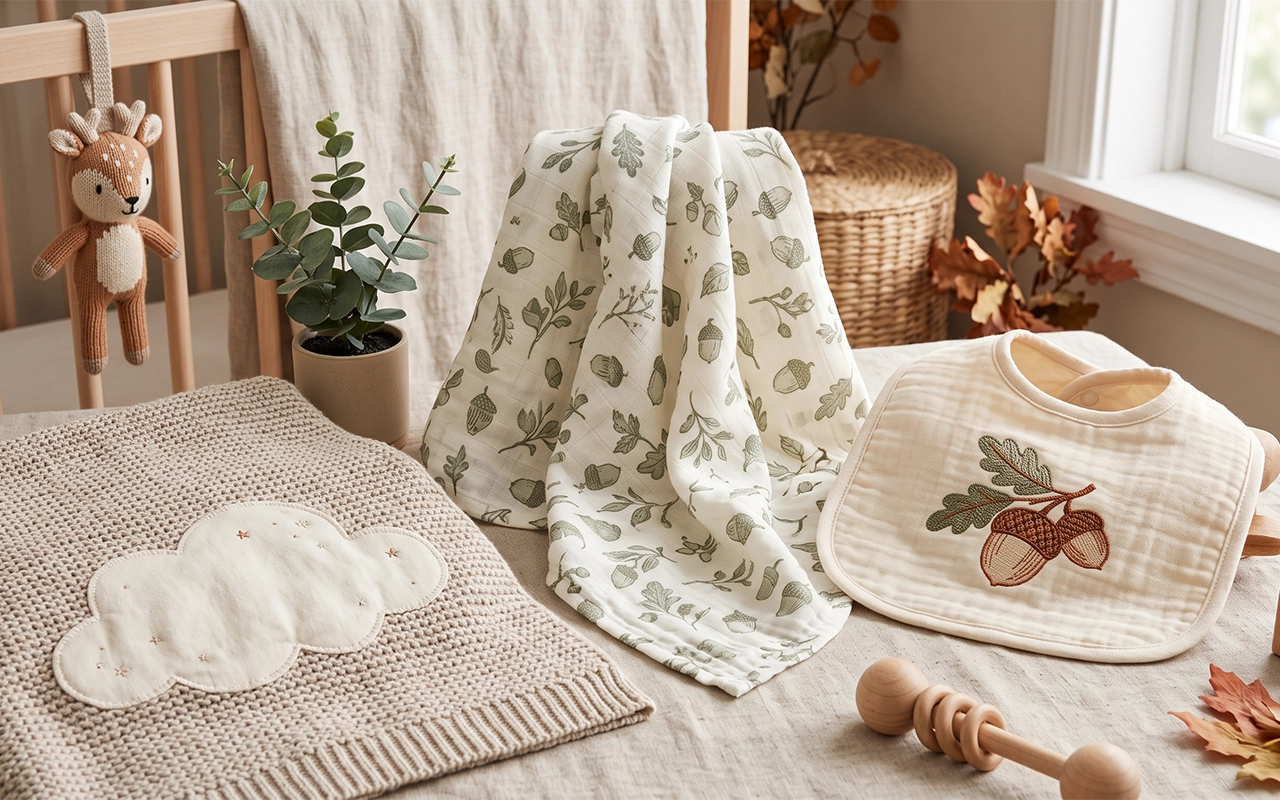
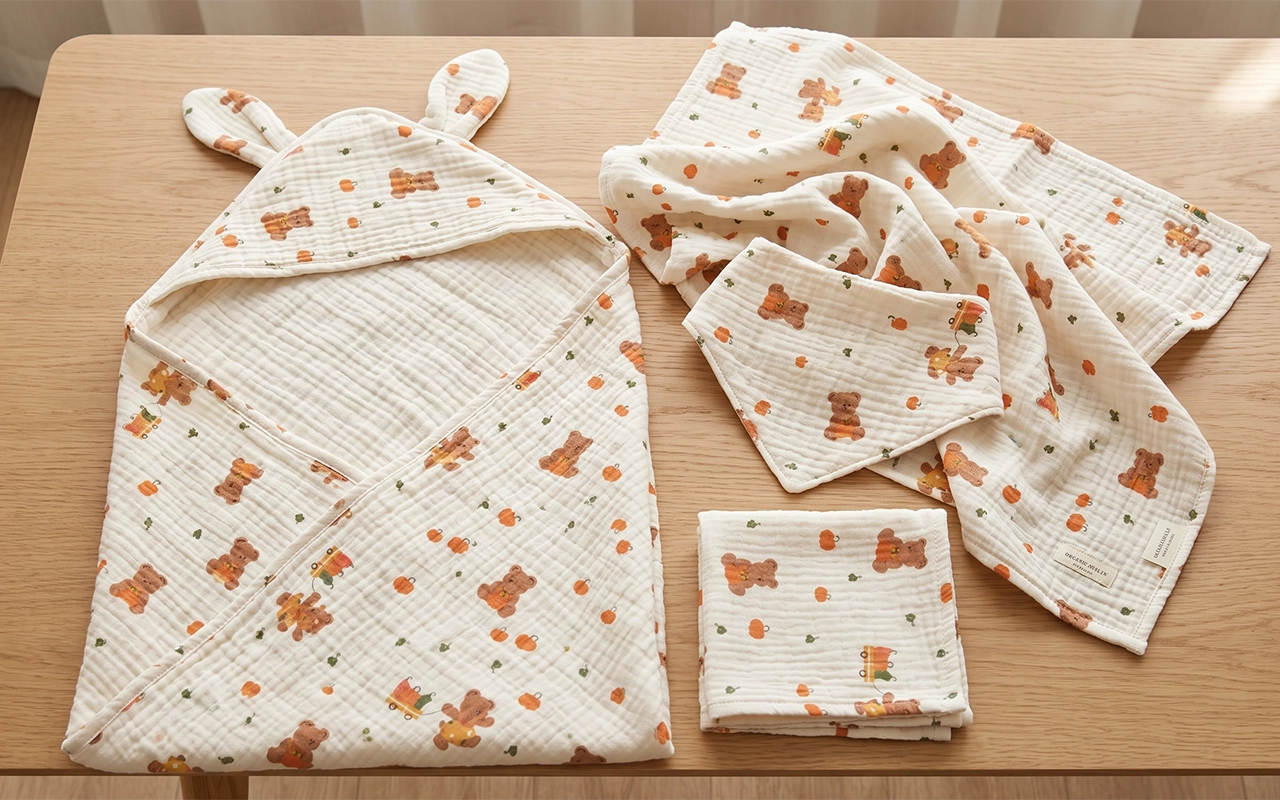
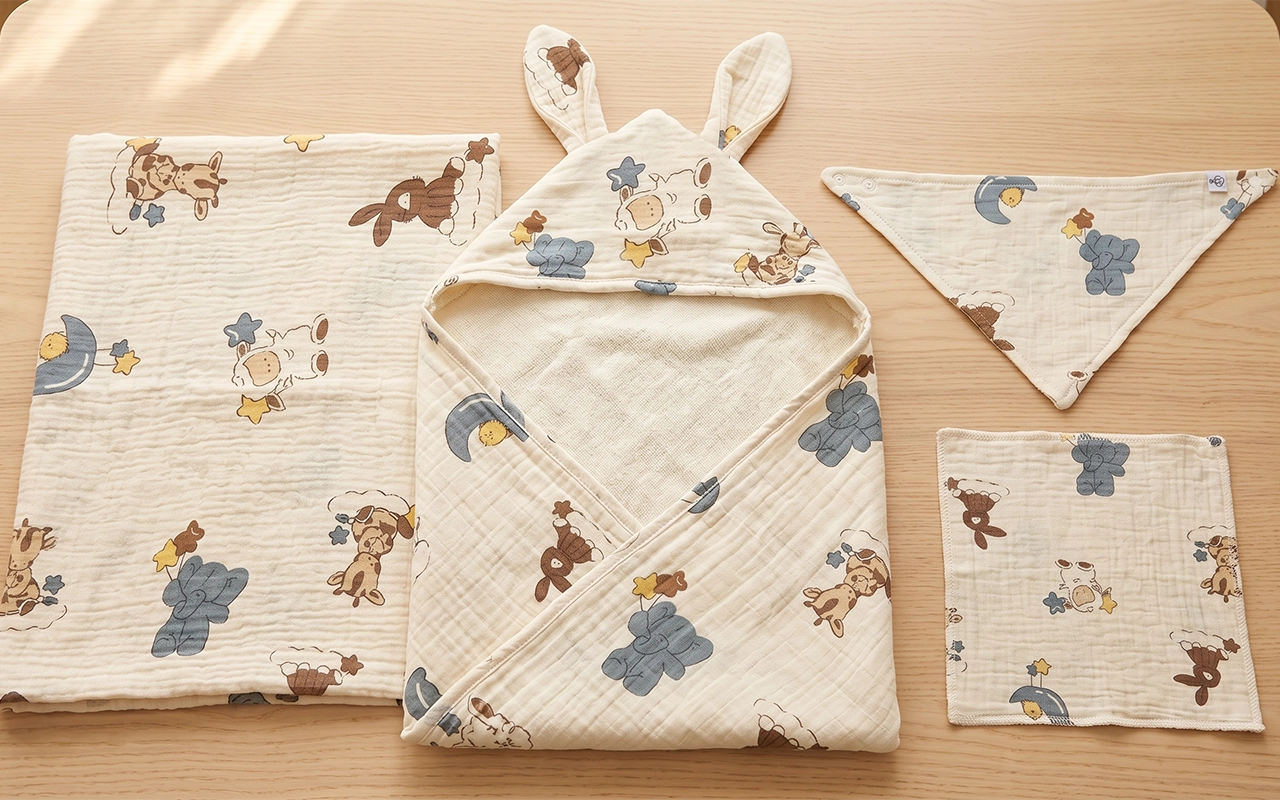
The fabric should also match the intended product style. For example, a soft knitted cotton fabric can create a more coordinated look when the clip belongs to the same collection as bibs, blankets, or other baby textiles.
However, visual coordination should not make the strap excessively bulky.
The product still needs to remain lightweight and well proportioned.
Clip Size and Material Affect the Overall Balance
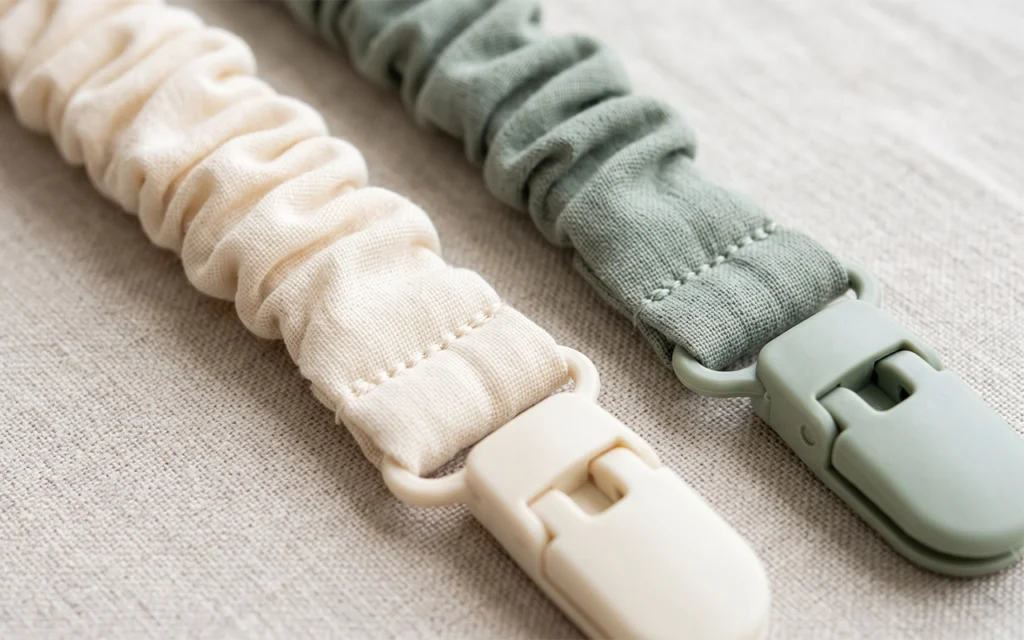
The clip connects the product to clothing, so its scale matters.
A clip that is too large can dominate the entire design.
A clip that is too small may look visually weak compared with a wider fabric strap or decorative element.
For custom development, buyers can review:
• Clip width
• Clip length
• Clip shape
• Opening mechanism
• Surface finish
• Color
• Connection point with the strap
PU-covered or soft-touch clip structures can create a softer visual appearance than exposed metal components.
The clip color can also be coordinated with the fabric strap, embroidery, or other collection details.
However, the clip should remain functional first. Decorative choices should not interfere with normal attachment or opening.
The Pacifier Attachment Loop Needs the Right Proportion
At the opposite end of the clip, the attachment loop connects the product to a pacifier or compatible accessory.
This section may look simple, but its proportion affects the overall product.
The loop should be long enough to attach correctly while remaining visually balanced with the rest of the strap.
During development, buyers should check:
• Loop length
• Loop thickness
• Attachment position
• Stitching strength
• Connection with the fabric strap
If the loop is too long, the product may look loose or unbalanced.
If it is too short, attachment can become less convenient.
The loop should also sit naturally when the pacifier is attached rather than twisting the strap.
Decorative Details Can Build Product Identity
Small decorative elements can make a pacifier clip much more recognizable.
For example, a brand can add:
• Fabric wings
• Small appliqué shapes
• Embroidery
• Quilting
• Contrast stitching
• Soft fabric ornaments
These details work especially well when the pacifier clip belongs to a coordinated baby textile collection.
A small decorative shape can repeat an element already used on a bib, blanket, or sleep sack.
For example, a wing detail can appear on both a pacifier clip and a baby blanket.
This creates visual continuity without requiring every product to use exactly the same construction.
Quilting and Embroidery Create Different Effects
Even when the decorative shape stays the same, the technique can change the final appearance.
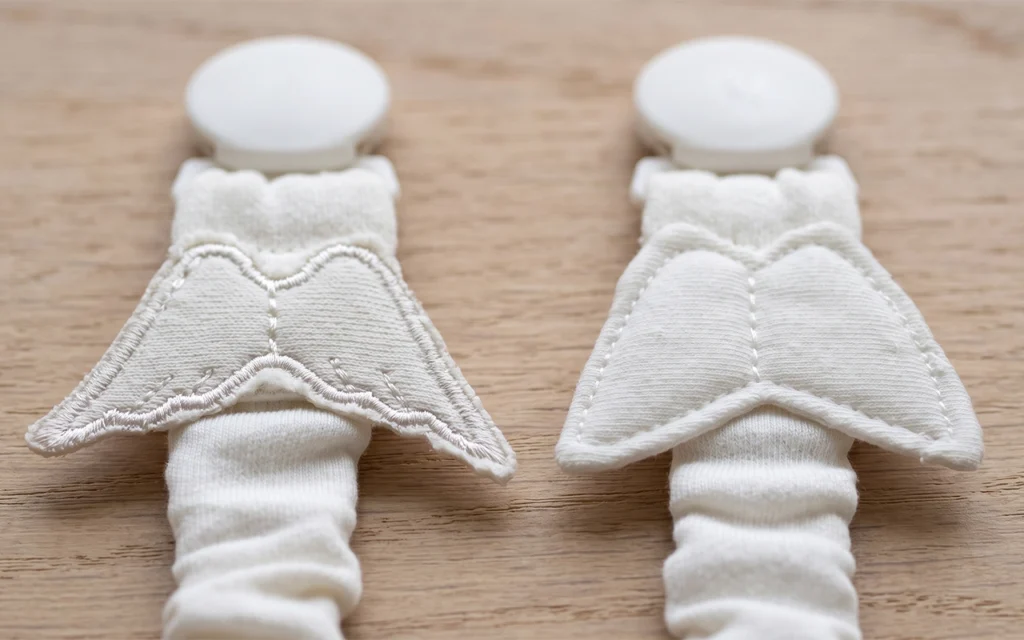
Quilting creates more surface texture and can make the decorative area look fuller.
Embroidery creates clearer lines and more defined detail.
A fabric wing, for example, can use:
• Quilted stitching across the surface
• Embroidered outlines
• Small embroidered motifs
• A combination of fabric appliqué and embroidery
The best choice depends on the fabric and the desired visual style.
A soft knitted fabric may support subtle embroidery, while a slightly more structured fabric may show quilting details more clearly.
The technique should be tested on the actual material rather than chosen only from artwork.
Decoration Size Needs to Match the Strap
Decorative elements should not be developed independently from the main strap.
A large ornament attached to a narrow strap can look heavy and unbalanced.
A very small ornament on a wide gathered strap may disappear visually.
Brands should compare:
• Decorative width
• Decorative height
• Strap width
• Clip size
• Total product length
The goal is to create proportion between all components.
This is especially important for wing, cloud, flower, animal, or other shaped decorations.
The shape should remain recognizable without making the overall product feel oversized.
Color Coordination Helps Build a Collection
Pacifier clips are often small enough to work well as supporting products in a wider baby collection.
Brands can coordinate:
• Strap color
• Clip color
• Decorative fabric
• Embroidery thread
• Loop color
• Labels
For example, a soft pink clip can match a pink bib, while a sage green version can connect visually with a blanket or sleep sack.
The products do not need to be identical.
Instead, they can share one or two repeated visual elements.
This creates a more complete collection while allowing each SKU to keep its own function.
Sampling Helps Check the Complete Product Balance
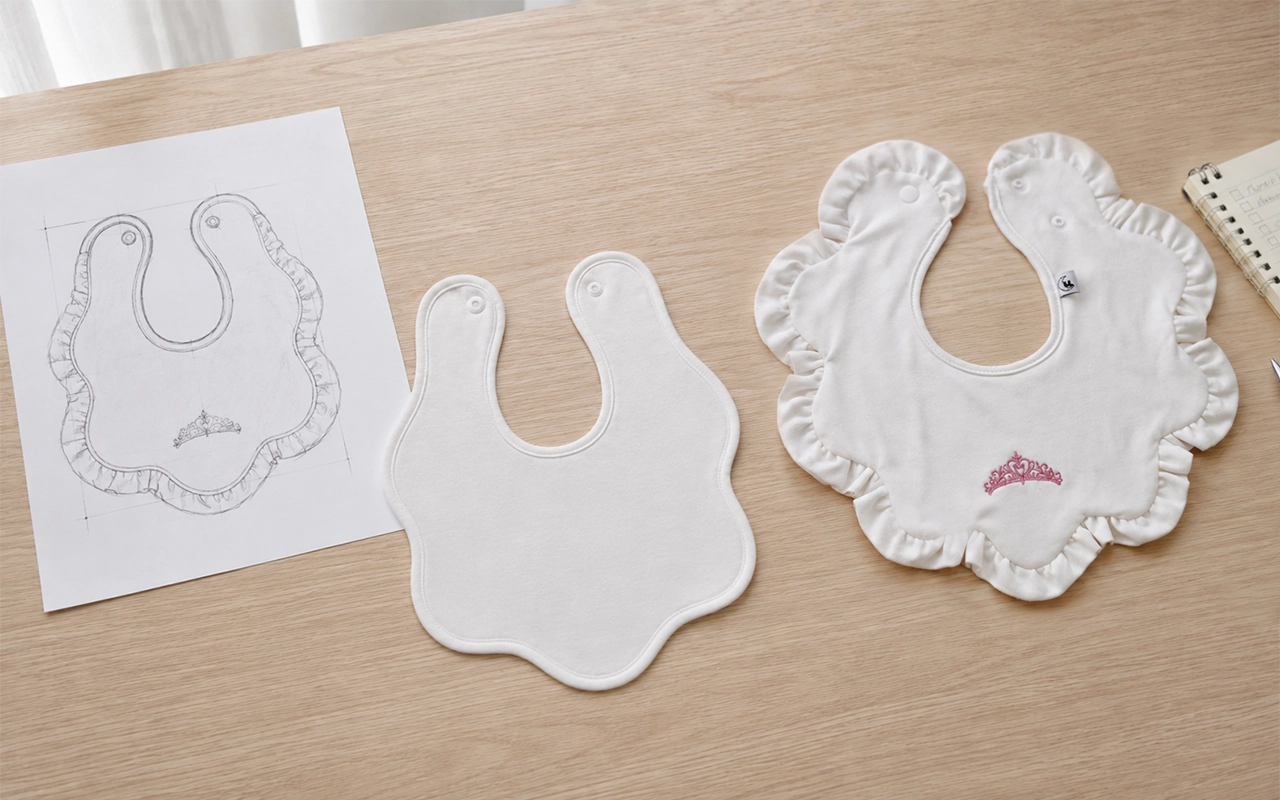
A technical drawing can show dimensions, but the finished sample reveals how the parts actually work together.
During sampling, buyers can review:
• Strap length and width
• Clip proportion
• Loop position
• Decorative shape
• Quilting or embroidery quality
• Color matching
• Stitching
• Overall balance
Inorange Baby can support custom pacifier clip development with different strap fabrics, PU clips, attachment loops, decorative shapes, embroidery, quilting, colors, labels, and coordinated product details.
The product can also be developed together with bibs, blankets, or other baby textile items to create a more consistent collection.
Conclusion
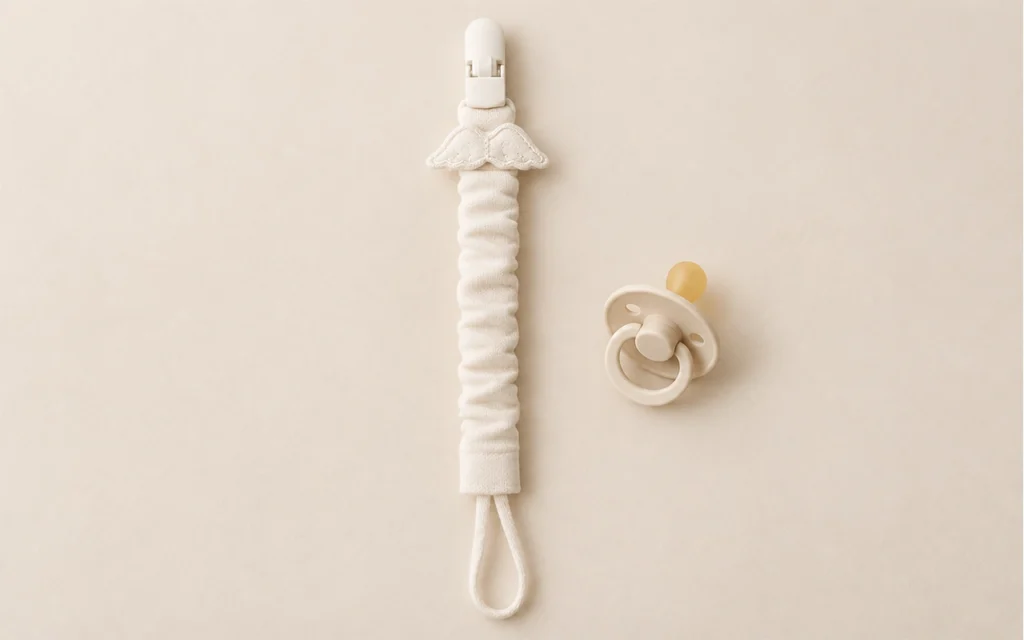
A well-developed pacifier clip depends on proportion and coordination.
The strap creates the main structure.
The clip defines the attachment end.
The loop connects the pacifier.
Decorative details create visual identity.
For buyers, the final design should consider:
Strap + Clip + Loop + Decoration + Color + Construction
as one complete product rather than separate parts.