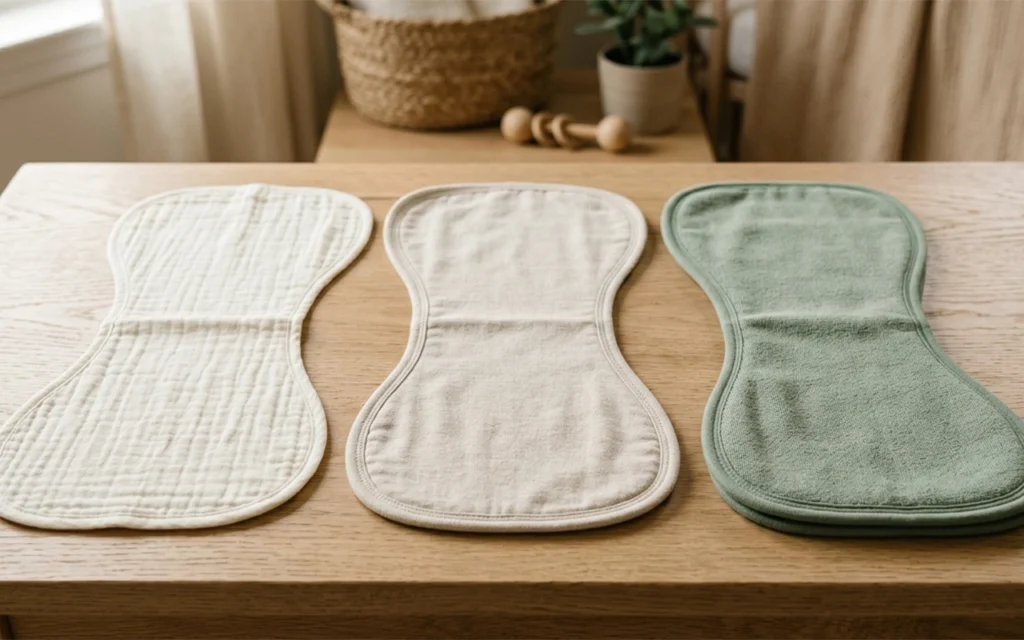
A 2-layer burp cloth can sometimes feel thicker than a 6-layer one. That is exactly why layer count alone does not tell the full story.
When buyers review baby burp cloths on the market, they often see many different options. Some products use 2 layers. Others use 3, 4, 5, 6, or even 8 layers. At the same time, materials, GSM, and fabric structures also vary.
For product development, this creates a common question:
How many layers should a baby burp cloth actually have?
The answer depends on more than numbers. Layer count matters, but so do fabric type, GSM, finished size, hand feel, absorbency, and product positioning.
Start with Product Positioning, Not Just Layer Count
A burp cloth can be designed for different purposes.
Some brands want a lighter product that folds easily and dries faster. Others want a thicker and more absorbent burp cloth with a fuller hand feel. Some products focus on muslin softness, while others use a more structured fabric combination.
Because of this, buyers should not begin with the assumption that more layers are always better.
A better starting point is to ask:
• What kind of burp cloth do we want to develop?
• Should it feel light or thick?
• Is absorbency the main priority?
• Should the product have a muslin look or another fabric appearance?
• What is the target price level?
Once these points are clear, layer count becomes easier to evaluate.
2–3 Layers: A Lighter or More Structured Direction
A lower layer count does not automatically mean a lower-value product.
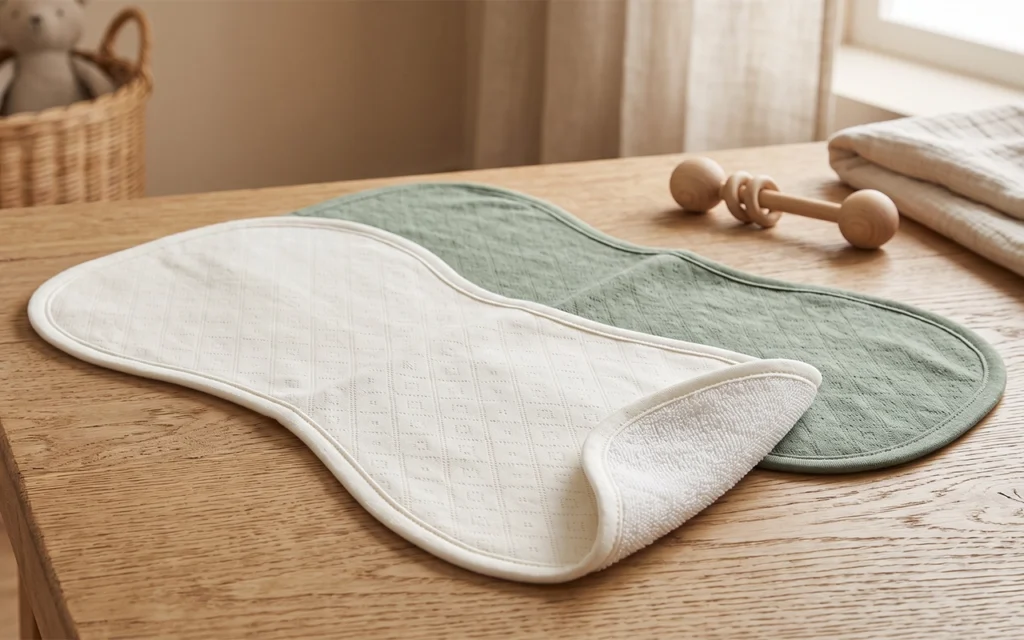
A 2-layer or 3-layer burp cloth can still feel substantial if the fabrics themselves are heavier or more structured. In some cases, a 2-layer product made with thicker materials may feel denser than a lightweight multi-layer muslin product.
Possible development directions may include:
• Decorative outer fabric + absorbent backing
• Knitted fabric + absorbent structure
• Heavier fabric with a cleaner construction
This type of product may suit brands that want:
• Lower bulk
• Faster drying
• Simpler construction
• Different surface textures
• A more structured hand feel
Therefore, a 2-layer burp cloth should not be judged too quickly. The actual result depends on the materials used in each layer.
4–5 Layers: A Balanced Range for Many Burp Cloth Projects
For muslin burp cloth development, 4-layer and 5-layer structures can offer a useful middle ground.
They often provide more body than a very light product, while still keeping the softness and breathable character associated with muslin.
This range can work well for:
• Everyday burp cloths
• Contoured burp cloths
• Printed muslin styles
• Organic cotton muslin products
• Coordinated newborn collections
However, even within the same layer count, products can still vary.
Two different 4-layer burp cloths may not feel the same if they use different yarns, different gauze constructions, different GSM, or different finished sizes.
As a result, buyers should compare complete specifications rather than layer count alone.
6–8 Layers: More Material, but Also More Bulk
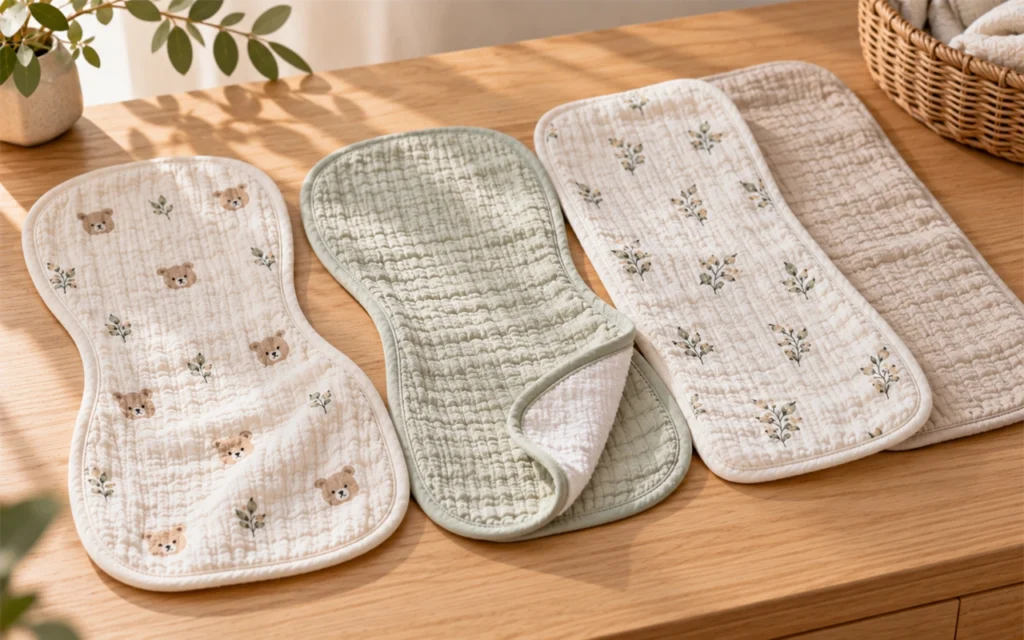
A higher layer count usually creates a stronger “multi-layer” product impression.
This can be useful when brands want a burp cloth that feels fuller, thicker, or more absorbent. At the same time, a higher layer count also changes the product in other ways.
Possible effects may include:
• More bulk
• Higher material consumption
• Heavier finished weight
• Longer drying time
• Higher production cost
• A different hand feel
Because of this, 6-layer and 8-layer products should be treated as a product direction, not as the default premium option.
For some brands, a fuller multi-layer muslin cloth may be the right choice. For others, the product may become too heavy or too thick for the intended market position.
That is why sampling remains important.
Layer Count and GSM Should Be Reviewed Together
One of the biggest mistakes in burp cloth development is comparing layers without checking GSM.
These two numbers describe different things.
Layer count tells you how many fabric layers the product uses.
GSM tells you the weight of the material per square meter.
This means:
• 2 layers do not always mean light
• 8 layers do not always mean heavy
• More layers do not always mean better absorbency
For practical comparison, buyers should record:
• Number of layers
• Material of each layer
• GSM
• Finished size
• Finished product weight
• Fabric construction
Another point also matters. Some suppliers may refer to the GSM of the fabric itself, while others may use product-level descriptions differently. Therefore, numbers should always be interpreted carefully during supplier comparison.
Material Choice Changes What “One Layer” Means
Not every layer has the same value.
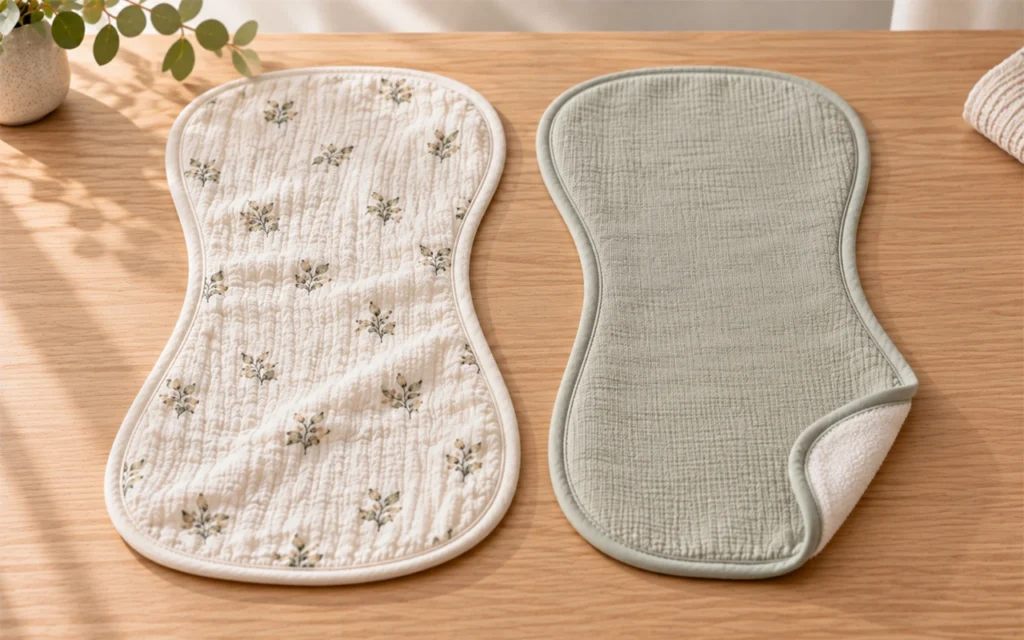
A layer of cotton muslin does not perform the same way as a layer of terry cloth, jacquard fabric, or knitted cotton. This is why materials must be reviewed together with structure.
A burp cloth project may use:
• Cotton muslin
• Organic cotton muslin
• Knitted cotton
• Terry cloth
• Jacquard fabric
• Bamboo-viscose blends
• Other absorbent textile structures
For example:
6 layers of lightweight muslin
and
2 layers of heavier knitted fabric
may create completely different product results.
The first may emphasize a soft multi-layer gauze feel. The second may offer a denser and more structured product. Therefore, brands should not decide on the number of layers before thinking about fabric choice.
Test More Than One Structure Before Finalizing Development
In many cases, the best way to choose a burp cloth structure is to compare samples.
A practical development approach may include:
Lightweight Version
Lower layer count or lighter construction.
Balanced Everyday Version
A middle-range structure, such as 4-layer or 5-layer muslin.
Thicker Absorbent Version
More layers or heavier fabric combinations.
After that, buyers can compare:
• Absorbency
• Thickness
• Hand feel
• Drying performance
• Finished weight
• Washing behavior
• Production cost
This gives a clearer basis for product selection than layer count alone.
Inorange Baby can support custom burp cloth development based on fabric direction, layer structure, GSM, finished size, shape, edge finishing, prints, labels, and packaging. Existing market references can help guide development, while final samples can be adjusted according to the brand’s target product position.
Conclusion
There is no single “best” layer count for baby burp cloths.
2-layer, 3-layer, 4-layer, 5-layer, 6-layer, and 8-layer products can all make sense in the market, depending on the material, GSM, structure, and product goal.
For buyers, the most useful comparison is not:
Which burp cloth has more layers?
A better question is:
Which combination of layers, materials, GSM, and finished size creates the product we actually want to sell?
That is the approach that leads to better sampling decisions and a clearer product position.