Why Breathability Matters for Infants
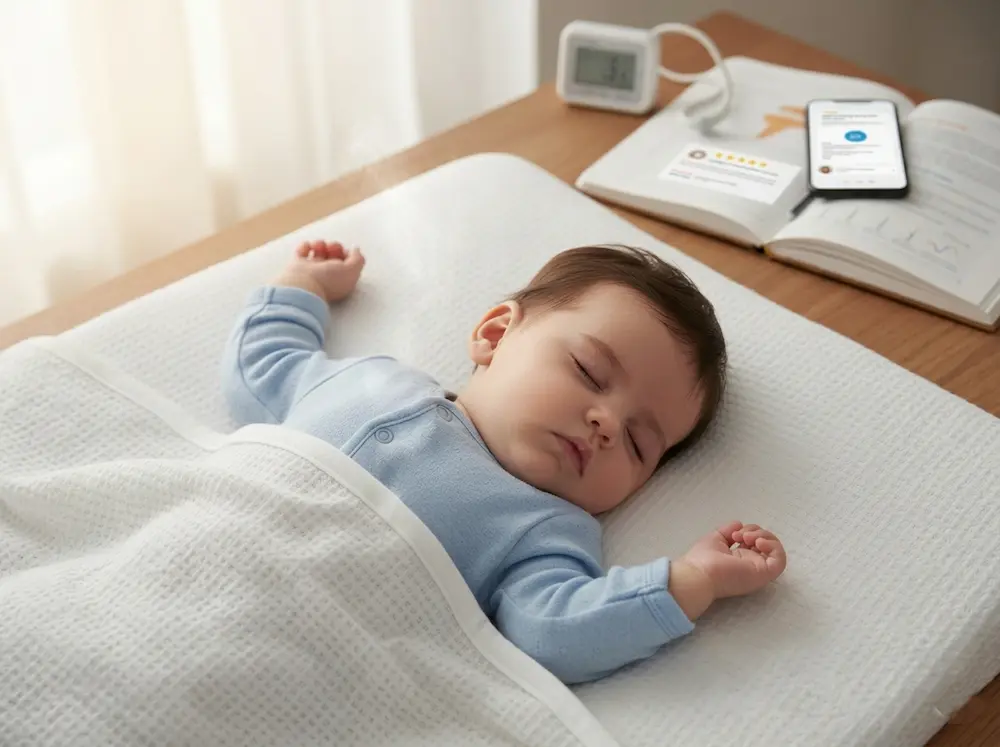
Breathability in baby textiles goes far beyond simple comfort. As infants have not yet developed a fully mature thermoregulation system, the microclimate formed between the fabric and the skin directly affects heat and moisture balance. Materials with good breathability and moisture absorption help reduce sweat accumulation and lower the risk of overheating.
Industry sources indicate that breathable fabrics can support temperature regulation and promote moisture dissipation, thereby reducing skin irritation and discomfort, while also contributing to more stable sleep in infants [1]. Further research shows that fabric selection can significantly affect an infant’s skin temperature, moisture condition, and even the surrounding breathing environment. Poor breathability not only leads to heat and moisture buildup but may also cause skin discomfort, and in extreme cases, pose potential safety risks [2].
From a market perspective, this is not only a product performance issue but also a commercial one. In practice, products with inadequate thermal performance or safety compliance often face withdrawal or redesign, while those with improved breathability tend to achieve lower return rates and higher customer satisfaction.
Common Misconceptions About Breathability
Although breathability has become a common selling point in baby textiles, its true meaning is still often oversimplified in the industry. Common misconceptions include equating “lightweight” with breathable, or assuming that cotton alone automatically ensures adequate breathability. However, these assumptions overlook a key fact: breathability is not a single material property, but a combined function determined by fiber type, yarn structure, and fabric construction.
In real applications, even when using the same material, different weaving methods and structural designs can result in significant differences in airflow and moisture management. Therefore, simplifying breathability as merely a “material choice” can easily mislead product development and fail to meet market expectations for performance stability and long-term comfort.
How Different Materials Perform in Real Use
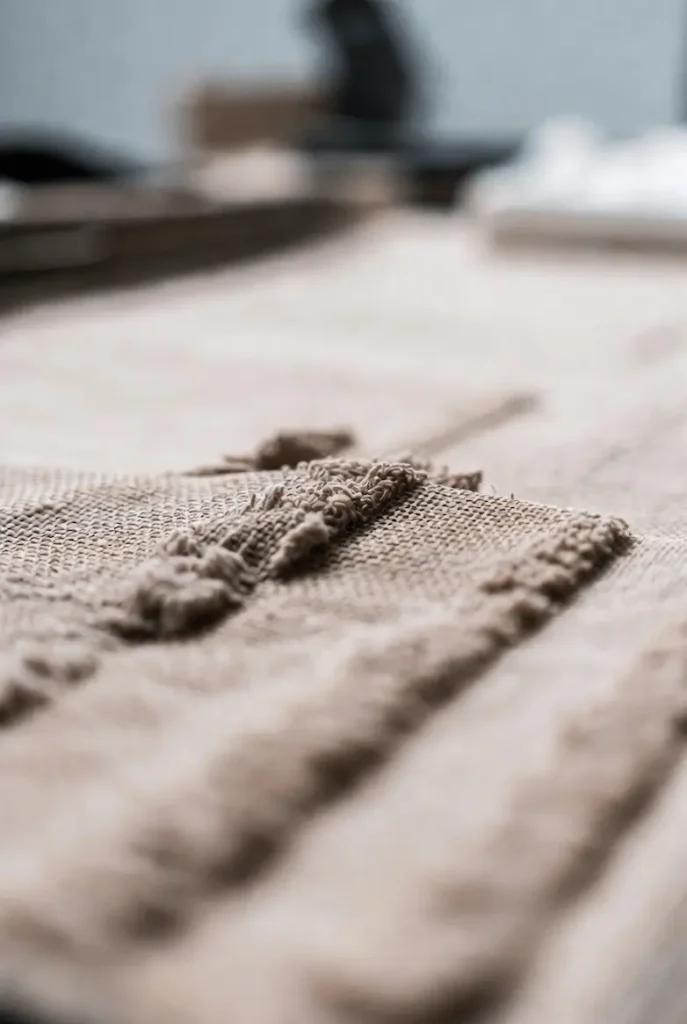
At the material level, different fiber systems exhibit distinct performance characteristics in terms of breathability and moisture management, rather than a simple hierarchy of superiority. Cotton, for example, naturally offers good moisture absorption and baseline breathability, making it a common choice in baby textiles. However, under high humidity or prolonged use, cotton releases moisture relatively slowly, which can lead to localized dampness and reduced long-term comfort. This issue becomes more noticeable in scenarios such as extended sleep, swaddling, or close-to-skin wear.
In contrast, regenerated fibers typically perform better in moisture diffusion and wicking efficiency, helping to reduce sweat retention. In real use scenarios such as nighttime sleep or environments with temperature fluctuations, these materials are more effective in maintaining a relatively stable dry state. However, their final performance still largely depends on specific production processes and quality control.
Synthetic fibers such as polyester, on the other hand, offer clear advantages in durability and cost efficiency, which is why they are widely used. However, their lower moisture absorption in enclosed or humid conditions can lead to moisture buildup between the skin and the fabric, creating a warm and humid microclimate [2]. In scenarios such as swaddling, layered bedding, or multi-layer usage, restricted airflow can further intensify heat and moisture accumulation.
Breathability Is More Than a Material Property
Therefore, in baby textile applications, the key to material selection is not maximizing a single performance attribute, but balancing different properties and aligning them with fabric structure. A single material alone is often insufficient to ensure stable breathability, and overall performance needs to be enhanced through the combination of structure and design.
As a result, breathability cannot be determined by a single material alone, but is the outcome of the combined interaction between material properties, fabric structure, and manufacturing processes. In this process, manufacturing capability becomes a key factor influencing final performance. Different yarn treatments, fabric constructions, and finishing processes all directly affect airflow and moisture transfer efficiency.
Based on this understanding, suppliers with stable production capacity and systematic manufacturing experience are able to go beyond material selection and achieve more precise control over product structure, thereby reaching a better balance between breathability, durability, and safety.
In this direction, we continue to focus on baby textile manufacturing, optimizing from material selection to structural design, with the goal of improving breathability and overall user experience.
From Design to Real Product Performance
In actual product development, breathability is achieved through the combined application of materials, structure, and processing. For example, in products such as baby blankets, sleeping bags, and bedding, optimizing fabric structure and airflow pathways, combined with materials that offer strong moisture management, helps achieve a more stable balance of heat and humidity.
In real usage scenarios, such as nighttime sleep or prolonged swaddling, this approach effectively reduces heat and moisture buildup, thereby improving comfort and stability. At the same time, while ensuring breathability, durability and safety standards must also be considered to meet market expectations for quality and reliability.


The Future of Breathable Materials in Baby Textiles
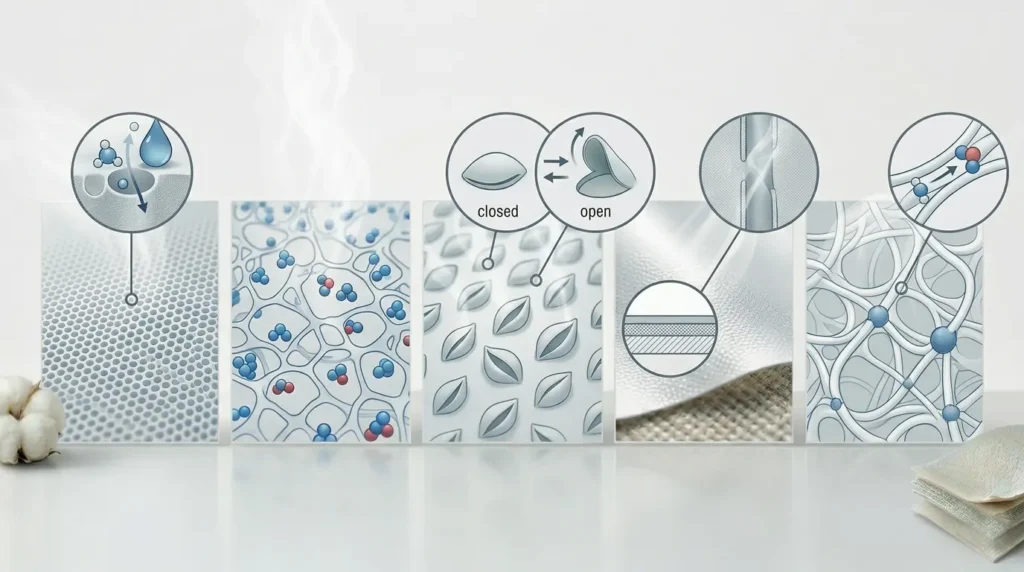
As the industry moves toward more refined performance standards, the definition of breathability is evolving from a single material property to a system-level capability focused on microclimate management. At the material level, a variety of new breathable systems are emerging.
For example, microporous functional membranes can balance vapor transmission and external protection by controlling pore size [3]; hydrophilic non-porous membranes enable stable moisture management through diffusion mechanisms [4]. At the same time, biomimetic materials aim to replicate the structure of human skin to achieve dynamic responses to temperature and humidity changes [5], while polyurethane breathable coatings and modified cellulose materials offer new ways to balance breathability and structural stability [6][7].
In this context, breathability will no longer be a single metric, but a comprehensive outcome shaped by the interaction of materials, structure, and function. For the manufacturing side, this also means a shift from material application toward system-level design capability. Future competition will not be about materials alone, but about the ability to control the microclimate.
[1] https://tiliankids.com/blogs/news/why-breathable-fabrics-matter-for-baby-clothing?srsltid=AfmBOortnEe3CgCBwaBA7Yj78WeQ7V2m4XG86ZY6gDK2FTJc1qQzJQr-&utm_source.com
[2] https://pmc.ncbi.nlm.nih.gov/articles/PMC12256047/?utm_source.com
[3] https://www.mdpi.com/1996-1944/16/15/5339
[4] https://www.sciencedirect.com/science/article/pii/B9781782424659000021
[5] https://journals.sagepub.com/doi/10.1177/1528083707082164
[6] https://pmc.ncbi.nlm.nih.gov/articles/PMC12509000/
[7] https://www.sciencedirect.com/science/article/abs/pii/S0144861722002715